
News
Osun: Jonathan criticises Governors, political leaders’ presence in election states

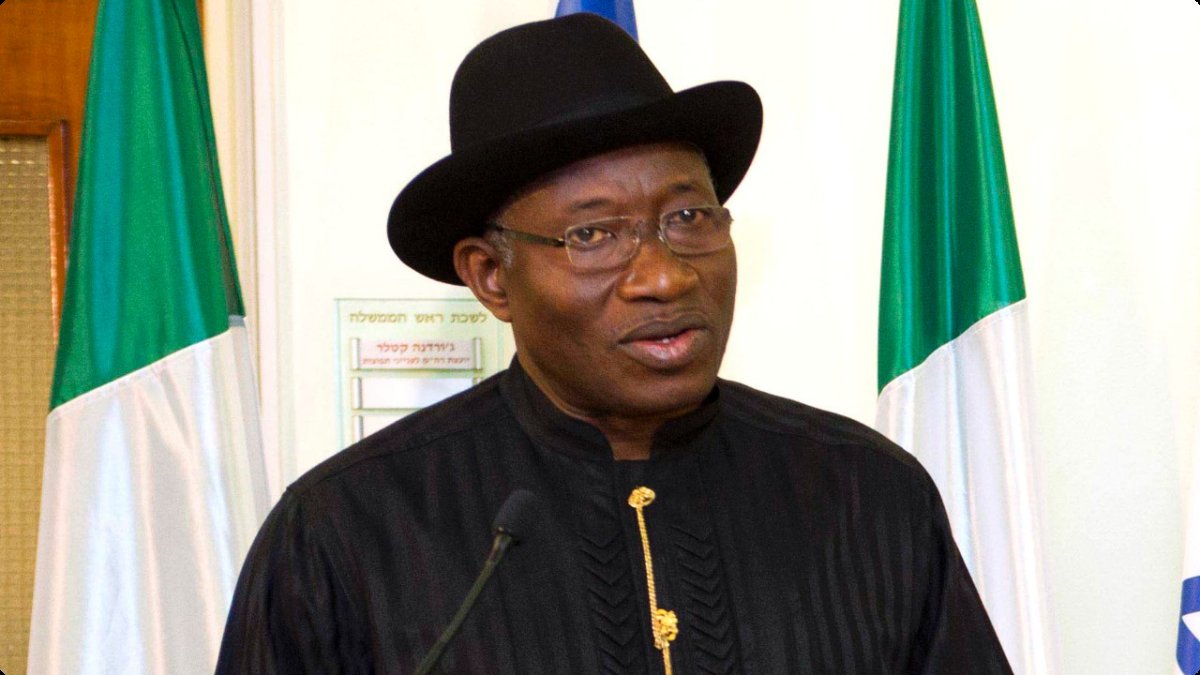
Former President Goodluck Jonathan has criticised the growing practice of serving governors, senior political office holders, party leaders and other influential government officials travelling to states where elections are being conducted with large numbers of aides and security personnel.
Jonathan raised the concern in a statement issued days after the Osun State governorship election, saying the development required urgent national attention.
The former president described the trend witnessed during recent elections in Osun, Ekiti and Ondo states as unusual, warning that such conduct should not become accepted as normal in a democratic society.
He stressed the need for stakeholders to examine the practice and protect the integrity of Nigeria’s electoral process.
“I recall that, as President, similar situations arose during the 2013 Anambra and 2014 Ekiti governorship elections. On those occasions, senior political leaders mobilised and descended upon the states. Upon being briefed, I ordered party leaders and senior government officials to leave the states immediately,” he said.
“This trend is unwholesome. If left unchecked, it could threaten our fragile democracy and have serious long-term implications for democratic stability.”
Jonathan, however, acknowledged that, as an essential part of democracy, political parties are entitled to campaign, mobilise their supporters and deploy their legitimate party structures.
Nonetheless, the former president stated that there is a point at which political mobilisation, particularly when it involves the overwhelming presence of serving governors, senior public officials and powerful political actors from across the country on election day, can create an atmosphere of apprehension, intimidation, bullying and undue pressure.
“We must ask ourselves whether the increasing deployment of political power and large-scale mobilisation by senior office holders on election day in states holding elections is consistent with the spirit of free, fair and peaceful democratic competition,” he said.
“This hardly happens in other democratic countries. We must not allow political competition to become a contest in which victory is perceived as something that must be achieved at all costs.
“There is also the question of precedent. If the current trend becomes established, what happens when governors from opposing political parties begin to descend on every state holding a competitive election? What happens when each party seeks to match political power with political power, governmental influence with governmental influence, and mobilisation with counter-mobilisation?
“Such a development would not strengthen our democracy. It would deepen political tensions and could make elections increasingly resemble battles for political survival rather than peaceful contests for the mandate of the people.”
Jonathan expressed the believe that this matter should not be treated as a partisan dispute concerning the Osun election, but as a broader national issue concerning the future of our electoral democracy.
He urged political office holders to recognise that their conduct carries a greater responsibility. He advised that the power and influence attached to public office should be used to strengthen democratic institutions, not to create apprehension among political opponents or citizens.
“For this reason, I call on the National Peace Committee to convene, as soon as practicable, a stakeholders’ engagement. The purpose of such a meeting should be to provide a neutral and constructive platform for political leaders and other stakeholders to reflect on emerging practices around elections and agree on standards that will protect our democracy and preserve peace.
“The engagement should bring together key stakeholders, including the leadership of registered political parties; the Independent National Electoral Commission (INEC); relevant security agencies; the leadership of the National Assembly; the Nigerian Bar Association (NBA); the Nigeria Governors’ Forum; civil society organisations; and the media, to interrogate this troubling trend.
“I believe that the National Peace Committee is particularly well placed to lead this conversation because of the confidence and moral authority it has built over the years in bringing political leaders together at moments of national tension.
“An early national conversation can help us establish appropriate boundaries and expectations for political conduct before practices that are unusual today become accepted as normal tomorrow,” he said.


 Follow Us on Google Discover









JAMB to establish UTME Centre in Canada for Nigerians in North America from 2027

Rivers govt shut down 21 health facilities over alleged child trafficking

Abiy Ahmed reappointed Prime Minister of Ethiopia

BREAKING: 32 persons were on board says FG, as NAF confirms ownership of crashed aircraft

2027: INEC to begin PVC distribution October 8

Shettima arrives Niger, visits families of NSCDC custodial death victims

2027: ‘He betrayed APGA’ – Anambra govt tells electorate to reject Obi, NDC

Ondo APC names 228-member campaign council for Tinubu’s 2027 re-election

BREAKING: Many feared dead as suspected Military Helicopter crashes in Ondo

Tinubu will ‘harvest’ votes in South-East, win five states — Umahi

No tribe buys bread cheaper, insecurity affects all Nigerians – Obi

2027: Anxiety mounts as INEC awaits Supreme Court judgment on party membership rules

Tinubu meets Uzodinma in Lagos amid rift with Wike’s Rainbow Coalition – Details Emerge

BREAKING: Security Forces kill suspected ISWAP leader planning attacks in Southern Nigeria

Nine Zamfara lawmakers join ADC after dumping APC
BREAKING: Many feared dead as suspected Military Helicopter crashes in Ondo

‘I warned El-Rufai to go on exile or they would jail him’ — Buba Galadima

NOUN halts Alumni activities, election over alleged certificate racketeering
Tinubu meets Uzodinma in Lagos amid rift with Wike’s Rainbow Coalition – Details Emerge

JUST IN: Kidnappers torture 20 corps members, demand N5m ransom each
BREAKING: 32 persons were on board says FG, as NAF confirms ownership of crashed aircraft

NYSC Abduction: Kidnappers issue 24-hour ultimatum, demand N1bn

BREAKING: 8 Zamfara Assembly members dump APC

Panic as fuel tanker catches fire, destroys shops, vehicles in Cross River
Nine Zamfara lawmakers join ADC after dumping APC
2027: ‘He betrayed APGA’ – Anambra govt tells electorate to reject Obi, NDC

BREAKING: Temi Nkem wins BBNaija Season 11 ‘Show Ya Sef’

Kebbi Gov moves to set up military base in Bagudo over rising banditry
2027: Anxiety mounts as INEC awaits Supreme Court judgment on party membership rules
