Editorials
2027: “Which North? North Korea or North Carolina?” Nigerians mock politicians promising Tinubu Northern votes

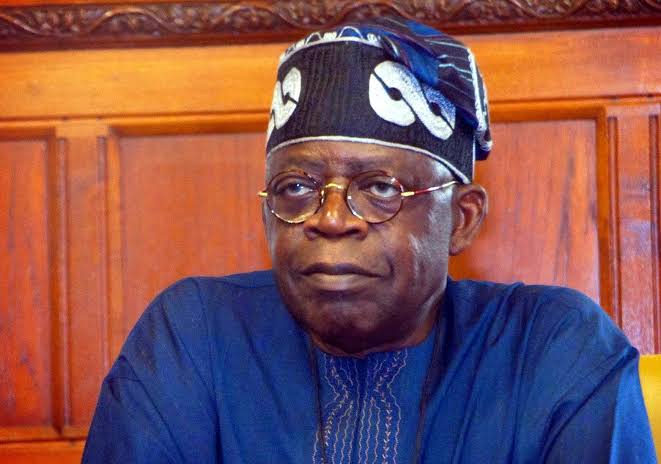
As the race towards the 2027 presidential election gradually gathers momentum, a growing debate is emerging over the confidence with which some Nigerian politicians claim they can deliver the northern region for President Bola Ahmed Tinubu.
From political commentators to ordinary citizens on social media, Nigerians, particularly those from the North, have been questioning the assumption that a handful of political leaders can speak for millions of voters and determine how an entire region will vote.
The question being thrown at some of these politicians is simple but pointed: Which North are you promising to deliver—North Korea, North Carolina or Northern Nigeria?
The sarcastic question captures a wider argument about political representation, voter independence and the tendency of some politicians to speak as though the electorate were under their personal control.
Among the prominent figures attracting attention are Senator Abdul’aziz Yari, Director-General of the All Progressives Congress (APC) Presidential Campaign Council; former Kano State Governor Ibrahim Shekarau; and Kano State Governor Abba Kabir Yusuf, who recently assured Tinubu of northern support for his re-election bid.
Their statements have intensified discussions about whether political endorsements by influential figures should be interpreted as evidence of the preferences of millions of voters across the North.
Yari and the Politics of Political Gratitude
Yari has repeatedly urged Northerners to support Tinubu in 2027, arguing that the region should reciprocate the support the President gave former President Muhammadu Buhari, who governed Nigeria from 2015 to 2023.
In September, Yari argued that Tinubu stood by Buhari when it was the North’s turn to produce the President and that Northerners should now support Tinubu’s second-term ambition. He has also defended the principle of rotational presidency, saying the existing political arrangement should be respected.
The argument presents political support as a matter of reciprocity: because Tinubu supported a northern president, the North should support him in return.
However, this reasoning raises an important question. Does an understanding between political leaders automatically become a binding agreement for millions of citizens?
Nigeria’s electorate is not a single political bloc whose decisions can be negotiated behind closed doors. Northern voters have different priorities, political affiliations, economic circumstances and expectations of government.
Some may agree with Yari’s argument about power rotation and national unity. Others may believe that the President’s performance should determine whether he deserves another term. Still others may support a different candidate or party.
These are legitimate democratic choices.
A political arrangement among party leaders cannot erase the right of individual citizens to assess the government and make independent decisions at the ballot box.
Abba Yusuf’s Promise and the Question of Representation
The debate gained fresh attention after Kano State Governor Abba Kabir Yusuf declared that the North would support Tinubu’s re-election.
Speaking at the inauguration of the Arewa for Asiwaju campaign office in Abuja on October 17, 2026, Yusuf pledged to mobilise northern support for the President. He also said Kano would play a significant role in the effort, describing the state as having the highest number of votes in Northern Nigeria.
The declaration is politically significant because Kano is one of the region’s most important electoral centres. However, the governor’s assurance has also raised questions about the distinction between a leader’s political commitment and the actual preferences of the people he governs.
A governor can establish a campaign structure, mobilise party members, engage community leaders and encourage supporters to vote for a candidate. What a governor cannot do is cast the ballots of every eligible voter in the state.
Kano’s electorate comprises people with different political loyalties and views about the Tinubu administration. The same is true of the wider North, which includes 19 states with diverse political histories and interests.
Consequently, a promise by one governor should be understood as a political declaration of intent, not proof that every voter in the region has accepted the candidate being promoted.
The electorate will ultimately determine whether such assurances translate into votes.
Why Are Nigerians Pushing Back?
The reaction to these political declarations reflects a broader debate about the relationship between political elites and ordinary citizens.
For years, Nigerian politics has featured prominent leaders claiming to possess the influence necessary to deliver votes in their states, local governments or geopolitical zones. Such claims can be useful campaign messages, particularly when parties are trying to demonstrate their organisational strength.
But they can also create the impression that voters are political assets to be transferred from one candidate to another.
That is the assumption many Nigerians are challenging.
The growing cost of living, concerns about security, unemployment, poverty and access to essential services have made governance and accountability important subjects in the national conversation. Voters are entitled to ask what a government has done, what remains unresolved and what another term might mean for their lives.
For citizens facing these challenges, an appeal based on political gratitude or regional solidarity may not be enough to settle the question of whom to support.
The relevant questions extend beyond which region should support which candidate. They include whether public officials have delivered on their promises, whether citizens feel safer, whether economic opportunities have improved and whether government policies are producing results that people can see in their daily lives.
These are questions that campaign endorsements alone cannot answer.
The North Is Not a Single Political Constituency
One of the weaknesses of sweeping claims about delivering the North is that they can obscure the region’s political diversity.
Northern Nigeria is not a single voting unit. It contains different ethnic groups, religious communities, economic interests, political traditions and local concerns. Voters in Kano may not approach an election in the same way as voters in Borno, Plateau, Benue, Sokoto, Kaduna or Adamawa.
Even within the same state, party supporters, undecided voters and citizens who reject the major political parties may hold sharply different views.
The region’s electoral history also demonstrates that northern voters do not invariably support one candidate. Their choices have varied across elections, reflecting changing political alliances, candidates, party structures and public sentiment.
It is therefore difficult to treat any politician’s endorsement as a guarantee of collective regional support.
Yari, Shekarau, Yusuf and other influential figures may have political networks capable of mobilising supporters. Their positions and alliances are relevant to the campaign. But their influence should not be confused with ownership of the electorate.
Political influence can help mobilise voters; it does not give any politician the right to decide how those voters must vote.
What the Tinubu Campaign Must Understand
For Tinubu’s campaign, declarations of support from influential northern politicians can provide a foundation for political mobilisation. They may help establish campaign offices, strengthen party coordination and attract supporters.
However, the value of those endorsements will ultimately depend on whether they resonate with voters.
If campaign messaging centres primarily on political arrangements, past alliances and promises to deliver entire regions, it risks leaving an important question unanswered: what is the administration offering Nigerians for the next four years?
The President and his supporters have the opportunity to present their record, explain their policies and make a case for continuity. Voters, in turn, have the right to scrutinise those claims and compare them with their own experiences.
That is how democratic accountability should work.
The same standard applies to opposition politicians. They, too, must demonstrate what they would do differently rather than assume that dissatisfaction with the government automatically guarantees support for an alternative.
No political party should mistake the public’s criticism of its opponents for an unconditional endorsement of its own candidates.
Beyond the Sarcasm
The question, “Which North? North Korea or North Carolina?” may have emerged as a sarcastic response to politicians’ confident declarations, but the underlying issue is serious.
It is about whether Nigerians are regarded as independent citizens or as political numbers that influential figures can promise to deliver.
Politicians are free to campaign for Tinubu, mobilise supporters and argue that the President deserves another term. Equally, citizens are free to question those arguments, demand accountability and make their choices without being treated as though their votes have already been decided.
The North belongs to its people, not to any governor, senator, former governor or campaign council.
As the 2027 election approaches, political leaders will have to do more than announce that they can deliver millions of votes. They will need to explain why those votes should be given to their preferred candidate.
Ultimately, it is not the politician who makes the promise who determines the outcome. It is the voter who enters the polling booth.
And until the votes are cast and counted, claims that an entire region has already been delivered remain political declarations—not a verdict from the electorate.


 Follow Us on Google Discover



“I saw Akpabio at the State House begging Tinubu to keep his position” — Jake Epelle

FG defends fiscal reforms as World Bank flags ₦7.7tn debt interest

2027: “Which North? North Korea or North Carolina?” Nigerians mock politicians promising Tinubu Northern votes

2027: Eight Zamfara lawmakers set to return to APC after meeting Tinubu

‘You will pay taxes beyond your capacity in 2027 if Tinubu is reelected’ – Sen. Kingibe warns Nigerians

N126.46bn election funds: SERAP drags INEC to court, demands accountability

2027: Wike, Rivers lawmakers visit Fubara as reconciliation efforts continue

Katsina wealth workers call off 7-day warning strike after Gov Radda’s intervention

Trump backs Netanyahu ahead of Israel’s October 27 election

2027 elections: INEC under fire over omission of governorship candidates

Wike, Akpabio, Uzodimma: Unity at the podium, rival ambitions behind the Scenes? can Tinubu keep his associates together?

Real reason we removed universities from IPPIS, recruitment waiver – FG

Macron condemns looting, vandalism during cost-of-living protests in France

Lagos State: List of LGAs, population, land mass, government, other key facts

Oyo State: List of LGAs, population, land mass, government, other key facts

‘₦29,000 Cannot sustain a retired officer’ — Atiku challenges Tinubu on police pensions, proposes initiative

Opposition will front a single candidate against Tinubu, announcement will be made few days to election – Lukman

Gunmen kill four vigilantes in Plateau community

2027: Tinubu must be stopped, ‘even Buhari saw him as bad news’ — Hakeem Baba-Ahmed

Suspended NSCDC commandant apologises over deaths of suspected illegal miners in Niger

2027: NDC will never step down for Atiku, stop attacking us – Kwankwaso replies ADC Campaign Council

Veteran Journalist, diplomat Dele Cole dies at 86

Ogun hospital under fire as Nurse dies of asthma attack amid alleged oxygen failure

COAS arrives Borno as Military moves to clear terrorist camps, rescue abductees

Messi’s double fires Inter Miami to 3-1 victory over Atlanta United

Buhari backed Osinbajo’s presidential ambition four times, Akande tells Babachir Lawal

Macky Sall quits race for UN Secretary-General position

2027: ‘APM will beat Tinubu in 12 battleground states’ – Makinde’s campaign team

Dr. Benjamins‑Laniyi urges media to amplify women’s leadership, adopt gender‑sensitive reporting
