World
Trump announces pause in planned US-Israel strikes on Iran

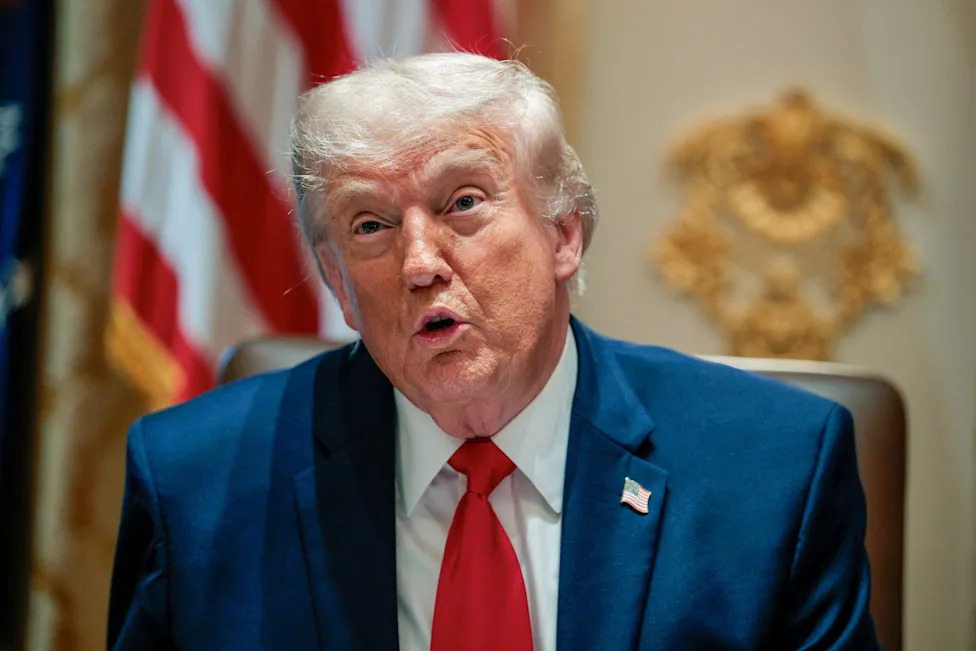
United States President Donald Trump has revealed that the US and Israel have agreed to delay any new military strikes on Iran, provided a peace agreement to end the months-long conflict is reached quickly.
Speaking on Saturday, Trump said both countries were prepared to launch fresh attacks if necessary but were giving diplomacy a final opportunity to succeed.
His comments came amid growing concerns that tensions in the Middle East could spiral further after he recently warned that Iran could face severe military action.
Reports had also suggested that Washington was considering another round of major strikes, including possible attacks on Iran’s energy infrastructure.
According to Trump, the United States was fully prepared for military action against Iran, describing American forces as “locked and loaded” for a potential operation. However, he said Iran and several other countries in the region had appealed for restraint, prompting Washington to postpone any immediate offensive.
“Based on this request, I have agreed, for the future benefit of the WORLD and, likewise, the survival of a successful and prosperous Iran, to cancel the attack, subject to being able to rapidly make a DEAL,” Trump posted on his Truth Social platform.
The US president said the deal would have to include the “Immediate, Complete and Total OPENING OF THE HORMUZ STRAIT, and an end to Iran’s nuclear threat.”
“The Country of Israel joins me in this commitment. Get to work, everybody, and get it DONE.”
After more than five months of war, which began on February 28 when the United States and Israel launched strikes on Tehran, there is seemingly no end to the conflict in sight.
A previous ceasefire deal with similar terms, including the reopening of the Strait of Hormuz, fell through, and Iran has since tightened its control over the vital waterway as the two countries resumed attacks against each other in recent weeks.
The resumption of hostilities has caused global oil prices, which had dipped during the initial ceasefire, to again rise.
And the back-and-forth comes just three months before midterm elections in the United States that could pose a challenge for Trump’s Republican Party.
– ‘Eager to do a deal’ –
US embassies in capitals across the Middle East had warned their citizens on Saturday to beware of “unforeseen escalation” in the regional conflict and urged them to be ready to leave.
CBS News said that the United States and Israel were planning joint strikes, possibly throughout the weekend, with oil refineries and power plants among possible targets.
But Trump said he ultimately decided to hold off on his threat of new attacks after requests from Gulf countries.
Saudi Crown Prince Mohammed Bin Salman called Trump on Saturday to express concerns about his strike plans, Axios reported, citing unnamed US officials.
One source with knowledge of the call told Axios that the Saudi crown prince had “urged Trump to de-escalate and refrain from launching the strikes”.
The White House did not immediately respond to a request for comment about the report.
Iran and the US resumed exchanges of fire last month after a days-long lull in fighting, although there were no reported strikes overnight Friday to Saturday.
US Secretary of State Marco Rubio told Fox News earlier in the week that the US had “wiped out” much of Iran’s defenses, adding that Tehran was “now willing and in some cases seem eager to do a deal on denuclearization, to do a deal on the straits.”
Still, he said Iran could “still do damage.”
On Wednesday, a drone struck a US-owned gas vessel moored in an Egyptian port, causing a fire. Egypt is investigating but has not yet accused any group of launching the attack.
Meanwhile, an “unknown projectile” struck a tanker off the coast of Oman, a British maritime agency said on Saturday.
Iran has effectively maintained control over navigation through Hormuz since the outbreak of the war on February 28, requiring vessels to obtain permission and pay transit fees before using the waterway.
Maritime trade tracking firm Kpler said on Friday that traffic through the Hormuz strait has dropped “sharply”.
On the Bab el-Mandeb Strait, another waterway that has gained increasing importance as a transit route for Saudi Arabian oil, the Iran-backed Houthi rebels in Yemen on Saturday denied seeking to charge ships for passage through it.
The narrow waterway connects the Red Sea to the Indian Ocean and, via the Suez Canal, the Mediterranean.


 Follow Us on Google Discover






Ramaphosa takes sick leave after BRICS Summit

Now that Soludo has exposed you over N127.37bn debt, quit 2027 race — Presidency dares Obi

Anambra govt releases Peter Obi’s alleged debt records

Supreme court reserves judgment on INEC appeal over electoral act

Adamawa Gov picks Chairman, two commissioners for electricity commission

2027: Atiku secures Court order to serve Tinubu through APC

Obi left N127.37bn external debt, he borrowed for Malaria, Erosion control, others – Anambra Govt

BREAKING: Police storm King’s College, seal off entrance amid parents’ protest

Drama at Education Ministry as workers block entrance, chant ‘Alausa must go’

10 things you should know about late Nollywood veteran, Olu Jacobs
BREAKING: Veteran Nollywood actor Olu Jacobs dies at 84

Remi Tinubu gives N20m to Nigerian Qur’anic Competition winner Maryam Dan’Azumi

Rainbow Coalition: APC begins talks to reconcile Wike, Party Governors

‘We Can’t Subsidise Everything’ — Dangote speaks on petrol price, crude cost

2027: Students across 19 Northern states, FCT endorse Tinubu for re-election
Obi left N127.37bn external debt, he borrowed for Malaria, Erosion control, others – Anambra Govt

Nile University of Nigeria announces recruitment for 9 vacancies (How to Apply)

Philomath University announces recruitment for 22 vacancies (How to Apply)
BREAKING: Veteran Nollywood actor Olu Jacobs dies at 84

2027: NDC says Nigerians can fund party with contributions as low as N1,500

Rainbow coalition is not an APC structure, I never promised Tinubu, APC that PDP won’t field candidates in 2027 – Wike replies APC Governors

Show proof I left Anambra with debts, I’ll stop my 2027 campaign – Obi dares Soludo
2027: Big battle for Wike as APC Govs move against Rainbow Coalition, parallel structures capable of undermining Tinubu, APC candidates

600 Northern Lecturers who attended Tinubu endorsement show must be bared 2027 election duties – ADC warns INEC

2027: Support Tinubu as he supported Buhari, Yari urges Northerners

‘I Don’t Want to Be Called Africa’s Richest Man Again’ — Dangote
Petrol at N1,350 in Nigeria still cheaper than in neighbouring countries – Dangote

Nigeria, India target $15bn trade as Modi pushes for more crude imports

Banditry Allegation: ‘I have nothing to hide’ — Sen. Buba submits self to DSS, Police for probe
