News
National Assembly to translate Nigerian laws into local languages

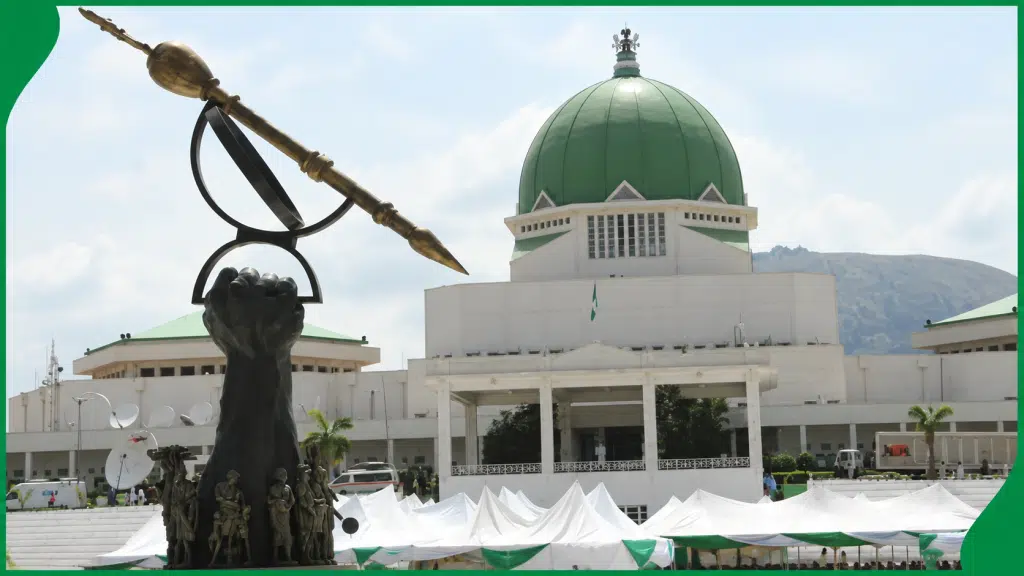
The National Assembly is set to expand access to legislative information by translating Nigerian laws into Igbo, Hausa, Yoruba and other local languages.
The initiative is part of plans to further digitise parliamentary records and make important legislative documents easier for Nigerians to access and understand.
The Executive Secretary of the National Assembly Library Trust Fund, Henry Nwawuba, disclosed this on Monday in Abuja while declaring open the 2026 National Assembly Library Week.
Nwawuba said the move would help bridge the gap between the legislature and the public by making parliamentary information available in languages that more Nigerians can easily understand.
The 2026 National Assembly Library Week is being held under the theme, “Parliamentary Memory: Connecting Records, Legislation and the People.”
Nwawuba said the three-day programme was designed as an annual platform to promote legislative research, access to information and effective utilisation of the resources of the National Assembly Library.
He described the library as more than a collection of books, saying “it serves as the knowledge infrastructure of the legislature and a repository of parliamentary records.”
He said the library was working to ensure that lawmakers, legislative aides, researchers and other stakeholders had access to authoritative parliamentary records, including Order Papers, Votes and Proceedings, committee reports and Acts passed by the National Assembly.
Nwawuba said the Trust Fund was investing in electronic repositories and upgrading its e-library, while developing a National Assembly Library mobile application to make legislative information more accessible to lawmakers, staff members, researchers and members of the public.
He also announced plans for a Bills Tracker, which would enable users to follow bills and monitor their progress through the legislative process.
According to him, the library is developing infographics, audiovisual materials and video explainers to simplify bills, Acts and legislative procedures for Nigerians.
He said the planned translation of laws into local languages would broaden access to legislative information and enable more citizens to understand laws that affect their daily lives.
Nwawuba said the library would also organise public policy dialogues to deepen citizens’ participation in public hearings and create more opportunities for interaction among legislators, citizens, researchers and other stakeholders.
He added that the initiatives were aimed at addressing inconsistencies in official parliamentary documents and the circulation of fake or unauthorised copies of National Assembly records.
Senate President, Godswill Akpabio, urged lawmakers to make greater use of the library, particularly in an era of increasing misinformation, disinformation and the rapid development of artificial intelligence.
Akpabio, represented by Sen. Osita Ngwu, described the library as a critical link between evidence, knowledge and legislative decision-making and called for continued support for its development.
The Speaker of the House of Representatives, Abbas Tajudeen, represented by the House Leader, Prof. Julius Ihonvbere, said legislative records were essential to understanding Nigeria’s legislative history and strengthening democratic governance.
Tajudeen said the strength of a legislature should be measured not only by the laws it enacted, but also by how effectively it documented its activities, preserved institutional knowledge and made such information available to future generations.
He said technology and artificial intelligence could improve legislative research, records preservation and access to information, but cautioned that their adoption must be guided by accuracy, security and professional judgment.
The Clerk to the National Assembly, Kamoru Ogunlana, said the National Assembly could not be truly independent if it lacked the capacity to generate, preserve, retrieve and authenticate its institutional knowledge and records.
Ogunlana said the library had an important role as a bridge between parliamentary records, legislation and the people, stressing that Parliament could not be fully transparent if its records could not be found, understood and trusted.
He identified the Order Paper, Votes and Proceedings and Hansard as key components of Nigeria’s democratic memory, explaining that the Order Paper provides the agenda for legislative business.
The Clerk warned against the circulation of incomplete, outdated, altered or unauthorised bills, Acts and other parliamentary documents, saying digital technology had made it possible for documents to be manipulated and circulated.
He stressed that the integrity of an Act depended not merely on the existence of a document, but on the ability to establish which version was authentic, which was authoritative and the legal process through which it emerged.
He noted that the continued widespread use of the Laws of the Federation of Nigeria, LFN 2004, highlighted the challenges of maintaining a current and authoritative consolidated body of federal legislation.
He explained that the LFN 2004 reflected the laws covered by that revision exercise and was not automatically updated whenever a new Act was enacted.
Ogunlana said the National Assembly must also strengthen cybersecurity, digital preservation, secure authentication, access controls, backup systems and staff members’ training as parliamentary records became increasingly digitised.
He warned that while digitisation would make parliamentary information easier to access, search and disseminate, it could also expose records to cyberattacks, manipulation and impersonation of official sources.
The Clerk said digital platforms must therefore be accessible and secure, while electronic records must be available, authentic and traceable.
He said the National Assembly Library should evolve beyond being a repository where documents were kept to becoming an institution where parliamentary knowledge was preserved, authenticated and made accessible to lawmakers, researchers, journalists, civil society organisations, students and the wider public.
The President of the Nigerian Library Association, Dr Lawal Umar, called for sustained investment in libraries and modern information technology to improve access to legislative information, while urging stronger collaboration between the National Assembly and state Houses of Assembly.
The Secretary-General, Conference of Speakers of African Legislatures, Amb. Debo Oyewale, said African legislatures had much to learn from one another in building institutions capable of preserving legislative memory.
(NAN)


 Follow Us on Google Discover



BREAKING: Edo Court sentences four kidnappers to death by hanging

BREAKING: Tinubu ends working vacation, departs Paris for Nigeria

I started casting out demons at 17 – Okpebholo

National Assembly to translate Nigerian laws into local languages

Tinubu, Otedola meet at private dinner in Paris

Court convicts 21 companies over illegal investment schemes in Nasarawa

Tragedy as driver allegedly runs over Police Sergeant during stop-and-search in Lagos

‘At 17, I was already casting out demons’ – Gov Okpebholo

We’ll restore fuel subsidy after tackling corruption – Obi

‘Tinubu hospitalised, receiving treatment in France’ – Sowore

Education Ministry releases approved textbooks for Nigerian schools

Atiku’s subsidy plan will bring petrol down to N400–N500 – Dino Melaye

2027: ‘Atiku will be physically present to lead Nigeria’ – ADC campaign council

Aiyedatiwa steps in as Ondo tertiary institutions suspend indefinite strike

FG issues flood alert to 24 states, FCT over heavy rainfall

Nigerian Navy Batch 39 Recruitment 2026: Application opens October 2 — Requirements, How to Apply

Six NDC governorship candidates reject Babachir Lawal’s appointment as North-East campaign coordinator

2027: APC chapters reject Wike’s Rainbow Coalition, demand formal defection to APC

Tinubu hale and hearty, still performing his duties from Paris – Presidency replies Atiku, Obi, Others

Flamingos crush Togo 4-0 to clinch 2026 WAFU-B U-17 Girls Cup title

US rejects Iran’s Strait of Hormuz reopening proposal

2027 Poll: Supreme court verdict opens fresh legal battle over PDP, opposition candidates

FG moves to revamp four ports nationwide
Court directs NMDPRA to grant import licences to Matrix Energy, AA Rano, AYM Shafa

PSC announces dates for 2026 Police promotion examinations

2027: PDP members dump party for APC in Kwara

Nollywood Actor Rykardo Agbor escapes death in tragic auto crash

JAMB restores CAPS, directs institutions to accelerate admissions

One dead as bus rams into median pole in Lagos