Editorials
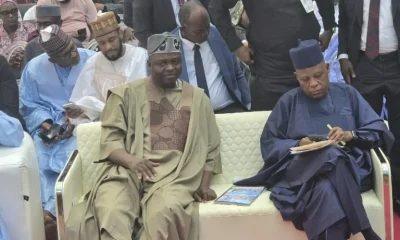
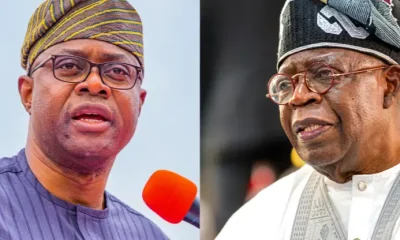
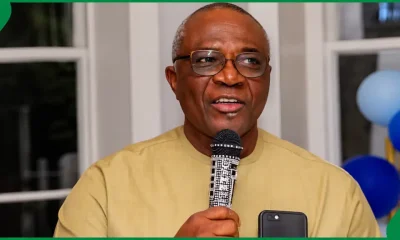
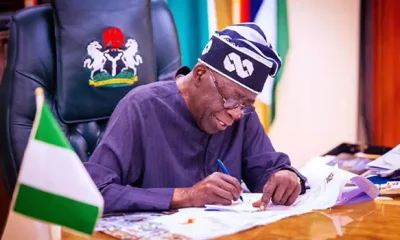
Wike, Akpabio, Uzodimma: Unity at the podium, rival ambitions behind the Scenes? can Tinubu keep his associates together?

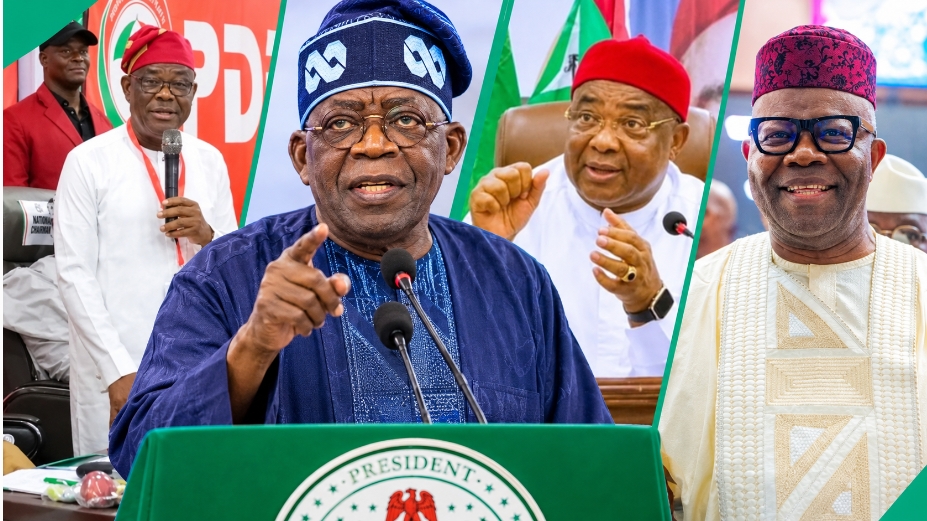
As President Bola Tinubu prepares for the 2027 general election, the inauguration of his Presidential Campaign Council has brought an important question to the forefront of Nigeria’s political conversation: can a coalition of powerful politicians with competing interests remain united long enough to deliver a coordinated campaign?
The event, held at the State House in Abuja on Wednesday, October 14, 2026, was intended to demonstrate the strength of the political alliance behind Tinubu’s re-election bid. Instead, pointed remarks by prominent figures have drawn attention to disagreements over political influence, party structures and ambitions for positions that will become available after the next election.
At the centre of the emerging tensions are the Minister of the Federal Capital Territory, Nyesom Wike; Senate President Godswill Akpabio; and Imo State Governor Hope Uzodimma.
Although all three have publicly expressed support for Tinubu’s return to office, their individual political interests raise questions about how far that common objective can accommodate their ambitions.
For Tinubu, the challenge is not simply to assemble influential politicians under one campaign structure. It is to ensure that their rival interests do not undermine the unity and coordination required to pursue his second-term ambition.
Wike’s Rainbow Coalition and the APC governors’ dilemma
Wike occupies an unusual position in the emerging political arrangement.
Despite remaining associated with the Peoples Democratic Party, the former Rivers State governor has openly supported Tinubu’s re-election bid and secured a place in the presidential campaign structure.
His proposed Rainbow Coalition is designed to draw support for Tinubu across party lines. However, the arrangement has generated disagreements with some APC governors, particularly over who should coordinate political mobilisation and how the president’s supporters should demonstrate their influence ahead of the election.
The disagreement came into sharper focus when Wike challenged APC governors to prove their political strength by delivering electoral victories for Tinubu in their respective states.
His message was straightforward: occupying prominent positions within the campaign structure should not be mistaken for an ability to produce votes at the polling units.
Wike’s position has particular significance because his support for Tinubu does not depend on his membership of the APC. His political approach allows him to maintain his own network while working towards the president’s re-election.
That arrangement may broaden Tinubu’s support beyond the ruling party, but it also raises questions about accountability and coordination. If several political figures claim responsibility for delivering the same electoral territory, disagreements could emerge over who controls the process and receives recognition for its outcome.
Uzodimma, who chairs the Progressive Governors Forum, has previously opposed political arrangements that he believes could weaken the APC or undermine its candidates.
The difference between Wike’s cross-party approach and the governors’ preference for a party-centred campaign has become one of the issues requiring careful management.
The question is whether both sides can operate within a common framework without allowing disagreements over political influence to distract from the campaign’s broader objectives.
Akpabio’s Senate presidency ambition and warning to governors
Akpabio’s position presents another dimension to the challenge.
As Senate President, he is seeking to retain his influence in the National Assembly beyond the 2027 elections. His ambition is tied not only to his own political future but also to the composition and leadership of the next Senate.
At the campaign council’s inauguration, Akpabio urged Tinubu to encourage lawmakers to seek re-election and continue supporting the administration in a second term.
He argued that retaining experienced legislators would help sustain the relationship between the executive and the National Assembly.
However, his remarks also included a warning to governors against pursuing other political offices before completing their constitutionally permitted eight-year tenure.
“I did eight years as a governor, and the constitution says you should do eight years. There’s no need for you to start eyeing another position that is not available,” Akpabio said.
Although he did not mention Uzodimma by name, the statement attracted attention because of reports that the Imo governor intends to contest a Senate seat in 2027 and may seek the Senate presidency after leaving office.
The timing also matters. The next National Assembly is scheduled to begin in June 2027, while Uzodimma’s second term as governor is expected to end in January 2028. His reported ambition to enter the Senate and potentially pursue its presidency therefore raises questions about the political calculations surrounding the transition.
Akpabio’s remarks can be understood in the context of a wider contest over the leadership of the 11th Senate. His supporters have publicly expressed confidence in his return, while the reported interest of other political figures has fuelled speculation about the succession battle.
The central issue is whether support for Tinubu’s re-election will also translate into an agreement over who should lead the National Assembly after the election.
Those are related but separate political questions. A politician’s support for the president does not automatically mean that the same politician will accept another figure’s ambition for the Senate presidency.
Uzodimma’s senatorial plan adds another layer
Uzodimma has publicly indicated his intention to contest a Senate seat in 2027, while reports have linked him to a possible ambition to succeed Akpabio as Senate President.
The governor’s role as chairman of the Progressive Governors Forum gives him a significant position within the APC’s state-level political structure. His involvement in Tinubu’s campaign also places him among the figures expected to coordinate mobilisation across the states.
Yet his reported interest in the Senate presidency creates an additional political calculation.
As a sitting governor, Uzodimma has responsibilities tied to the remainder of his tenure. As a prospective senatorial candidate, he must also consider the political relationships and legislative support that could shape his future in the National Assembly.
Should he enter the Senate after the election, his potential interest in its leadership would put him in the same political space as Akpabio, who is seeking to retain the position.
The resulting competition need not automatically become a confrontation. However, it creates room for disagreements over legislative leadership, political succession and the influence of governors in determining who occupies national offices.
Wike has already publicly opposed Uzodimma’s reported Senate presidency ambition. In September, the FCT minister criticised the idea of governors seeking to influence the emergence of the next Senate leadership by determining which candidates enter the National Assembly. He specifically said he would not support Uzodimma for the position.
That position means the disagreement extends beyond the relationship between Akpabio and Uzodimma. It also involves Wike, whose support for Tinubu coexists with his opposition to a political ambition associated with one of the APC’s influential governors.
The president’s campaign coalition must therefore accommodate politicians who share a common electoral objective but may not share the same preferences for the distribution of power afterwards.
Can a shared presidential ambition overcome personal interests?
Political coalitions often bring together individuals and groups with different motivations. Their members do not necessarily have to agree on every issue to work towards a common objective.
The difficulty arises when competing ambitions concern positions that cannot be occupied by everyone involved.
The presidency, the Senate presidency and other senior offices have distinct constitutional and political requirements. While campaign support can be negotiated, the eventual distribution of political offices depends on elections, party decisions and the choices of lawmakers.
This is why the tensions surrounding Wike, Akpabio and Uzodimma deserve attention beyond the exchanges at the campaign council’s inauguration.
Wike’s Rainbow Coalition seeks to mobilise support across party boundaries. Akpabio is seeking to retain his position as Senate President, while Uzodimma has declared his intention to contest a senatorial seat and has been linked to the contest for the next Senate presidency.
Their interests may overlap in supporting Tinubu, but that common purpose does not settle their differences over political influence and succession.
If those differences remain manageable, the campaign council can continue to operate despite competing ambitions. If they escalate, disagreements over individual political futures could complicate coordination within the president’s support base.
The important distinction is between a coalition that accommodates differences and one that allows those differences to obstruct its shared work.
Tinubu’s role in managing the competing interests
As the beneficiary of the coalition, Tinubu has a central role in maintaining a working relationship among its influential members.
His campaign council includes politicians from different parties and political backgrounds, reflecting an effort to consolidate support beyond the formal boundaries of the APC. The presence of Wike and other non-APC figures demonstrates that the president’s support base is not restricted to members of the ruling party.
However, an expanded coalition also requires clarity about responsibilities, coordination and the management of disagreements.
The president and the campaign leadership will need to ensure that political mobilisation is not weakened by rival claims over who controls particular areas, which figures deserve recognition for electoral results or who should receive support for future offices.
At the same time, disagreements over the Senate presidency cannot simply be resolved by assuming that campaign allies will abandon their personal ambitions. The contest for legislative leadership will involve its own political and institutional processes.
A workable arrangement would require the different actors to distinguish between the immediate objective of campaigning for Tinubu and the separate negotiations that may follow the 2027 elections.
That distinction would not eliminate competition, but it could help prevent disagreements over future offices from disrupting present responsibilities.
Campaign unity will be tested beyond the inauguration
The inauguration of the Presidential Campaign Council was an opportunity for the APC and Tinubu’s wider support base to project unity ahead of the 2027 election.
Yet the exchanges involving Wike, Akpabio and Uzodimma demonstrated that a common presidential candidate does not necessarily erase the different interests of the politicians supporting him.
Wike’s Rainbow Coalition raises questions about coordination between cross-party mobilisation and the APC’s own structures. Akpabio’s bid to retain the Senate presidency intersects with Uzodimma’s declared senatorial ambition and reported interest in the same leadership position. Wike’s opposition to Uzodimma’s reported ambition adds another dimension to those competing interests.
These issues do not establish that the coalition will break apart. They do, however, illustrate the political negotiations that can accompany an election campaign involving powerful actors with different objectives.
For Tinubu, the task is to maintain cooperation among his supporters without allowing the campaign to become a battleground for positions that will be contested after the election.
Ultimately, the durability of the coalition will depend on whether its members can separate their immediate commitment to the president’s re-election from their individual calculations about the next political dispensation.
The inauguration has brought the coalition together. Whether its members can sustain that unity through the campaign, the election and the subsequent contest for political offices remains an open question.


 Follow Us on Google Discover




Wike, Akpabio, Uzodimma: Unity at the podium, rival ambitions behind the Scenes? can Tinubu keep his associates together?

Real reason we removed universities from IPPIS, recruitment waiver – FG

Macron condemns looting, vandalism during cost-of-living protests in France

Lagos State: List of LGAs, population, land mass, government, other key facts

Oyo State: List of LGAs, population, land mass, government, other key facts

Osun State: List of LGAs, population, land mass, government, other key facts

Ondo State: List of LGAs, population, land mass, government, other key facts

Eight Nigerian Soldiers killed as ISWAP landmine hits Army patrol vehicle in Borno

Bauchi Health Agency boss, four children die in Road accident

‘Nigeria cannot become prosperous in four years’ — Tinubu’s Economic Adviser says

2027: Tinubu must be stopped, ‘even Buhari saw him as bad news’ — Hakeem Baba-Ahmed

APC sweeps all 21 chairmanship seats, 239 Councillorship positions in Kogi LG poll

‘₦29,000 Cannot sustain a retired officer’ — Atiku challenges Tinubu on police pensions, proposes initiative

FG ends 17-year blackout in Gombe community with 1MW solar mini-grid

EPL: Leeds hold Man Utd to 1-1 draw as pressure mounts on Carrick

2027: Kwankwaso a goat in sheep’s clothing, secretly working for Tinubu – Atiku Campaign Council

Opposition will front a single candidate against Tinubu, announcement will be made few days to election – Lukman
‘₦29,000 Cannot sustain a retired officer’ — Atiku challenges Tinubu on police pensions, proposes initiative

Gunmen kill four vigilantes in Plateau community

Tension as traditional ruler collapses, dies in Ondo

Veteran Journalist, diplomat Dele Cole dies at 86

Suspended NSCDC commandant apologises over deaths of suspected illegal miners in Niger

2027: NDC will never step down for Atiku, stop attacking us – Kwankwaso replies ADC Campaign Council

Ogun hospital under fire as Nurse dies of asthma attack amid alleged oxygen failure

Macky Sall quits race for UN Secretary-General position

2027: ‘APM will beat Tinubu in 12 battleground states’ – Makinde’s campaign team

Buhari backed Osinbajo’s presidential ambition four times, Akande tells Babachir Lawal

COAS arrives Borno as Military moves to clear terrorist camps, rescue abductees

Dr. Benjamins‑Laniyi urges media to amplify women’s leadership, adopt gender‑sensitive reporting
