National News
BREAKING: FG approves N70,000 monthly transport allowance for workers for six months

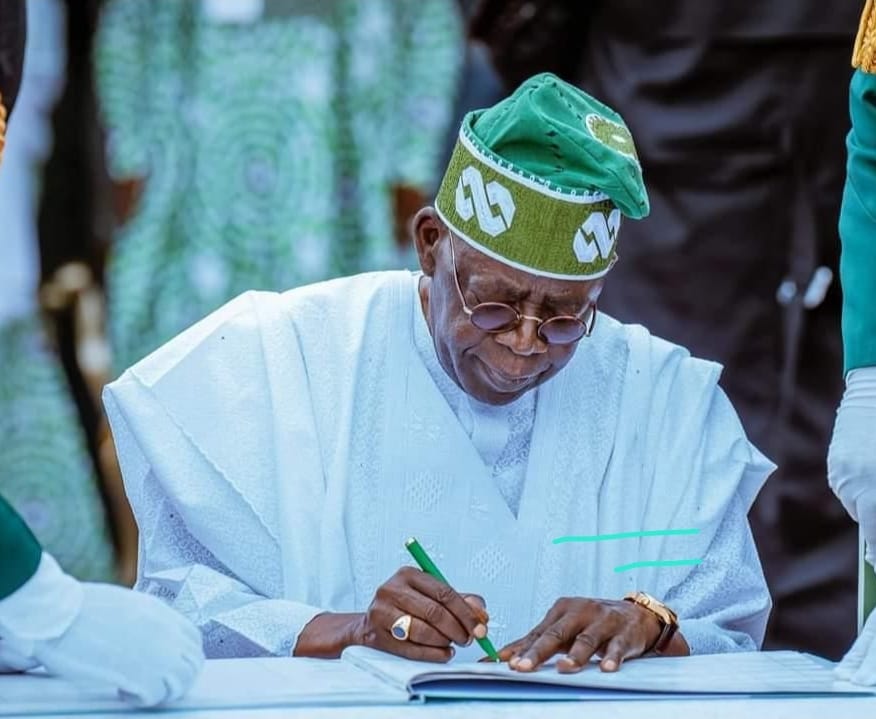
The Federal Government has approved a monthly transport intervention of N70,000 for public service workers across all levels for six months, beginning in November 2026, as part of efforts to cushion the impact of rising living costs.
The approval was among the resolutions reached at a conciliation meeting between the Federal Government and the leadership of the Nigeria Labour Congress (NLC) in Abuja on Tuesday, October 27, 2026.
The meeting was convened amid renewed pressure from organised labour over workers’ welfare, the rising cost of living and the implementation of outstanding agreements.
According to a memorandum of understanding signed at the end of the meeting, the government also approved the payment of outstanding peculiar allowance arrears, effective from May 1, 2026. The arrears are to be paid in three equal monthly instalments beginning in November.
However, the Federal Government and the NLC failed to reach an agreement on the effective date for implementing the national minimum wage, although both parties agreed that the Minimum Wage Negotiation Committee would be constituted and begin meetings immediately.
The resolutions were contained in a memorandum of understanding signed by the Director-General of Budget, Timi Yakubu; NLC President, Joe Ajaero; the Permanent Secretary of the Service Welfare Office in the Office of the Head of the Civil Service of the Federation, Dr Garba Abdul S.U.; and the Minister of Labour and Employment, Dr Muhammad Maigari Dingyadi.
Titled ‘Resolutions Reached at a Conciliation Meeting Held at Federal Ministry of Labour and Employment Between the Federal Government and the Leadership of Nigeria Labour Congress on Tuesday, 27th October, 2026’, the document outlined agreements on transport support, peculiar allowance arrears, minimum wage negotiations, health workers’ remuneration, tax relief and hazard allowances for agricultural officers.
The meeting followed an earlier conciliation session held on October 22, 2026, by the Federal Ministry of Labour and Employment to address disagreements between the government and organised labour.
On the transport intervention, the memorandum stated: “That transport intervention of Seventy Thousand Naira (N70,000) commencing from November 2026 would be paid across all levels for a period of six months.”
However, the document did not specify the exact payment dates or explain the administrative arrangements for disbursing the intervention.
The agreement comes amid persistent concerns over transportation costs and the prices of essential goods following the removal of the petrol subsidy in May 2023, which contributed to increased living costs across the country.
Organised labour has repeatedly called for measures to ease the financial pressure on workers, including improved remuneration, reductions in petrol prices and the implementation of outstanding welfare agreements.
FG, NLC Disagree Over Minimum Wage Implementation Date
Despite the agreements on transport support and allowance arrears, the effective date for implementing the national minimum wage remains unresolved.
The memorandum stated that both parties had agreed to constitute the Minimum Wage Negotiation Committee and commence meetings immediately.
“It was agreed that the Minimum Wage Negotiation Committee would be constituted and commence meeting immediately. It should however be noted that there is a disagreement on the effective date of implementation,” the document stated.
The disagreement leaves a key issue unresolved, although both parties have committed to beginning negotiations without delay.
The memorandum also recorded the NLC leadership’s dissatisfaction with the government’s handling of its demands.
It stated that the Congress leadership “expressed concern over the Federal Government’s attitude towards the above issues.”
In response, the government “stated that it fully respect the right of the Congress to advocate for improved working conditions for Nigerian workers, and is genuinely trying to address every aspect of it through a structured intervention.”
The national minimum wage became a major point of contention in 2024 when the Federal Government and organised labour negotiated an increase in the statutory monthly minimum wage from N30,000 to N70,000. The new rate was subsequently enacted into law.
The latest agreement provides for further discussions on the implementation date but does not specify the particular proposal under consideration or when negotiations are expected to conclude.
Other issues listed in the memorandum, including health workers’ remuneration, tax relief and hazard allowances for agricultural officers, also form part of the broader discussions between the government and organised labour.
While the approved transport intervention and allowance arrears represent agreed measures, the unresolved minimum wage implementation date and other outstanding matters remain subject to further negotiations and administrative action.


 Follow Us on Google Discover









Fleetwood beat Arsenal 5-3 on penalties to reach EFL Cup quarter-finals

Cameroon suspends Issa Tchiroma Bakary’s opposition party for three months

Niger: Woman, four students killed in crash involving Gov Bago’s convoy in Minna

‘Don’t approve a single dollar’ — Atiku warns NASS over Tinubu’s $20.52bn, €1.045bn borrowing plan

Akinwunmi Adesina meets Tinubu, says economic reforms yielding results, urges focus on growth

‘There’s nothing like Rainbow Coalition in Imo State’, Gov Uzodimma warns supporters, vow action

BREAKING: FG approves N70,000 monthly transport allowance for workers for six months

APC state youth leaders deny receiving SUVs from Dayo Israel

37 miners’ deaths: Presidential panel blames extreme heat, overcrowding in NSCDC custody

2027: Court reserves judgment in SDP suit challenging INEC over Adebayo’s candidacy

BREAKING: Tinubu seeks Senate approval for $20.51bn, €1.045bn external borrowing

Troops repel terrorists, recover two AK-47 rifles in Benue

Reps move to tighten rules on electric, CNG vehicle imports in Nigeria

Troops kill 8 suspected terrorists, rescue 3 kidnap victims in Katsina, Kaduna, Zamfara
Tinubu seeks National Assembly approval to settle N269.44bn outstanding debts

US Pastor marries second wife, describes monogamy as unbiblical

‘Ebola may force postponement of 2027 elections’ – NCDC

FIFA U-17 Women’s World Cup: Round of 16 fixtures, dates, kick-off times revealed

Outrage as viral video shows JIBWIS members demanding AK-47s, threaten to kill ‘Infidels’ in Enugu, Jos on a Sunday
BREAKING: FG approves N70,000 monthly transport allowance for workers for six months

Why data may be used even when mobile data is switched off – MTN

Lone Ebola patient to be flown out of Nigeria for further treatment
Reaction trails as APC youth leader Dayo Israel gifts 2026 Toyota Prado SUVs to party officials

Bandits storm Kaduna community, abduct two farmers

“I know what I came into office to do” — President Tinubu

INEC bows to pressure, makes preliminary Voters’ Register available online for public inspection

Agbara Nla: The Return hits N408.3m, ranks as Nollywood’s second-biggest film of 2026

BREAKING: Harry Kane wins 2026 Ballon d’Or

NDC accuses Borno Assembly candidate of supporting Atiku’s ADC campaign, expels him
