
Business News
Naira slums to N1,400/$

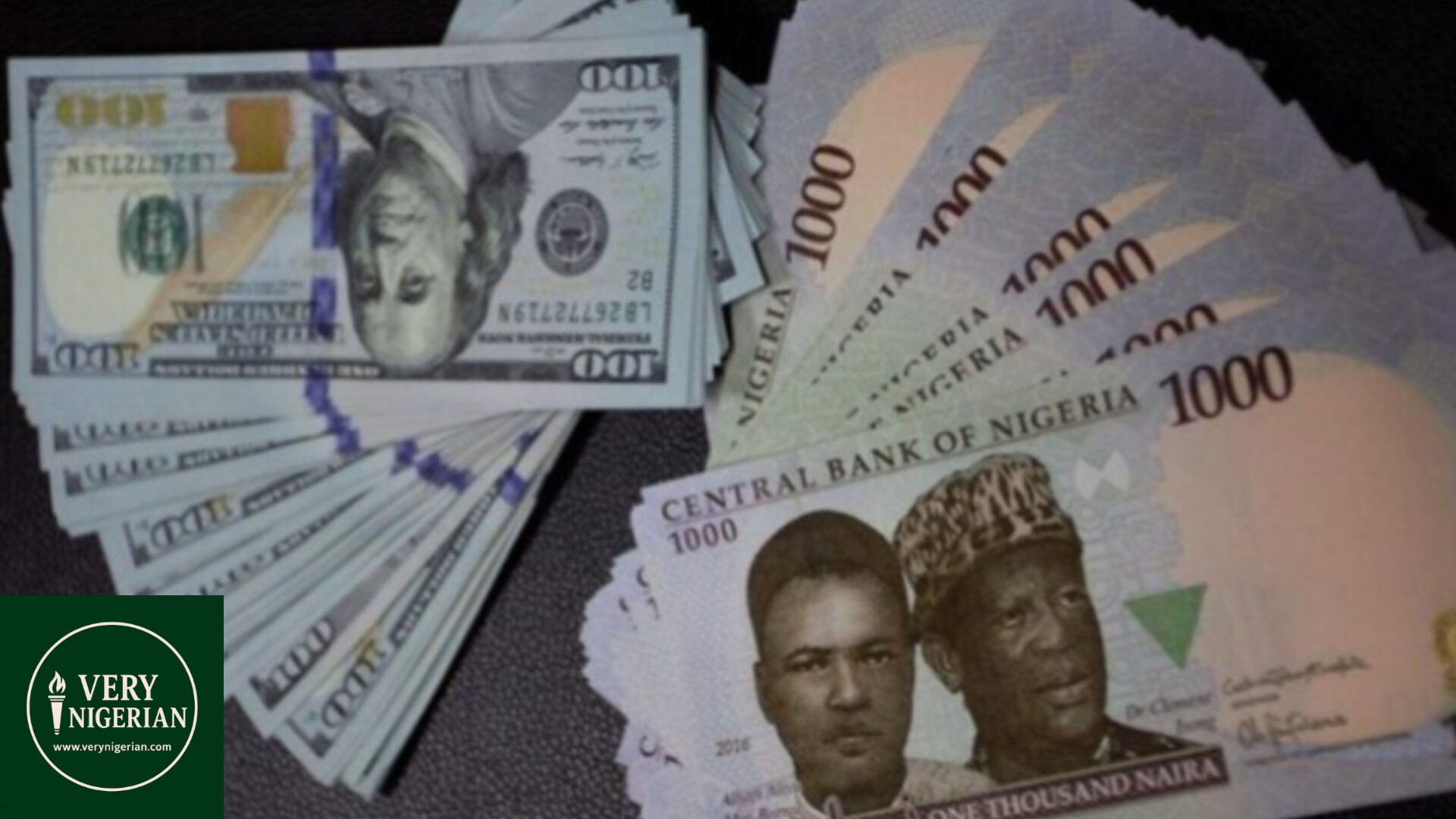
The naira weakened further against the United States dollar at the official foreign exchange market on Thursday, closing at N1,388/$ despite a significant increase in dollar transactions.
The latest depreciation represents a loss of N8.01, or 0.58 per cent, compared with the N1,379.99/$ recorded at the close of trading on Wednesday.
Data published by the Central Bank of Nigeria (CBN) showed that the local currency traded at an intraday high of N1,397/$ and a low of N1,370/$ before settling at N1,388/$.
The decline occurred as foreign exchange turnover increased to $800.31 million across 184 transactions, compared with $502.88 million recorded in 148 transactions during the previous trading session.
The figures represent a 59.1 per cent increase in dollar transactions, suggesting stronger activity in the official market. However, the increased turnover did not prevent the naira from losing further value.
The depreciation also widened the gap between the official and parallel market exchange rates.
Currency dealers quoted the dollar at an average of N1,439 on Wednesday, while some parallel market rates reportedly reached N1,460. Based on Thursday’s official closing rate, the difference stood at N51 and N72 per dollar, respectively.
The latest decline extends the naira’s depreciation in November. The currency weakened from N1,346.01/$ on November 2 to N1,350.45/$ on November 5 and N1,353.50/$ on November 10.
It subsequently closed at N1,363/$ on November 17, before falling to N1,379.99/$ on November 18 and N1,388/$ on Thursday.
The pressure has coincided with a significant decline in foreign exchange inflows into the Nigerian economy.
A report by Coronation Merchant Bank’s research subsidiary showed that total foreign exchange inflows fell to $807.6 million last week from $2.48 billion in the preceding week.
This represented a 67.4 per cent decline and the lowest weekly inflow in at least five weeks.
Analysts have partly linked the naira’s weakness to reduced dollar supply, speculative demand and possible capital outflows ahead of the 2027 general elections.
Although the CBN has continued to provide foreign exchange to support liquidity in the market, the latest figures indicate that increased trading activity has not translated into sufficient stability for the local currency.
Nigeria’s external reserves have also recorded slower growth in recent weeks after rising steadily for several months.
Naira undervalued, may strengthen to N1,127/$ — Fasua
Meanwhile, the Special Adviser to the President on Economic Affairs, Dr Tope Fasua, has described the naira as undervalued, saying it could strengthen to N1,127 against the dollar if the country sustains reserve growth, improves foreign exchange supply and attracts productive investments.
Fasua said the International Monetary Fund had projected about three months earlier that the naira could trade at N1,127 to the dollar.
He argued that Nigeria needed to sustain its economic reforms and increase domestic production to support the currency.
He spoke on Thursday at the National Growth and Development Forum 2026 in Abuja.
“The IMF itself said about three months ago that the naira could be trading at N1,127 to the dollar. So the naira has now become undervalued,” he said.
Fasua also highlighted improvements in some economic indicators, saying Nigeria’s economy grew by 4.43 per cent in the second quarter of 2026, while inflation declined to 14.06 per cent in October from 20.9 per cent a year earlier.
He added that external reserves exceeded $55 billion in October, when the naira traded at N1,346 to the dollar at the end of the month.
However, the country’s gross external reserves have recently recorded a slight decline. Figures cited in the report showed that reserves fell from $54.76 billion to approximately $54.71 billion as of Wednesday.
The reserves had reportedly reached about $55.26 billion in October before falling below $55 billion on November 9.
Despite the recent decline, Nigeria’s external reserves remain above their level at the beginning of 2026.
Fasua maintained that a stronger currency must be supported by economic productivity rather than administrative measures.
“A stronger naira must be earned through a stronger economy. It cannot be legislated into existence,” he said.
Experts identify election spending, policy uncertainty as possible factors
The Chief Executive Officer of the Centre for the Promotion of Private Enterprise, Dr Muda Yusuf, identified increased political spending, uncertainty over economic reforms and speculative demand for foreign exchange as possible factors behind the naira’s recent depreciation.
Yusuf said demand for dollars could rise as political activities intensify ahead of the 2027 general elections, particularly in the parallel market, where some transactions involving cash are difficult to trace.
According to him, political spending could increase demand for physical foreign currency because some transactions may not pass through formal banking channels.
“You know that political spending and demand for dollars, especially cash, are likely to be much higher, putting pressure on the parallel market,” he said.
Yusuf also expressed concern that disagreements among political parties over the continuation of the government’s economic reforms could create uncertainty for investors.
He explained that concerns about a possible reversal of some policies after the elections might influence investment decisions and encourage capital outflows.
“We are having different perspectives now as to whether people believe in the reforms and whether they will reverse the reforms. Political parties are saying that they will reverse some of the reforms. That may also be creating some issues around political risk,” he said.
The economist warned that investors who were uncertain about Nigeria’s future policy direction could withdraw their investments.
“If you have political risk, then you have the risk of capital outflows. If you are not sure that the environment will remain as stable as it has been, the risk of capital outflows is also a possibility,” he added.
He further identified speculative demand as another possible factor, explaining that expectations of further depreciation could prompt individuals and businesses to purchase dollars in anticipation of higher exchange rates.
“People feel that the exchange rate may depreciate, and therefore they now begin to quickly buy up for speculative purposes,” Yusuf said.
Although he expressed concern about the recent movement, Yusuf said it was too early to conclude that the naira had entered another prolonged period of depreciation.
CBN’s reserve management also affects exchange rate — Okeke
Another economist, Dr Marcel Okeke, said the naira’s recent movements should be considered within the context of the CBN’s managed exchange rate system.
Okeke argued that Nigeria was no longer operating a completely floating exchange rate regime, as monetary authorities continued to intervene to manage movements in the foreign exchange market.
He explained that although the country’s external reserves had risen to about $55 billion, the funds could not be deployed entirely to defend the naira because they served several other economic purposes.
“External reserves have so many purposes. Because it is there, we cannot just take it and pump it into managing the exchange rate,” he said.
According to him, the size of a country’s reserves also influences international confidence in its economic strength and ability to meet external obligations.
Okeke added that some exchange rate fluctuations were normal under a managed system, provided they remained within acceptable limits and did not become excessively volatile.
He also identified election-related spending as a possible source of additional dollar demand, arguing that some politicians might prefer holding foreign currency because of its perceived value and acceptability.
He said increased political spending and currency conversions ahead of the 2027 elections could add further pressure to the foreign exchange market.


 Follow Us on Google Discover



2027: Opposition Coalition reschedules second summit to Nov 30

BREAKING: Court sacks Atiku’s ally Tukur Ribadu as Adamawa ADC guber candidate, orders INEC to restore Omar Suleiman candidacy

Court rejects Atiku’s bid to tender fresh evidence in suit seeking Tinubu’s disqualification

Tension as gunmen storm NDC secretariat, attack candidates, destroy party materials in Edo

INEC makes 86,931 PVCs available for collection in Kogi

JUST-IN: FIFA President Gianni Infantino arrives in Warri for Stadium commissioning

Naira slums to N1,400/$

‘He will lose the election’ – Kano fortune teller predicts Gov Yusuf’s fate ahead of 2027

Atiku urges INEC to open AI system to independent audit ahead of 2027 polls

EFCC presents 13 new evidence against ex-power minister Olu Agunloye over $6bn Mambilla project

Court bars Jimmy Odukoya from posing as Senior Pastor of Fountain of Life Church

Enugu business community mourns as billionaire Festus Oshaba-Onuh dies in fatal crash

2027: Peter Obi will disgrace Soludo in Anambra – Dele Momodu

Peter Obi cannot be more popular than Buhari – Shettima tells Igbos

Tinubu confers GCON on Senior Advocate Wole Olanipekun

BREAKING: INEC releases final 2027 list, names Atiku, Amaechi as ADC candidates (Full List)

EFCC arraigns Lagos socialite Halimat Tejuosho over alleged N1.1bn scam to secure victim NNPC GMD position

2027: ADC files 17-ground appeal against INEC over Atiku’s candidacy

After criticism, Tinubu expands campaign tour to 19 states, removes Bauchi, adds Katsina, Zamfara, Imo, Kwara, others

‘His tough reforms will bring lasting prosperity’ — Wike begs Nigerians to give Tinubu another chance

N100m Housing Loans: What Nigerians need to know about Tinubu’s mortgage scheme

2027 AFCON Qualifiers: With two games remaining, what Nigeria now need to qualify

JUST IN: Presidential assent in view as Tinubu receives State Police Bill

‘Nigerians must go’ – Anti-migrant protesters demand entry ban in South Africa

Anthony Joshua announces arrival of baby girl with longtime partner Osbourne

2027: ADC Leaders are lazy, entitled politicians – NDC campaign DG

Peter Obi extends Washington visit, meets US senator James Lankford

NLC, TUC end rift over FG’s N70,000 transport allowance for workers
Why I regret keeping my father’s successor video – Jimmy Odukoya
