
Politics
Atiku urges INEC to open AI system to independent audit ahead of 2027 polls


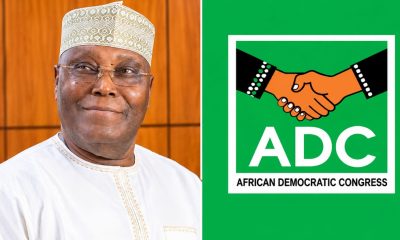
Atiku Abubakar, presidential candidate of the African Democratic Congress (ADC), has called on the Independent National Electoral Commission (INEC) to publicly disclose any artificial intelligence (AI) system it intends to use in processing polling unit results ahead of the 2027 general elections.
Atiku also demanded that any such technology be subjected to independent scrutiny to ensure transparency and prevent possible interference with the electoral process.
In a statement issued on Thursday by Phrank Shaibu, Director of Strategic Communication of the ADC Presidential Campaign Council, the former vice-president said Nigerians deserve to know whether an automated system would have the power to delay, reject or interfere with the transmission of election results before voting begins.
Atiku disclosed that he had written to the INEC chairman on behalf of his party and other democratic stakeholders, requesting full transparency regarding the commission’s planned use of artificial intelligence.
He said his demands include algorithmic transparency, an independent audit of the technology and clearly defined rules to ensure proper human oversight of any automated system used during the elections.
The call follows INEC’s announcement that it would integrate AI and intelligent document processing into the process linking its data verification and authentication system (DIVAS) with the INEC result viewing portal (IReV).
“If an algorithm can flag a polling unit result sheet, the public deserves to know what triggers that flag, who set the threshold, who can change it and what happens to the result afterward,” the statement reads.
The ADC candidate warned that result sheets could be flagged or delayed because of poor lighting, unfamiliar handwriting or worn paper, adding that such decisions could affect voters’ rights.
“Nor can INEC leave room for a system that treats errors in one area as harmless while treating similar errors elsewhere as grounds to delay results,” he said.
“Such decisions would affect real votes, cast by real people, whose rights cannot be made dependent on secret software settings.”
Atiku asked INEC to publish the system’s technical and operational framework, including the sources of its training data, the criteria for flagging discrepancies, and the identities of its developers and third-party vendors.
He also demanded that independent cybersecurity experts, political party technology representatives and civil society technologists be granted access to the source code, training data and decision logs to conduct a meaningful audit before the nationwide mock accreditation scheduled for November 28, 2026.
The former vice-president called on the commission to publish a clear procedure for handling result sheets flagged by the system, including who reviews them, how decisions are recorded, how political parties are notified and how errors can be promptly challenged.
He said AI must remain an administrative aid under human supervision and should not have the power to automatically delete, alter or permanently block a result.
“The polling unit result sheet, Form EC8A, records what happened where the people voted. INEC must publicly reaffirm the legal status of the physical form completed and signed at the polling unit and explain how it will resolve any conflict between that document and an AI assessment,” he said.
“A machine’s verdict cannot be allowed to quietly displace the evidence witnessed by voters and party agents.”
Atiku also demanded that political parties be granted real-time monitoring access through a dedicated dashboard or suitable observer interface to enable them to detect unusual patterns of flagging, delays or blocked uploads during elections.
He called on the national assembly to summon INEC’s leadership and ICT directorate to provide public explanations on the system’s design, safeguards and audit arrangements.
The former vice-president urged election observers and international partners to monitor the digital handling of results alongside events at polling units.
He added that voters should lawfully document results as announced and displayed at their polling units, providing a public record against which uploaded results can be checked.


 Follow Us on Google Discover





2027: Opposition Coalition reschedules second summit to Nov 30

BREAKING: Court sacks Atiku’s ally Tukur Ribadu as Adamawa ADC guber candidate, orders INEC to restore Omar Suleiman candidacy

Court rejects Atiku’s bid to tender fresh evidence in suit seeking Tinubu’s disqualification

Tension as gunmen storm NDC secretariat, attack candidates, destroy party materials in Edo

INEC makes 86,931 PVCs available for collection in Kogi

JUST-IN: FIFA President Gianni Infantino arrives in Warri for Stadium commissioning

Naira slums to N1,400/$

‘He will lose the election’ – Kano fortune teller predicts Gov Yusuf’s fate ahead of 2027

Atiku urges INEC to open AI system to independent audit ahead of 2027 polls

EFCC presents 13 new evidence against ex-power minister Olu Agunloye over $6bn Mambilla project

Court bars Jimmy Odukoya from posing as Senior Pastor of Fountain of Life Church

Enugu business community mourns as billionaire Festus Oshaba-Onuh dies in fatal crash

2027: Peter Obi will disgrace Soludo in Anambra – Dele Momodu

Peter Obi cannot be more popular than Buhari – Shettima tells Igbos

Tinubu confers GCON on Senior Advocate Wole Olanipekun

BREAKING: INEC releases final 2027 list, names Atiku, Amaechi as ADC candidates (Full List)

EFCC arraigns Lagos socialite Halimat Tejuosho over alleged N1.1bn scam to secure victim NNPC GMD position

2027: ADC files 17-ground appeal against INEC over Atiku’s candidacy

After criticism, Tinubu expands campaign tour to 19 states, removes Bauchi, adds Katsina, Zamfara, Imo, Kwara, others

‘His tough reforms will bring lasting prosperity’ — Wike begs Nigerians to give Tinubu another chance

N100m Housing Loans: What Nigerians need to know about Tinubu’s mortgage scheme

2027 AFCON Qualifiers: With two games remaining, what Nigeria now need to qualify

JUST IN: Presidential assent in view as Tinubu receives State Police Bill

‘Nigerians must go’ – Anti-migrant protesters demand entry ban in South Africa

Peter Obi extends Washington visit, meets US senator James Lankford

Anthony Joshua announces arrival of baby girl with longtime partner Osbourne

2027: ADC Leaders are lazy, entitled politicians – NDC campaign DG

NLC, TUC end rift over FG’s N70,000 transport allowance for workers
Why I regret keeping my father’s successor video – Jimmy Odukoya
