
National News
Nigeria, India target $15bn trade as Modi pushes for more crude imports

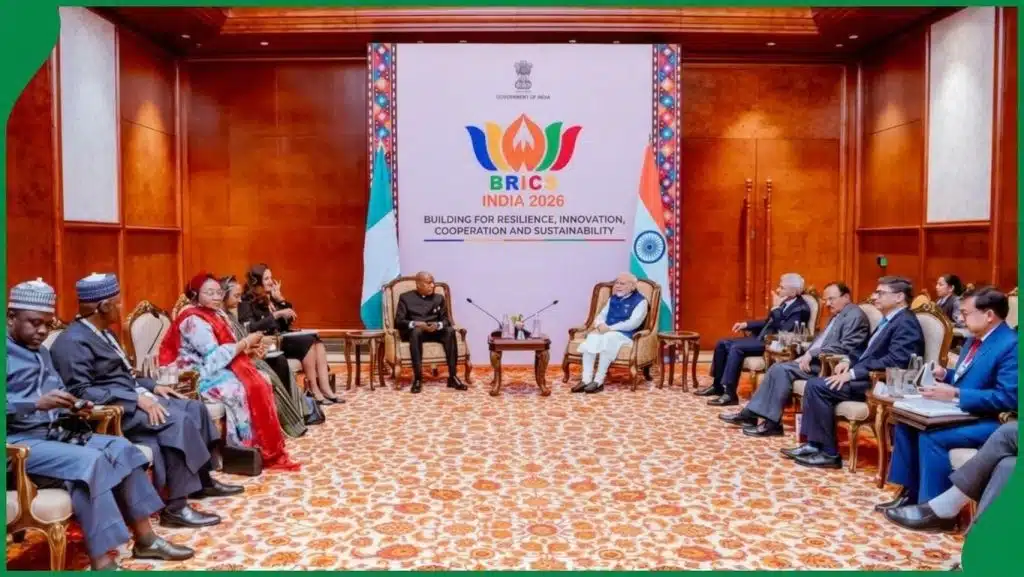
Nigeria and India are seeking to rebuild bilateral trade between both countries to nearly $15 billion, with Indian Prime Minister Narendra Modi calling for renewed purchases of Nigerian crude oil.
The development followed a bilateral meeting between Vice President Kashim Shettima and Modi on the sidelines of the recently concluded BRICS Leaders’ Summit in New Delhi, India.
According to a statement issued on Monday, September 14, by Shettima’s media aide, Stanley Nkwocha, Modi called for increased crude oil purchases from Nigeria as part of efforts to revive trade between both countries.
The Indian Prime Minister said stronger energy cooperation could help restore commercial exchanges between Nigeria and India to levels previously recorded.
The statement noted that the renewed push builds on a longstanding economic relationship in which crude oil has historically constituted a significant portion of India’s imports from Nigeria.
Bilateral trade between the two countries reached approximately $14.95 billion in the 2021–2022 financial year but declined to $7.13 billion in 2024–2025 following a reduction in India’s purchases of Nigerian crude.
The trade volume subsequently increased to about $9 billion in 2025–2026, according to figures attributed to the Indian High Commissioner to Nigeria, Abhishek Singh.
Responding to Modi’s request, Shettima said the Nigerian Government would examine the proposal as part of broader efforts by President Bola Ahmed Tinubu’s administration to attract investments and strengthen strategic economic partnerships.
“Nigeria would examine the request as part of broader efforts by President Bola Ahmed Tinubu’s administration to attract investment and build strategic partnerships capable of expanding the country’s productive capacity,” the Vice President said.
Shettima said Nigeria was interested in expanding its relationship with India beyond the traditional exchange of commodities to partnerships that promote domestic production, value addition and job creation.
He identified pharmaceuticals, defence and digital technology as key sectors where both countries could deepen cooperation through investment and skills transfer.
“The President Tinubu administration is particularly interested in moving Nigeria’s relationship with India beyond the traditional exchange of commodities towards investments that support domestic production and value addition,” Shettima said.
The two leaders also agreed to strengthen private-sector engagement, with discussions covering fintech, digital technology and digital public infrastructure.
The Vice President’s delegation also highlighted opportunities for greater cooperation in other areas of mutual interest as Nigeria seeks to diversify its economic partnerships.
Meanwhile, the Minister of Women Affairs, Imaan Sulaiman-Ibrahim, said Nigeria was studying India’s women-led self-help group model as part of efforts to strengthen financial inclusion and grassroots entrepreneurship.
She said the experience could help Nigeria expand economic opportunities for women and bring more women into productive economic activities.
“Women’s economic empowerment is fundamental to our ambition of building a $1 trillion economy. We must deliberately bring millions more Nigerian women into productive economic activity,” she said.
The renewed engagement between Nigeria and India comes as both countries seek to reverse the decline in bilateral trade and broaden their economic relationship beyond crude oil to investment, technology, manufacturing and human-capital development.


 Follow Us on Google Discover









‘I Don’t Want to Be Called Africa’s Richest Man Again’ — Dangote

600 Northern Lecturers who attended Tinubu endorsement show must be bared 2027 election duties – ADC warns INEC

BBNaija S11: Barry wins HoH title, becomes first finalist

Ondo students set 14-day deadline for Aiyedatiwa over ASUU strike

Nigeria, India target $15bn trade as Modi pushes for more crude imports

2027: Oba of Lagos backs Tinubu, says ‘ no vacancy in Aso Rock’

2027: NDC says Nigerians can fund party with contributions as low as N1,500

Banditry Allegation: ‘I have nothing to hide’ — Sen. Buba submits self to DSS, Police for probe

FG orders immediate release of funds to regional development commissions

El-Rufai’s former allies return to APC, endorse Uba Sani ahead of 2027

Food and Agriculture Organization Of the United Nations (FAO-UN) announces 4 recruitment vacancies across Nigeria (How to Apply)

International Breweries Recruitment: 5 Job vacancies across Nigeria (How to Apply)

ADC Leadership Crisis: Court adjourns Gombe’s suit against David Mark, Aregbesola

Soludo still servicing loans inherited from Peter Obi, Obiano — Anambra Govt

Nwifuru fires back at Cubana Chief Priest, calls him ‘Noisemaker, Nobody’
International Breweries Recruitment: 5 Job vacancies across Nigeria (How to Apply)
Food and Agriculture Organization Of the United Nations (FAO-UN) announces 4 recruitment vacancies across Nigeria (How to Apply)

2027 Elections: INEC publishes final list of 1,195 Senate, 3,213 Reps candidates (Full List)

2027: Over 600 Northern Lecturers endorse Tinubu’s re-election bid

Average Nigerian can survive on N3,000 daily, says Reno Omokri
2027: NDC says Nigerians can fund party with contributions as low as N1,500

Hon. Desmond Elliot kneels down, begs Gbajabiamila for forgiveness

15 feared killed as gunmen strike Plateau communities

Yamal double fires Barcelona to 4-2 victory over Levante

Haaland scores as 10-man Man City beat Manchester United 1-0

Burna Boy’s ‘Praise the Sky’ Potshot missed true Christians: by Ugochukwu Ugwuanyi

Tinubu’s FBI records are not evidence of criminal history, it won’t be released – Reno Omokri

BBNaija Season 11: Abi, Araga evicted from ‘Show Ya Sef’ House

By attacking APC Govs, you are sowing seed of discord like you did in PDP, join APC or step aside – Onoh tells Wike
