National News
Senate urges INEC to disqualify candidates linked to electoral violence

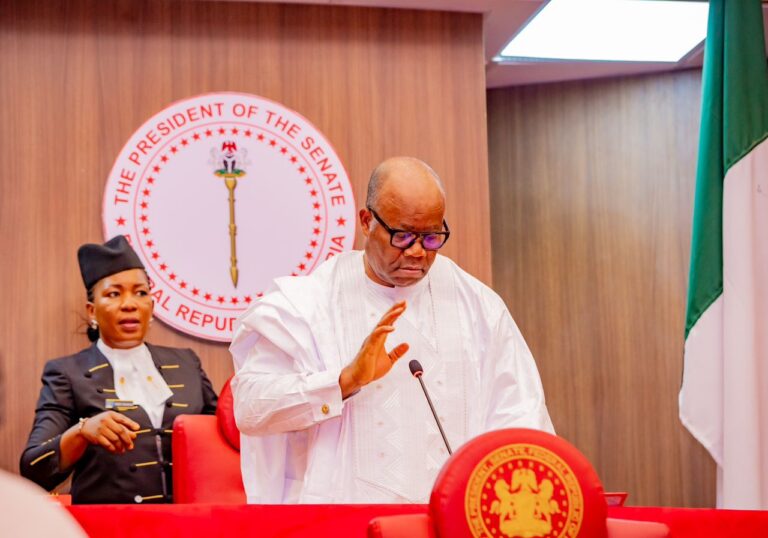
The Nigerian Senate has called on the Independent National Electoral Commission (INEC) to disqualify candidates whose supporters are found to have instigated or participated in electoral violence, provided there is an established court conviction and the relevant provisions of the 2026 Electoral Act are satisfied.
The lawmakers also condemned the growing cases of political violence across the country, warning that attacks on political leaders, supporters and campaign gatherings could threaten national security, democratic participation and the peaceful conduct of the 2027 general elections.
The resolutions followed a motion sponsored by Senator Abdul Ningi, representing Bauchi Central, on the urgent need to address rising political violence, intolerance and attacks on political figures and their supporters.
During deliberations on the motion on Tuesday, the Senate urged governors to stop denying opposition parties access to public facilities, including stadiums, hotels and other venues under their control, for political activities.
It also called on security agencies to conduct impartial and transparent investigations into reported incidents of political violence in the Federal Capital Territory, Edo, Delta and Sokoto states, identify those responsible and prosecute them where evidence supports such action.
The lawmakers further urged the Federal Government to direct the Inspector-General of Police and other security agencies to strengthen security arrangements for political leaders, candidates, supporters and campaign gatherings nationwide.
They also called for effective early-warning and rapid-response mechanisms to prevent violence ahead of the 2027 elections.
Speaking during the debate, Senate President Godswill Akpabio said INEC should enforce the provisions of the 2026 Electoral Act against candidates and supporters linked to electoral violence.
“Any candidate or supporter caught instigating violence, then INEC has a right to disqualify,” Akpabio said.
He urged the electoral commission to ensure that the law was implemented without discrimination against any political party.
Akpabio also referred to Sections 121 to 128 of the Act, which he said outlined electoral offences and penalties, including intimidation and the snatching of Bimodal Voter Accreditation System (BVAS) machines, ballot boxes and other electoral materials.
According to him, the legislation provides prison terms ranging from 12 months to five years, without an option of a fine for aggravated offences involving acts such as stoning, physical attacks and the use of dangerous weapons.
He also cited Section 92, which he said empowers INEC to suspend elections in areas affected by violence and reschedule them within 24 hours.
The Senate President further referred to the Electoral Offences Commission Bill 2025, which he said was passed alongside the Electoral Act to establish a dedicated mechanism for addressing offences such as vote-buying, electoral violence and attacks on election officials.
Akpabio said the responsibility for implementing the provisions now rested with the executive arm of government.
In his presentation, Ningi expressed concern over a series of reported attacks involving political figures and campaign supporters.
He cited the November 13 incident involving President Bola Tinubu’s convoy shortly after the President observed Jumu’ah prayers at the Shehu Shagari Central Mosque in Garki, Abuja. The convoy was reportedly attacked with stones and other objects, leaving vehicles damaged and security personnel injured.
The senator also recalled reported attacks on Peter Obi and other political stakeholders during a political gathering in Benue State, as well as the disruption of a procession involving Nigeria Democratic Congress (NDC) supporters and the Obidient Movement in Asaba, Delta State, on November 7.
The Asaba incident reportedly resulted in one death and five injuries.
Ningi also mentioned the reported attack on the convoy of former Vice-President and African Democratic Congress (ADC) presidential candidate, Atiku Abubakar, in Sokoto State.
He warned that the incidents reflected a troubling pattern of political intolerance, intimidation and violence capable of undermining public confidence in the electoral process and discouraging citizens from exercising their democratic rights.
Senator Binos Yaroe, representing Adamawa South, proposed an additional resolution urging state governors to guarantee equal access to public facilities for all political parties and candidates.
He argued that restricting opposition parties from using public venues could undermine the principle of a level playing field and trigger unnecessary political conflicts.
Senator Sampson Ekong, representing Akwa Ibom South, also urged the Ministry of Information and the National Orientation Agency (NOA) to intensify public enlightenment campaigns against political violence.
Ekong said legal provisions alone would not adequately address the problem without sustained public education. He urged the agencies to discourage the recruitment and manipulation of young people for violent political activities.
Contributing to the debate, Senator Ali Ndume, representing Borno South, condemned the attack on Tinubu’s convoy, describing it as an embarrassment to the country.
He said political disagreements and public anger should be expressed through lawful means, rather than violence.
Ndume also commended the President for directing the release of those arrested over the incident, describing the decision as an act of statesmanship.
He proposed that security agencies should prohibit the carrying of dangerous objects, including knives and sticks, at campaign venues.
The lawmaker also recommended the establishment of mobile courts to handle cases involving people arrested for carrying weapons or engaging in violence during political campaigns.
According to him, such courts should operate across party lines, with offenders prosecuted and convicted where sufficient evidence exists.
Ndume further expressed concern over political slogans such as “Tinubu Must Go”, “Atiku Must Go” and “Obi Must Go”, describing them as potentially militant and calling for restraint in political campaigns.
Senator Sumaila Kawu, representing Kano South, supported Ndume’s recommendations, particularly the proposal for special courts to prosecute people found carrying dangerous weapons during campaign activities.
However, he challenged lawmakers to examine their own conduct and the behaviour of their supporters, questioning why some political candidates were surrounded by supporters carrying dangerous objects despite existing laws against electoral violence.
He said lawmakers must take responsibility for ensuring that political activities complied with the laws they had enacted.
The Senate also mandated its Committees on National Security and Intelligence, Police Affairs, and INEC to engage relevant institutions and report back within one week on measures to prevent political violence and protect the 2027 electoral process.


 Follow Us on Google Discover



JAMB introduces online process for change of course, institution, ends physical office visits

City Boy Movement dismisses Mas’ud Rahamaniyya as Sokoto director

NLC, TUC end rift over FG’s N70,000 transport allowance for workers

Super Eagles rise to 29th in latest FIFA world rankings, fifth in Africa

US strategist Diana London deletes posts on Tinubu interview amid reports of receiving $4.5m lobbying fee from Nuhu Ribadu

‘Congress did not meet with or endorse him’ — Atiku US lobbyist speaks on Peter Obi Washington visit

Xi Jinping welcomes Trump in China ahead of historic meeting with Putin

2027: Court upholds Suswam’s candidacy, declares him APC senatorial flagbearer in Benue

Government neglect and poverty fueling deforestation, climate heat in Nigeria, Official warns

‘Don’t allow political ambition to tear Nigeria apart’ — Jonathan warns politicians ahead of 2027 poll

Senate urges INEC to disqualify candidates linked to electoral violence

Abia Govt sacks Enyimba Management, Technical Crew over poor performance

U-23 AFCON Qualifiers: Olympic Eagles thrash DR Congo 4-0, advance 4-2 on aggregate

‘No Nigerian President has developed the North like Tinubu’ — Yari

I can go home, sleep comfortably, Allah gives power to whom he pleases – Tinubu

Nafiu Bala resumes as ADC national chairman, notifies INEC

BREAKING: Pro-Biafra agitator Simon Ekpa released from Finnish prison

No federal job in 2027 – Nigerian govt bars all agencies from hiring

FG gives universities three months to recover excess payments to staff

₦100m Extortion, ₦2bn Transaction: Reps probe mining marshals, summon NSCDC boss

Fani-Kayode faces diplomatic reprimand as South Africa invokes Vienna Convention, summons him over livestream controversy

He is a true leader, He succeeded where others failed – US Congressmen praise Peter Obi in Washington

2027: ‘Reject rice politics, don’t sell your votes for food’ — Ex-Anambra gov, Obiano warns Nigerians

Fountain of Life Church removes Jimmy Odukoya as Senior Pastor

‘Let Tinubu finish what he started, He deserves Second Term’ — Fashola tells Nigerians

BREAKING: Gov. Abba Yusuf confirms divorce from Kwankwaso’s daughter, says room is now open for other women to apply

Vanguard Online Editor Olufemi Ajasa dies at 44

2027: Ibrahim Kashim, Governorship Candidate in Bauchi dumps NDC, defects to APC

2027 Grammy Awards: Full list of nominees unveiled
