
Politics
My husband suffering political prosecution – El-Rufai’s wife Asia reports husband’s detention to international community

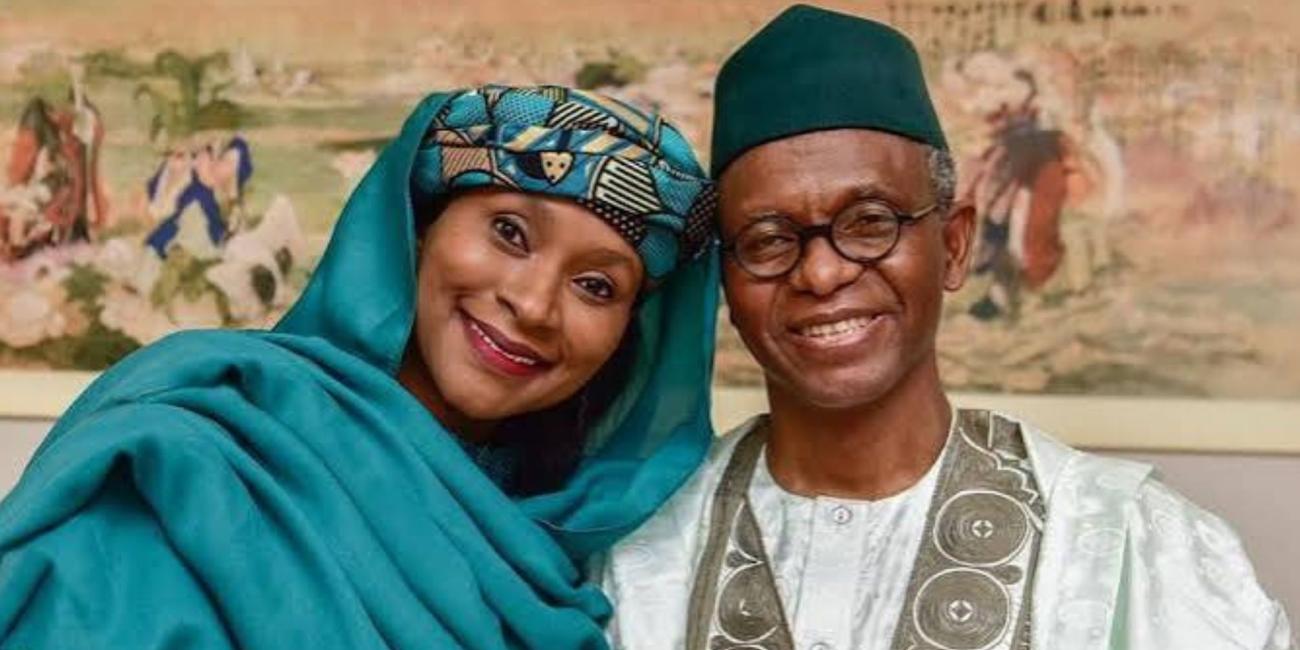
Asia Ahmad El-Rufai, lawyer and wife of former Kaduna State Governor, Nasir El-Rufai, has appealed to the international community to intervene over what she described as her husband’s prolonged detention, arguing that his continued incarceration amounts to “punishment before trial” and poses a threat to Nigeria’s democratic institutions.
In a public statement published by The Africa Report to mark what she described as the 150th day of El-Rufai’s detention, Asia said she was speaking “not as a politician, lawyer or diplomat, but as a wife, a mother and a Nigerian woman asking that the country my husband served for so many years remember its own conscience.”
Reflecting on the length of the detention, she said the period represented “five months of missed meals, missed prayers, missed proper mourning of his deceased mother, missed family conversations, interrupted medical care and moments we can never recover.”
Asia acknowledged that her husband had been a controversial public figure throughout his career, having served as Director-General of the Bureau of Public Enterprises, Minister of the Federal Capital Territory and Governor of Kaduna State.
“My husband is no stranger to controversy or public scrutiny… He has been praised, criticised, loved and opposed. That is democracy. But what is happening to him today is not democracy, and it is not accountability. It is punishment before trial,” she stated.
She alleged that her husband’s ordeal began with what she described as an attempted airport interception during which security officials allegedly seized his passport without a warrant and assaulted one of his aides.
According to her, El-Rufai voluntarily honoured an invitation by security authorities after receiving a summons but was detained despite assurances that he would be granted bail.
She further claimed that the former governor became seriously ill while in custody, alleging that he suffered bleeding from his nose and mouth and faced delays in receiving medical attention and prescribed medication.
Describing the emotional impact on the family, Asia said the experience had been deeply traumatic.
“Behind every headline about charges and investigations, there is a family waiting, praying and trying not to imagine the worst,” she said.
While insisting that no public official should be above the law, she maintained that investigations and prosecutions must be conducted fairly and transparently.
“If the state believes it has evidence, let it be presented before an impartial court, openly and fairly. But justice cannot be selective. It cannot be pursued through overlapping charges, repeated detention, impossible bail conditions and public humiliation designed to persuade the nation of guilt before a judge has heard the case,” she said.
Asia also expressed concern over what she described as the growing use of legal institutions for political purposes, arguing that there were increasing fears that Nigeria was drifting towards “lawfare”—the use of judicial processes as political weapons.
According to her, El-Rufai’s political differences with President Bola Tinubu’s administration and his exit from the All Progressives Congress (APC) should not justify what she described as prolonged persecution.
She further criticised what she called the complexity of the legal proceedings against her husband, alleging that multiple charges, overlapping allegations and repeated bail applications had effectively prolonged his detention.
Asia also referenced the cases of Joel Adoga, Jimi Lawal and Professor Abubakar Bello, claiming they had similarly suffered prolonged detention or restrictive bail conditions.
She appealed to Nigeria’s international partners, including foreign governments, multilateral organisations and human rights groups, to closely monitor the case and advocate for due process.
According to her, international partners should insist on transparent judicial proceedings, humane detention conditions, timely access to medical care and respect for judicial independence.
Addressing President Bola Tinubu directly, she urged him to allow the judicial process to proceed fairly.
“History is rarely kind to leaders who allow power to wound the innocent in order to silence the inconvenient. A strong government does not fear a strong critic,” she stated.
She added that if her husband was credibly accused, he should be allowed to defend himself before an impartial court with unrestricted access to his legal team, doctors and family members.
Concluding her appeal, Asia argued that the matter extended beyond her husband’s personal circumstances and had become a broader test of Nigeria’s democratic institutions.
“I do not ask the world to decide my husband’s innocence. I ask only that it stand for the principles Nigeria and its Constitution have promised to uphold—fairness, due process, humane treatment, judicial independence and equal protection before the law,” she said.


 Follow Us on Google Discover








2027: Kwankwaso a goat in sheep’s clothing, secretly working for Tinubu – Atiku Campaign Council

DSS arrests Maina’s fugitive son in Abuja, hands him over to EFCC

2027: Step down if you are not working for Tinubu – Deji Adeyanju dares Obi, Kwankwaso

2027: ‘I wont join my Uncle to support Tinubu’ – Davido says

Enugu NYSC death: NAFDAC debunks claims linking corps members death to fake drugs

33 Governors cannot be wrong in supporting Tinubu – Bayo Onanuga

Security forces arrest five suspects over abduction of 20 NYSC members in Imo

Rugby star Hyron Andrews dies at 31 after accidental fall in South Africa

LAUTECH Resident Doctors halt 50-day strike as Makinde intervenes

House Officers, Nurses, Radiographers, Others wanted as DELSUTH opens recruitment – Apply Now

FG raises health fund allocation to N40.76bn, extends insurance to prison inmates

Erisco Foods announces 13 job openings across Nigeria – Apply Now

Tinubu reappoints Bala Bila as INEC commissioner, nominates six others

2027: ‘Don’t trust your destiny to ‘kalokalo’ people’ – Wike warns Rivers voters against Atiku, Amaechi, Obi

BREAKING: Cross River PDP Chairman Venatius Ikem resigns, cites leadership crisis
Erisco Foods announces 13 job openings across Nigeria – Apply Now

2027: Atiku, Obi, Makinde, Adebayo, Duke hold talks with six opposition parties
‘You Betrayed Osun People’ — Adeleke, Davido face backlash over support for Tinubu

Ex-Senator Bello Mandiya’s body found in Abuja home three days after he slipped, hit his head in the bathroom
Tinubu reappoints Bala Bila as INEC commissioner, nominates six others

JUST IN: Finnish Appeal Court reduces Simon Ekpa’s jail term to four years, upholds terrorism conviction

Zamfara govt set to empower 36,176 residents with Dangote shares

Over 10 soldiers, four civilians feared dead as Boko Haram terrorists attack Borno military base

‘I love Islam, I’ve sent people to Mecca to pray for me, Nigeria for 25 years’ – Akpabio

Umahi reopens first Niger bridge after emergency repairs, displays Tinubu’s photos

Lagos govt announces 3-day traffic diversion on Independence bridge for emergency repairs

‘Local champion’ – Donald Duke takes fresh swipe at Gov Diri over Lagos-Calabar coastal highway

Elon Musk unveils Tesla’s ‘flying’ car in stunning demonstration

Panic in Rivers community as pipeline explosion injures 20, razes over 50 houses
