
Politics
‘Don’t allow political ambition to tear Nigeria apart’ — Jonathan warns politicians ahead of 2027 poll

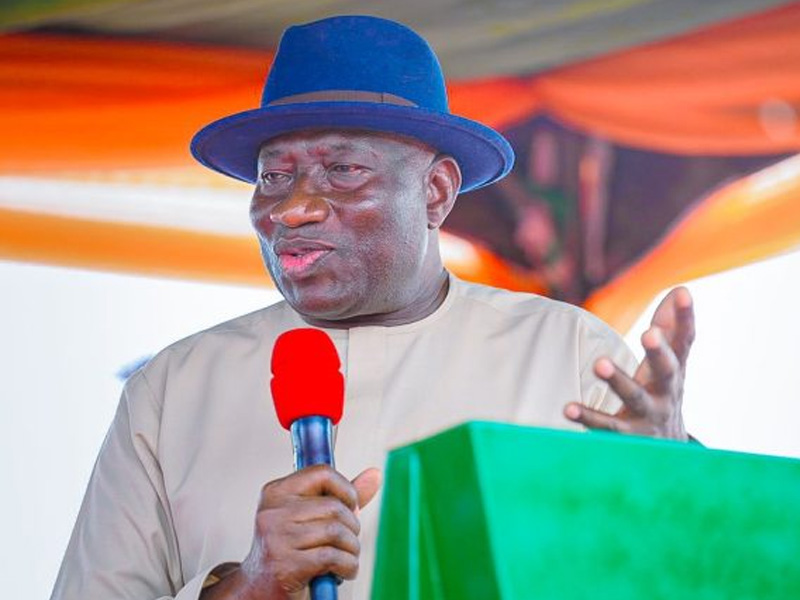
Former President Goodluck Jonathan has cautioned political leaders against allowing their ambitions for power to undermine Nigeria’s unity, warning that political intolerance, ethnic rivalry and electoral violence could plunge the country into crisis ahead of the 2027 general elections.
Jonathan expressed concern over the increasing use of political thugs and the recruitment of young people as instruments of violence, insisting that political competition must not threaten national cohesion and peaceful coexistence.
He spoke at the third edition of the Peace and Security Conference organised by the Goodluck Jonathan Foundation in Abuja. The conference was themed, “Safeguarding Peace and Strengthening Social Cohesion in a Competitive Political Environment.”
The former President urged political actors to place national unity above personal and political ambitions.
“We must never allow political ambition to undermine the bonds that hold us together as one nation and in our states,” he said.
Jonathan also expressed concern over controversies surrounding judicial pronouncements, particularly conflicting judgments delivered by courts of coordinate jurisdiction.
He warned that such developments could weaken public confidence in the judiciary and encourage citizens to resort to self-help.
“When citizens begin to lose faith in the courts and resort to self-help, the consequences can be disastrous. The descent from a loss of confidence in institutions to anarchy is a danger we must collectively prevent,” he said.
He called on political leaders to respect opposing views and acknowledge the right of others to seek political office.
Jonathan also urged Nigerians to prioritise competence, national interest and public service over prejudice and personal ambition when choosing their leaders.
In his remarks, the Chairman of the Independent National Electoral Commission (INEC), Professor Joash Amupitan, warned that political parties, candidates and their supporters would face legal consequences for engaging in violence, intimidation and inflammatory campaigns ahead of the elections.
Amupitan, who was represented by National Commissioner May Agbamuche-Mbu, acknowledged that political competition naturally involved vigorous debates, disagreements and passionate mobilisation but insisted that these must not degenerate into violence or lawlessness.
He specifically warned against harassment, intimidation and physical attacks on INEC officials and ad hoc election workers, saying offenders would be dealt with under the law.
“I must sound a stern warning against any form of harassment, intimidation, or physical attack directed at the leadership, staff, or ad hoc workers of INEC by supporters of any political party—whether within Nigeria or abroad.
“Election officials are public servants discharging a sacred constitutional duty; assaulting or threatening them is an assault on the Nigerian state and will be met with decisive legal consequences,” he said.
The INEC chairman also identified misinformation, disinformation, artificial intelligence-generated content, deepfake videos and cloned voices as emerging threats to peaceful elections.
He warned that fabricated information could trigger unrest within minutes and disclosed that the commission had established a dedicated Artificial Intelligence Division within its Information and Communication Technology department to monitor digital threats and verify online information.
Amupitan reaffirmed INEC’s commitment to institutional neutrality and the conduct of peaceful, credible and inclusive elections.
According to the commission’s timetable cited at the conference, the presidential and National Assembly elections are scheduled for January 16, 2027, while governorship and state assembly elections are expected to hold on February 6, 2027.
Also speaking, former President of the ECOWAS Commission, Dr Omar Alieu Touray, warned against the use of ethnic, religious and regional identities to divide Africans during political contests.
In his keynote address, Touray argued that democracy should be based on competing ideas and development programmes rather than divisions arising from people’s backgrounds.
“Competition is the lifeblood of democracy. It is the mechanism through which citizens express preferences, debate ideas and hold leaders accountable. We must never confuse political competition with political conflict,” he said.
He distinguished between opposing a candidate’s policies and denying the person the right to govern because of their ethnic, religious or regional identity.
“There is a profound difference between saying, ‘I disagree with your policies,’ and saying, ‘Because you belong to a different ethnic, religious or regional community, you do not have the right to govern me.’ The first is democracy. The second is exclusion masquerading as democracy,” Touray added.
In a goodwill message, the Minister of Defence, retired General Christopher Musa, urged political leaders to demonstrate restraint, maturity and statesmanship ahead of the elections.
Musa, who was represented by his Special Adviser on Strategic Communication, Mercy Ndi Bala, warned against hate speech, misinformation and inflammatory narratives capable of exploiting Nigeria’s ethnic, religious and political differences.
He stressed that national security extended beyond military deployment and equipment, noting that public trust, social cohesion and cooperation between communities and security agencies were equally important to maintaining stability.
The minister called for a whole-of-government and whole-of-society approach to security, involving government institutions, traditional and religious leaders, civil society organisations, the media and young people.
Earlier, the Executive Director of the Goodluck Jonathan Foundation, Ms Ann Iyonu, raised concerns over declining public confidence in Nigeria’s electoral process.
She cited a 2026 Afrobarometer survey released on November 11, which, according to her, showed that fewer than four in 10 Nigerians believed the 2027 general elections would be free and fair.
Iyonu warned that the credibility of the elections would have implications beyond Nigeria, given the country’s economic influence and strategic importance to regional security.


 Follow Us on Google Discover







JAMB introduces online process for change of course, institution, ends physical office visits

City Boy Movement dismisses Mas’ud Rahamaniyya as Sokoto director

NLC, TUC end rift over FG’s N70,000 transport allowance for workers

Super Eagles rise to 29th in latest FIFA world rankings, fifth in Africa

US strategist Diana London deletes posts on Tinubu interview amid reports of receiving $4.5m lobbying fee from Nuhu Ribadu

‘Congress did not meet with or endorse him’ — Atiku US lobbyist speaks on Peter Obi Washington visit

Xi Jinping welcomes Trump in China ahead of historic meeting with Putin

2027: Court upholds Suswam’s candidacy, declares him APC senatorial flagbearer in Benue

Government neglect and poverty fueling deforestation, climate heat in Nigeria, Official warns

‘Don’t allow political ambition to tear Nigeria apart’ — Jonathan warns politicians ahead of 2027 poll

Senate urges INEC to disqualify candidates linked to electoral violence

Abia Govt sacks Enyimba Management, Technical Crew over poor performance

U-23 AFCON Qualifiers: Olympic Eagles thrash DR Congo 4-0, advance 4-2 on aggregate

‘No Nigerian President has developed the North like Tinubu’ — Yari

I can go home, sleep comfortably, Allah gives power to whom he pleases – Tinubu

Nafiu Bala resumes as ADC national chairman, notifies INEC

BREAKING: Pro-Biafra agitator Simon Ekpa released from Finnish prison

No federal job in 2027 – Nigerian govt bars all agencies from hiring

FG gives universities three months to recover excess payments to staff

₦100m Extortion, ₦2bn Transaction: Reps probe mining marshals, summon NSCDC boss

Fani-Kayode faces diplomatic reprimand as South Africa invokes Vienna Convention, summons him over livestream controversy

He is a true leader, He succeeded where others failed – US Congressmen praise Peter Obi in Washington

2027: ‘Reject rice politics, don’t sell your votes for food’ — Ex-Anambra gov, Obiano warns Nigerians

Fountain of Life Church removes Jimmy Odukoya as Senior Pastor

‘Let Tinubu finish what he started, He deserves Second Term’ — Fashola tells Nigerians

BREAKING: Gov. Abba Yusuf confirms divorce from Kwankwaso’s daughter, says room is now open for other women to apply

Vanguard Online Editor Olufemi Ajasa dies at 44

2027: Ibrahim Kashim, Governorship Candidate in Bauchi dumps NDC, defects to APC

‘Nigerians are angry with APC; Dancing and display of money won’t win Tinubu votes’ — APC Senator admits
