
Politics
Fashola rejects ‘Rig and Die’ slogan, but says ‘election riggers should not be killed or face death penalty’

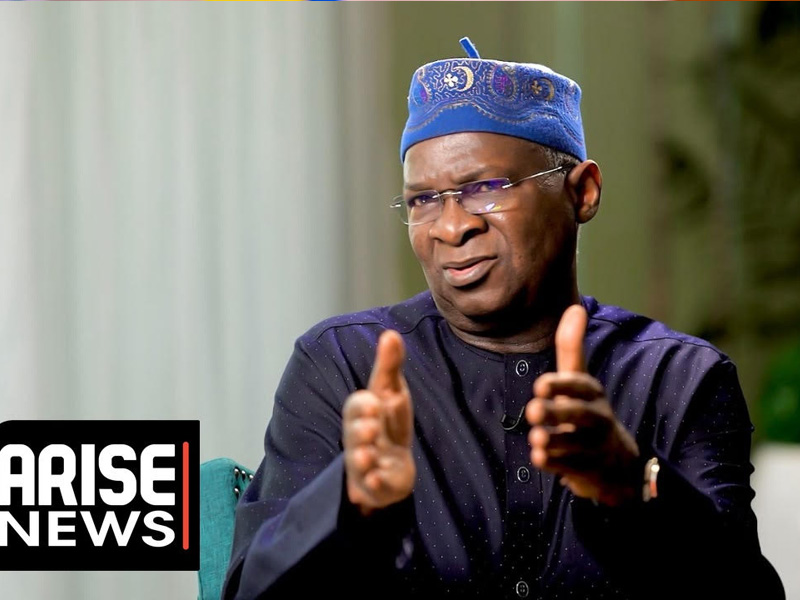
Former Lagos State Governor Babatunde Fashola has rejected calls for election riggers to face the death penalty, insisting that electoral offences must be punished firmly but strictly within the provisions of the law.
Fashola, a Senior Advocate of Nigeria (SAN) and former Minister of Power, Works and Housing, said Nigeria must move away from extreme political rhetoric as the country prepares for the 2027 general elections.
He made the remarks during an exclusive interview with ARISE News anchor, Ojy Okpe, while reacting to the controversial “rig and die” slogan attributed to former Deputy Senate President Ovie Omo-Agege and comparisons with comments made by former President Muhammadu Buhari ahead of the 2019 elections concerning ballot-box snatchers.
Asked whether election riggers should be sentenced to death, Fashola responded: “Absolutely not. I mean, come on.”
In the interview, which aired on Friday, the former governor argued that electoral offences should attract punishments prescribed by law rather than threats of extrajudicial violence.
“I think we must move away from what I think are extreme narratives and rhetoric,” he said.
Fashola noted that the Electoral Act does not prescribe the death penalty for electoral offences, adding that even where capital punishment applies, an accused person must be charged, tried and given an opportunity to defend themselves.
“The punishment under the Electoral Act is not death. And even if it were death, which I will not support, there’s a process before you take human life; a charge, a trial, an opportunity to defend yourself,” he stated.
He urged Nigerians to condemn electoral malpractice unequivocally while insisting that political disagreements must not turn elections into an excuse for violence.
“The penalty for rigging is not death. But don’t rig. Go and campaign for your party,” Fashola said.
The former minister also advised political parties to focus on mobilising supporters in areas where they have electoral strength and working to reduce their losing margins in places where they enjoy less support, rather than attempting to manipulate election results.
“There are places where each party is popular. There are places where parties will never win, no matter what they do there. That is the reality across the world,” he said.
On whether existing penalties for electoral offences were sufficient to discourage malpractice, Fashola suggested that some serious violations could attract stiffer custodial sentences without the option of a fine.
He argued that offences capable of undermining democracy should carry consequences strong enough to deter potential offenders.
“I think maybe there might be stiffer sentences without option of fine, maybe a defined custodial sentence that is deterrent in nature,” he said.
Fashola added that certain serious offences should not be treated as crimes that offenders could escape by simply paying fines.
“I always hold the view that some very serious, really impactful conduct should not be allowed to be monetised, and undermining of democracy is seriously impactful,” he stated.
However, he maintained that the death penalty would be excessive for electoral offences.
“I don’t think it goes that far,” he added.
The former Lagos governor also called for sustained public education on elections and democratic values, arguing that Nigeria had repeatedly amended its electoral laws without giving comparable attention to educating citizens about the principles of democracy.
He proposed nationwide enlightenment programmes on electoral conduct and civic responsibility, beginning from primary schools and delivered in Nigeria’s major languages.
According to him, reducing desperation during elections requires politicians and voters to understand that democracy is a continuous contest in which parties may win in one election cycle and lose in another.


 Follow Us on Google Discover



You are a puppet who plays second fiddle to Seyi Tinubu, Gbajabiamila, Wike; becomes useful only to attack Atiku: ADC blast Shettima

2027: INEC conducts nationwide mock accreditation, result upload exercise amid mixed reports

Manchester United humiliated 4-0 by Brentford at Old Trafford as relegation battle intensifies

Lagos Senator Idiat Adebule seeking re-election dies at 56, barely 24 hours after birthday celebration

NPFL faces fresh backlash as Shooting Stars fans attack Rivers United players, referee

Gunmen launch fresh attack in Plateau, kill 51-year-old man, two others

18 Super Falcons players arrive camp ahead of Algeria friendly (Full list)

INEC begins BVAS mock accreditation, result upload in Zamfara

FG unveils N5m support scheme for 600 Nigerian Tailors (How To Apply)

2027: ‘Peter Obi is the best candidate everybody should step down for’ – Galadima speaks on opposition coalition against Tinubu

‘Tinubu Must Go! Nigerians don’t want him anymore’ – Peter Obi

2027: ‘I’ll deal with you if you don’t vote APC’ – Nwifuru threatens Ebonyi community

‘Tinubu should rule Nigeria for another 10 years if possible’ – Bisi Akande

Bisi Akande backs Tinubu’s continued presidency, says 10 years needed to complete reforms

2027: SDP’s Adebayo pledges N200 per litre petrol without fuel subsidy if elected

Wike plotting to rig 2027 elections – Imo APC

Fresh controversy as Chinese nationals allegedly appear multiple times on voter register, INEC keeps mum

OK Movement withdraws campaign, mobilisation support for NDC, dumps Peter Obi ahead Of 2027 election

Kwankwaso accuses Kano Governor Yusuf of using EFCC to tarnish his reputation

‘My finances were better before Tinubu’s Govt’, but Nigerians must feel the pain to reap the benefits’ – Seyi Law

2027: Opposition coalition talks gather momentum as Atiku, Obi, Makinde, Duke meet Nov 30

Fashola rejects ‘Rig and Die’ slogan, but says ‘election riggers should not be killed or face death penalty’

Adeleke takes oath of office for second term as Osun Governor

Enugu govt orders temporary closure major roads ahead of Tinubu’s campaign visit

Osun Police mobilise 2,500 officers for Adeleke’s second-term inauguration

Shettima leads political heavyweights, traditional rulers to Adeleke’s second-term inauguration

EPL: Bruno Fernandes sign new Man United contract until 2028

2027: Supreme Court upholds Arobo as APC candidate for Owo/Ose federal constituency

CBN names Murtala Mohammed as acting Keystone Bank MD
