News
Kwankwaso accuses Kano Governor Yusuf of using EFCC to tarnish his reputation

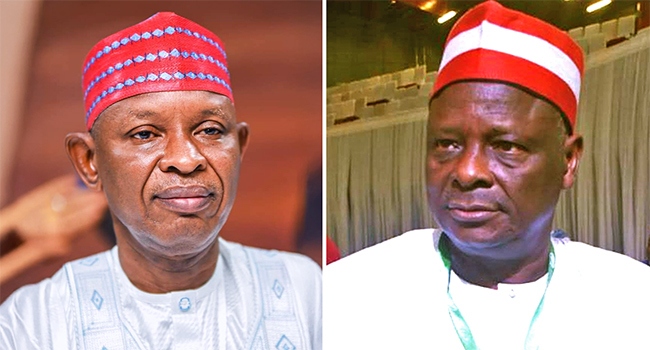
Former Kano State Governor and New Nigeria Peoples Party (NNPP) leader, Rabiu Musa Kwankwaso, has accused Governor Abba Kabir Yusuf of attempting to use anti-corruption agencies to tarnish his reputation and weaken his political influence ahead of the 2027 general elections.
Kwankwaso made the allegations in a statement addressing the growing tension between him and his former political associate, accusing the governor of orchestrating a campaign against him through the Economic and Financial Crimes Commission (EFCC), the media and other public institutions.
He said Yusuf had served under him in different capacities, including as his Personal Assistant, Principal Private Secretary and commissioner, before emerging as the NNPP’s candidate in the 2019 and 2023 governorship elections.
According to Kwankwaso, Yusuf won the 2023 election through the collective efforts of their political movement, while their relationship spanned 43 years.
The former governor, however, alleged that the trust he had placed in Yusuf had been abused, claiming that the governor was determined to drag him and members of his family into public controversy.
Kwankwaso alleged that Yusuf had previously submitted a formal request to the EFCC seeking an investigation against him but failed to secure the commission’s cooperation.
He claimed that the governor subsequently turned to an organisation identified as the Society for Anti-Corruption and Good Governance Initiative (SACGGI), which he alleged was used to organise protests at the EFCC’s headquarters to pressure the agency into taking action against him.
Kwankwaso further questioned the organisation’s credibility, claiming that it was not registered with the Corporate Affairs Commission (CAC) and had no verifiable online presence or formal relationship with the EFCC or the Independent Corrupt Practices and Other Related Offences Commission (ICPC).
He also accused the governor and some members of his cabinet of using media platforms to circulate information aimed at damaging his reputation.
The NNPP leader argued that the alleged campaign was politically motivated and intended to distract attention from governance issues, undermine his political movement and weaken its chances of winning the 2027 elections.
He warned that the situation could further heighten political tension and threaten peace and security in Kano State.
Kwankwaso said the alleged actions were not restricted to him but also extended to other candidates of his political camp, particularly the party’s Kano governorship candidate, Aminu Abdussalam, who he said was defending his ticket before the Independent National Electoral Commission (INEC) and the courts.
He accused Yusuf of attempting to influence institutions, including INEC and the judiciary, to prevent Abdussalam’s name from being published as a candidate and ultimately stop him from contesting the 2027 governorship election.
According to Kwankwaso, the alleged objective was to pave the way for Yusuf to contest without a major challenger.
The former governor, however, expressed appreciation to the EFCC for what he described as its professional handling of two previous invitations extended to him during his years in public service.
He also defended his record, listing his previous positions in government, including two terms as Kano State governor, 17 years in the civil service, Deputy Speaker of the House of Representatives during the aborted Third Republic, Minister of Defence and member of the 8th Senate.
He further cited his participation as an elected delegate at the 1994–1995 Constitutional Conference, his appointment as Special Adviser to the President on Darfur and his service as a representative of the North-West on the Niger Delta Development Commission.
Kwankwaso said he had maintained a clean record throughout his years in public service, adding that he had no reason to be intimidated by the allegations against him.
He advised serving and aspiring public office holders to exercise caution, warning that political power was temporary.
“Public office is transient; those who live in glass houses should be careful about throwing stones,” he said.
The former governor also thanked Nigerians who, according to him, had refused to be misled by the alleged campaign and had spoken in defence of his reputation and public record.


 Follow Us on Google Discover







NPFL faces fresh backlash as Shooting Stars fans attack Rivers United players, referee

Gunmen launch fresh attack in Plateau, kill 51-year-old man, two others

18 Super Falcons players arrive camp ahead of Algeria friendly (Full list)

INEC begins BVAS mock accreditation, result upload in Zamfara

FG unveils N5m support scheme for 600 Nigerian Tailors (How To Apply)

2027: ‘Peter Obi is the best candidate everybody should step down for’ – Galadima speaks on opposition coalition against Tinubu

‘Tinubu Must Go! Nigerians don’t want him anymore’ – Peter Obi

2027: ‘I’ll deal with you if you don’t vote APC’ – Nwifuru threatens Ebonyi community

‘Tinubu should rule Nigeria for another 10 years if possible’ – Bisi Akande

Bisi Akande backs Tinubu’s continued presidency, says 10 years needed to complete reforms

2027: SDP’s Adebayo pledges N200 per litre petrol without fuel subsidy if elected

‘He lies as if his life depends on it’ – Presidency blasts Peter Obi

2027: ‘It will be a miracle for Atiku or Obi to step down’ – Rufai Oseni

EFCC drags woman to court over alleged N62.5m pilgrims fraud
Nigeria moves to host inaugural U-17 Women’s Africa Cup of Nations

Just-In: You are just a ‘useful errand boy for now’, your usefulness will be outlived soon – Gov Uzodimma claps back at Wike

Wike plotting to rig 2027 elections – Imo APC

Fresh controversy as Chinese nationals allegedly appear multiple times on voter register, INEC keeps mum

OK Movement withdraws campaign, mobilisation support for NDC, dumps Peter Obi ahead Of 2027 election

‘I am pleased with his performance’ – Babangida declares support for Tinubu’s 2027 re-election

Kwankwaso accuses Kano Governor Yusuf of using EFCC to tarnish his reputation

‘My finances were better before Tinubu’s Govt’, but Nigerians must feel the pain to reap the benefits’ – Seyi Law

2027: Opposition coalition talks gather momentum as Atiku, Obi, Makinde, Duke meet Nov 30

Fashola rejects ‘Rig and Die’ slogan, but says ‘election riggers should not be killed or face death penalty’

Ebonyi NDC Deputy Governorship candidate defects to APC, declares support for Tinubu

74 killed in Niger communal clash as Bago orders probe, donates N148m to victims’ families

Rivers United land N490m three-year shirt sponsorship deal

Fountain of Life crisis: Court orders arrest of Pastor Jimmy Odukoya over contempt case

Adeleke takes oath of office for second term as Osun Governor
