
News
Fresh controversy as Chinese nationals allegedly appear multiple times on voter register, INEC keeps mum

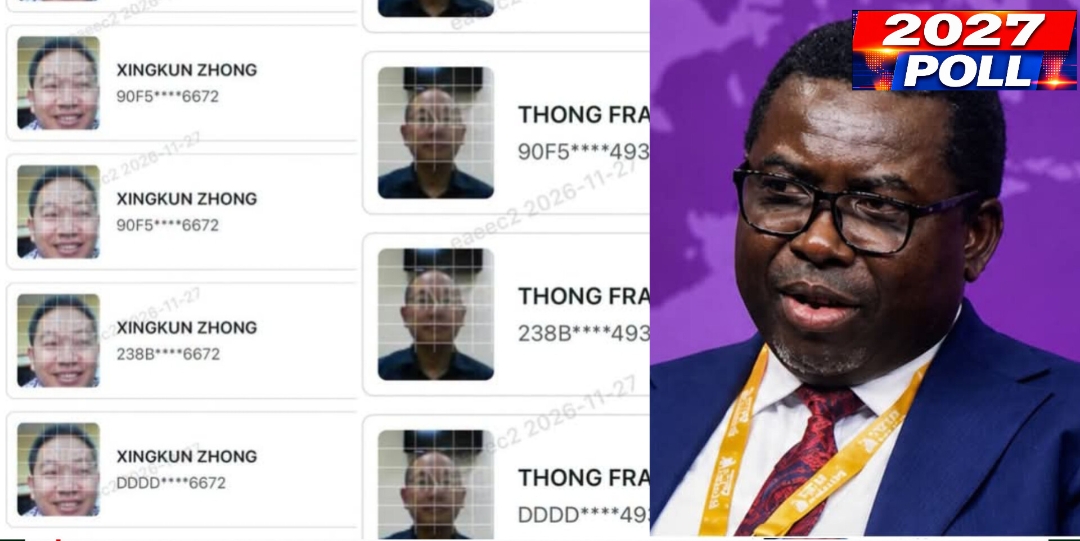
Fresh concerns have been raised over the integrity of the Independent National Electoral Commission’s (INEC) voter register following the circulation of photographs on social media allegedly showing Chinese nationals appearing multiple times in the electoral database.
One individual identified as Xingkun Zhong reportedly appears seven times under a single polling unit in Abuja, while another person identified as Thong Frank is said to have appeared four times on the register.
The development has sparked fresh questions about the accuracy, credibility and security of INEC’s voter database ahead of the 2027 general elections.
The latest controversy comes amid growing concerns over questionable entries and suspected artificial intelligence-generated photographs discovered on the commission’s preliminary Register of Voters.
SaharaReporters had earlier reported the discovery of suspicious photographs on voter profiles published on INEC’s official website, prompting calls for an independent investigation into the electoral database.
Following the reports, the Socio-Economic Rights and Accountability Project (SERAP) urged President Bola Tinubu to direct the Nigeria Data Protection Commission (NDPC) to investigate the alleged irregularities and determine whether Nigerians’ personal information had been unlawfully accessed, altered or compromised.
In a letter dated October 31, 2026, and signed by its Deputy Director, Kolawole Oluwadare, SERAP called for an independent forensic examination of the reported irregularities.
The organisation also urged the authorities to identify those responsible, establish the number of affected records and ensure that eligible voters were not wrongly excluded from the electoral process.
SERAP warned that questionable entries and possible unauthorised alterations to the database could erode public confidence in the electoral process and undermine the credibility of the register intended for the 2027 elections.
INEC had earlier acknowledged public concerns over suspected AI-generated photographs and questionable registration records identified during the nationwide display of the preliminary register between October 9 and 15, 2026.
The commission reportedly said the affected records had been flagged for further examination, adding that verification and data-cleanup exercises were ongoing ahead of the certification of the final Register of Voters scheduled for December 15, 2026.
However, the latest photographs circulating online have introduced another dimension to the controversy, particularly the reported multiple appearances of individuals under the same polling unit.
It is important to note that repeated appearances of a name in a preliminary register do not, by themselves, establish that the individual registered multiple times or that each entry represents a separate valid voter registration. The authenticity and circumstances of the records would need to be independently established.
As of the time of this report, INEC had yet to publicly authenticate the latest photographs or explain the circumstances surrounding the reported multiple entries.
The commission is expected to clarify whether the records resulted from database errors, duplicate entries, technical lapses or other irregularities.
The controversy comes at a crucial period in preparations for the 2027 general elections, with increasing calls for transparency, accountability and stronger safeguards to protect the integrity of the nation’s electoral register.


 Follow Us on Google Discover










NANS blasts LASUED over fee hike, demands immediate reversal

EPL: Bruno Fernandes sign new Man United contract until 2028

Fresh controversy as Chinese nationals allegedly appear multiple times on voter register, INEC keeps mum

OK Movement withdraws campaign, mobilisation support for NDC, dumps Peter Obi ahead Of 2027 election

Adeleke takes oath of office for second term as Osun Governor

Shettima leads political heavyweights, traditional rulers to Adeleke’s second-term inauguration

Sanwo-Olu suspends November environmental sanitation for INEC mock polls

2027: Supreme Court upholds Arobo as APC candidate for Owo/Ose federal constituency

Kwankwaso accuses Kano Governor Yusuf of using EFCC to tarnish his reputation

Fashola rejects ‘Rig and Die’ slogan, but says ‘election riggers should not be killed or face death penalty’

‘My finances were better before Tinubu’s Govt’, but Nigerians must feel the pain to reap the benefits’ – Seyi Law

Wike plotting to rig 2027 elections – Imo APC

Enugu govt orders temporary closure major roads ahead of Tinubu’s campaign visit

Osun Police mobilise 2,500 officers for Adeleke’s second-term inauguration

2027 Election: Tuface backs ‘Rig and Die’ slogan, calls for severe punishment for electoral offenders

Just-In: You are just a ‘useful errand boy for now’, your usefulness will be outlived soon – Gov Uzodimma claps back at Wike

Exclusive: Makinde adopts Atiku as preferred presidential candidate for 2027 as alliance talks reach conclusion

2027: ‘Tinubu in big trouble, won’t be on ballot’ – Adetokunbo Pearse give reason

2027: ‘Where will he get the votes?’ – Shehu Sani says Atiku will be defeated by Tinubu

‘I am pleased with his performance’ – Babangida declares support for Tinubu’s 2027 re-election
Wike plotting to rig 2027 elections – Imo APC

Fashion icon Veruschka, German Supermodel dies at 87

Verified voters in Nigeria now above 100m – INEC Chairman Amupitan

2027: ‘I receive threat messages daily’ — INEC chairman Amupitan raises alarm

2027: I’m already done with Rivers, FCT, give me Imo, Kwara to deliver for you – Wike tells Tinubu

2027: Opposition coalition talks gather momentum as Atiku, Obi, Makinde, Duke meet Nov 30

Akwa Ibom emerges Nigeria’s cleanest State again, maintains nine-year winning streak

NUJ FCT congratulates Fatima Rasheed on emergence as NAWOJ Zone D Vice President

Honour Pete Edochie by renaming national theatre after him – Brymo tells Tinubu
