
News
End State killings now, Soyinka tells Tinubu at 2026 Public Lecture


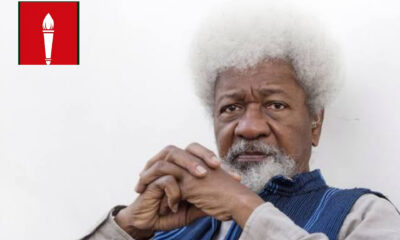
Nobel Laureate Professor Wole Soyinka has called on President Bola Tinubu to end all forms of extrajudicial killings by state actors, warning that the silence of Nigerians in the face of such abuses continues to fuel human rights violations across the country.
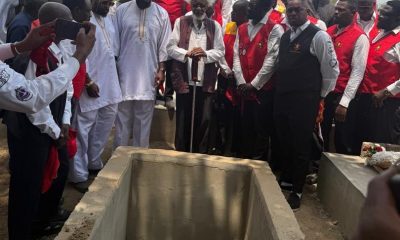
Soyinka made the appeal during the 28th Wole Soyinka Lecture held in Port Harcourt, themed “Reclaiming the Nigerian State through Accountability, Justice and Civic Courage.”
The literary icon dedicated the 2026 edition of the annual lecture to victims of extrajudicial killings and state excesses, declaring that Nigeria’s greatest failure is not only the killings themselves but the collective silence that enables perpetrators to escape justice.
According to Soyinka, public indifference to abuses committed by state institutions has contributed to the devaluation of human life and emboldened further violations.
> “Today is dedicated to the 18 Ughelli residents butchered by state agencies for no reason at all, simply for minding their own business; to the young man shot dead in broad daylight by a policeman while under suspicion; and to Deborah, the youth hunted through the city by her own classmates, necklaced and set ablaze,” he said.
He added:
> “The crime is the silence of the rest of us, that such a thing is possible and that the killers of that girl can actually go on television, hold up a match and say, ‘This is the match with which I set her on fire.’ And there the system of justice fails us completely.”
Soyinka dismissed allegations that speaking against such incidents amounted to promoting religious division, insisting that conversations like the annual lecture remain necessary because every human life deserves equal protection under the law.
He also urged Nigerians to closely monitor the case of the police officer accused of fatally shooting a young man in southern Nigeria and ensure that justice is served.
Delivering the keynote address, former Minister of Aviation, Chief Osita Chidoka, argued that justice begins long before cases reach the courtroom, stressing that fairness starts with how law enforcement agencies treat citizens.
Chidoka said police officers must decide whether to investigate complaints based on merit rather than external influence.
Highlighting challenges within Nigeria’s justice and correctional system, he disclosed that 64 per cent of inmates in custodial centres—more than 50,000 people—are awaiting trial and have not been convicted of any offence.
> “Each of these 50,000 is a life in suspension, a job lost, a family destabilised, someone’s health failing. When the state causes that delay, and the citizens pay for it in lost liberty, the delay is not inefficiency. It is a form of violence carried out by the state itself,” Chidoka said.
He maintained that genuine justice requires equal application of the law, regardless of social status or political affiliation.
> “Justice must defend the accused, the unpopular, the political opponent, and the minority, because citizenship does not depend on agreement. Where justice is negotiable, citizenship becomes hierarchical,” he added.
Earlier, Chairman of the occasion and former Managing Director of the Niger Delta Development Commission (NDDC), Chief Timi Alaibe, urged participants from government, academia, civil society and the private sector to treat the lecture as a platform for meaningful national reflection rather than a ceremonial gathering.
According to Alaibe, sustainable national development cannot thrive where accountability is absent.
> “Nations are not reclaimed by rhetoric alone; they are reclaimed when conscience triumphs over confidence, when institutions are stronger than individuals, and when citizens summon the courage to do what is right, even when it is difficult,” he said.


 Follow Us on Google Discover



‘I Don’t Want to Be Called Africa’s Richest Man Again’ — Dangote

600 Northern Lecturers who attended Tinubu endorsement show must be bared 2027 election duties – ADC warns INEC

BBNaija S11: Barry wins HoH title, becomes first finalist

Ondo students set 14-day deadline for Aiyedatiwa over ASUU strike

Nigeria, India target $15bn trade as Modi pushes for more crude imports

2027: Oba of Lagos backs Tinubu, says ‘ no vacancy in Aso Rock’

2027: NDC says Nigerians can fund party with contributions as low as N1,500

Banditry Allegation: ‘I have nothing to hide’ — Sen. Buba submits self to DSS, Police for probe

FG orders immediate release of funds to regional development commissions

El-Rufai’s former allies return to APC, endorse Uba Sani ahead of 2027

Food and Agriculture Organization Of the United Nations (FAO-UN) announces 4 recruitment vacancies across Nigeria (How to Apply)

International Breweries Recruitment: 5 Job vacancies across Nigeria (How to Apply)

ADC Leadership Crisis: Court adjourns Gombe’s suit against David Mark, Aregbesola

Soludo still servicing loans inherited from Peter Obi, Obiano — Anambra Govt

Nwifuru fires back at Cubana Chief Priest, calls him ‘Noisemaker, Nobody’
International Breweries Recruitment: 5 Job vacancies across Nigeria (How to Apply)
Food and Agriculture Organization Of the United Nations (FAO-UN) announces 4 recruitment vacancies across Nigeria (How to Apply)

2027 Elections: INEC publishes final list of 1,195 Senate, 3,213 Reps candidates (Full List)

2027: Over 600 Northern Lecturers endorse Tinubu’s re-election bid

Average Nigerian can survive on N3,000 daily, says Reno Omokri
2027: NDC says Nigerians can fund party with contributions as low as N1,500

Hon. Desmond Elliot kneels down, begs Gbajabiamila for forgiveness

15 feared killed as gunmen strike Plateau communities

Yamal double fires Barcelona to 4-2 victory over Levante

Haaland scores as 10-man Man City beat Manchester United 1-0

Burna Boy’s ‘Praise the Sky’ Potshot missed true Christians: by Ugochukwu Ugwuanyi

Tinubu’s FBI records are not evidence of criminal history, it won’t be released – Reno Omokri

BBNaija Season 11: Abi, Araga evicted from ‘Show Ya Sef’ House

By attacking APC Govs, you are sowing seed of discord like you did in PDP, join APC or step aside – Onoh tells Wike
