
Business News
FG seeks $500m World Bank fresh loan to finance infrastructure as Tinubu’s tenure nears end

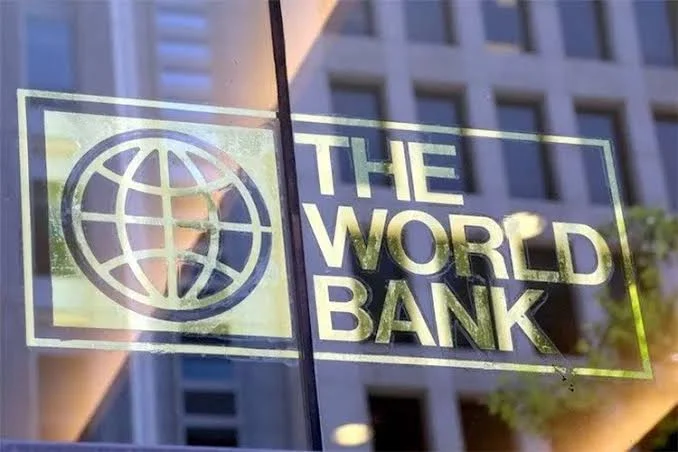
The Federal Government is seeking a fresh $500m loan from the World Bank to establish an infrastructure financing platform, with the proposed approval date falling four days before the scheduled inauguration of Nigeria’s next president in May 2027.
The proposed facility is part of a wider $3.85bn initiative designed to attract private investment into critical sectors of the Nigerian economy, including energy, transportation and water.
Details of the proposed financing are contained in the World Bank’s Initial Project Information Document for the Nigeria Infrastructure Financing and De-Risking Platform for Growth and Jobs, known as INFRAGROW. The document was prepared and updated on November 4, 2026, according to a report by The PUNCH published on Monday.
The Federal Ministry of Finance is listed as the borrower, while the Nigeria Sovereign Investment Authority (NSIA) will serve as the implementing agency.
The World Bank has scheduled the project’s technical design review for January 21, 2027, with May 25, 2027, listed as its estimated approval date.
The proposed date is particularly significant as Nigeria’s next presidential inauguration is scheduled for May 29, 2027, meaning the facility could receive approval shortly before the end of President Bola Tinubu’s current tenure.
However, the proposed financing has not yet received approval, and the World Bank’s timetable remains subject to change. Approval would also not automatically translate into immediate disbursement or implementation. Punch Newspapers +1
### How the $3.85bn financing platform will work
The World Bank’s document estimates Nigeria’s annual infrastructure financing gap at approximately $100bn, identifying inadequate investment and weak project preparation as major obstacles to economic growth, fiscal sustainability and job creation.
The proposed $500m World Bank facility comprises $400m from the International Bank for Reconstruction and Development (IBRD) and $100m from the International Development Association (IDA).
The wider $3.85bn financing structure is expected to combine contributions from government, private investors, commercial lenders and international financial institutions.
Under the proposed arrangement, the NSIA is expected to contribute $200m in equity as a founding shareholder, while private-sector investors would provide another $200m. Commercial debt financing is projected at $600m.
The arrangement also includes $100m in IDA payment guarantees and $2.25bn in guarantees from other international financial institutions, bringing the proposed guarantee-related financing to $2.35bn.
The platform is expected to operate through four independently governed subsidiaries, each designed to address specific challenges affecting infrastructure investment.
The first is the Project Preparation Facility, which will finance feasibility studies, transaction structuring, risk assessments and procurement support to make infrastructure proposals more attractive to investors.
The second is the Viability Gap Fund, which will provide financial support for economically important projects that cannot generate sufficient commercial returns while maintaining affordable tariffs or sustainable government payments.
The third, the Risk Capital Facility, will provide equity and other forms of long-term capital to commercially viable infrastructure projects that struggle to attract investors because of their risk profiles.
The fourth is the Credit Guarantee Vehicle, which will provide guarantees against specified credit defaults, public-sector payment failures and political risks affecting eligible foreign investments.
The World Bank expects the facilities to encourage participation by commercial banks, pension funds, insurance companies and other institutional investors.
### Environmental and social risks
The proposed project will also support reforms aimed at strengthening public institutions responsible for identifying, preparing, procuring and supervising public-private partnership projects.
Its implementation will be divided into four components covering institutional development, project preparation, financing mobilisation and improvements to the regulatory environment.
The International Finance Corporation is expected to participate as a prospective co-investor, while the Multilateral Investment Guarantee Agency may provide political risk insurance.
However, the World Bank has classified the project’s environmental and social risks as high because the financing platform could support large-scale infrastructure developments in sectors such as energy, transportation and water.
Potential risks identified include land acquisition, displacement of communities, environmental damage, occupational hazards and other social consequences.
The proposed INFRAGROW initiative is intended to expand sustainable infrastructure investment by improving project preparation, reducing investment risks and mobilising private capital.
Its eventual impact will depend on the project’s approval, implementation and management, as well as the ability of the proposed facilities to attract the level of private investment envisaged.
Source: The PUNCH, November 9, 2026. Punch Newspapers +2


 Follow Us on Google Discover










We can’t stay indoors”: Sheda Farmers face double heat threat of crop loss and health risks: by Oladosu Adebola Oluwaseun

Barcelona defender Pau Cubarsí clinches 2026 Golden Boy award

BREAKING: INEC removes fake images, deceased persons from voter register ahead of 2027 elections – Amupitan

Enugu Air announces London flights, sets December 10 take-off date

Court Rejects Maihaja’s challenge to Wali’s emergence as Yobe APC guber candidate

‘Deliver your ward for Tinubu, get N10m’ — Wike tells FCT Councillors

‘Any Igbo man who refuses to vote for Peter Obi is an enemy of the Igbo people’ — Victor Umeh

ICPC raises charges against fake PFIPC DG Adeyemi, names four additional suspects

Reps demand accountability, greater oil production five years after PIA enactment

Tragedy as Edo APC chieftain dies after son allegedly attacks him over prophecy

VP Shettima honored with traditional title in Ebonyi

INEC warns politicians against ‘Rig and Die’ slogan, says electoral offenders will face prosecution

PSC names Salisu Bello Fago as new Niger State CP

2027: 375 Judges sworn in for election petition tribunals

COP31 opens as UN chief challenges world leaders to act on climate crisis
INEC warns politicians against ‘Rig and Die’ slogan, says electoral offenders will face prosecution

Tell Nigerians where you got money to build university – Tinubu

‘He is a crook, never studied at Chicago state University’ – Ex-lecturer Doherty challenges Tinubu’s academic claims

FG seeks $500m World Bank fresh loan to finance infrastructure as Tinubu’s tenure nears end

Keyamo: ADC will be on 2027 ballot, but Atiku may be excluded

BEDC approves salary increase for all staff, begins implementation December 1

‘After election, they will check under your bed for taxes’ — Kwankwaso takes swipe at Tinubu government

EPL: Man Utd rescue dramatic 4-4 draw against Villa as Chelsea suffer narrow defeat to Sunderland

Yoruba pioneered home videos, not Nollywood, Nkem Owoh clarifies
Tragedy as Edo APC chieftain dies after son allegedly attacks him over prophecy

Nigerian Army restores official X account after cyberattack

Panic as gunmen abduct mother, three sons in Enugu community

Ugandan woman arrested with 87 cocaine wraps after church crusade in Lagos

‘Nobody Can Take My Ticket’ — Uzodimma Fires Back Amid Senatorial Candidacy Dispute
