
World
US-led troops withdraws from Iraq after 12 years

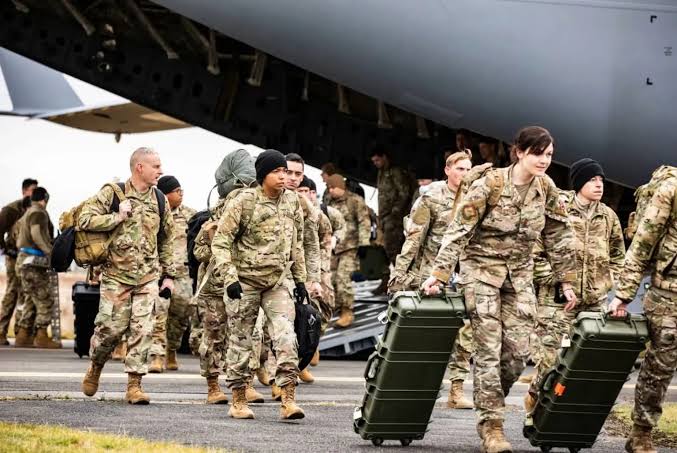
The US-led international coalition is ending its military mission in Iraq after more than 10 years of operations against the Islamic State (IS) group.
The coalition was deployed to Iraq and Syria in 2014 after IS captured large areas of both countries and carried out massacres and other atrocities.
The campaign helped Iraqi forces defeat IS in Iraq in 2017, while the group was territorially defeated in Syria two years later.
Despite the loss of its territorial strongholds, IS continued to operate through remnants and cells. Coalition troops therefore remained in the region to support efforts to prevent the group from rebuilding its operations.
The mission, however, has also been a source of political and military tensions in Iraq over the years, as the presence of foreign troops generated repeated calls and pressure for their withdrawal.
Baghdad and Washington agreed in 2024 to wind down the coalition’s mission, and its troops withdrew gradually from bases across the country, restricting their presence to the autonomous northern Kurdistan region.
Their final withdrawal from there is scheduled for Wednesday.
The Iraqi government believes the coalition’s withdrawal removes the excuse powerful Tehran-backed militant factions have used to retain their weapons.
Iraqi Prime Minister Ali al-Zaidi declared that October 1, the day following the coalition’s departure, should be celebrated as Sovereignty Day.
It is “a national occasion that affirms the completion of Iraq’s path toward sovereignty and consolidates the presence of the state and its institutions”, the heads of the executive, legislative and judicial branches said on Monday.
They added that “the presence of weapons outside state authority must be addressed… in line with timelines set by the government, in a manner that strengthens state sovereignty”.
An auto-rickshaw drives past a billboard installed along a street in Baghdad on September 29, 2026.
For The Good Of Its People
Zaidi, who came to power this year with the US’s blessing, has vowed to reinforce the state’s monopoly on arms and ensure that armed factions hand over their weapons to the state.
His government initially set September 30 as the deadline for factions to disarm, but later withdrew the time limit as talks continued to “regulate” weapons — an issue that has fuelled tensions and is expected to take much longer to resolve.
With several powerful groups refusing to disarm, senior politicians have intervened and are now hoping to work out a compromise deal.
Factions have put forward conditions that include not only the withdrawal of foreign troops, but also an end to American political and economic interference.
The powerful Kataeb Hezbollah group said in a statement Monday that the withdrawal of “the occupation forces… is a start towards achieving full sovereignty”.
But the group also threatened Zaidi’s government.
“A government that doesn’t work for the good of its people will be brought down by all possible means,” it said.
Vehicles drive past Iraqi flags installed along a street at the Tahrir Square in Baghdad on September 29, 2026.
During the battle against IS, both the US-led coalition and Tehran-backed factions fought the jihadists, their common enemy.
But after IS’s defeat, the presence of the coalition turned into a persistent point of contention between Iraqi authorities and the factions.
Those groups demanded the withdrawal of US troops and began targeting them with drones and missiles, triggering US retaliatory strikes that killed several faction commanders over the years.
During the Middle East regional war, Iran and its allied factions intensified their attacks, targeting US-led troops in the Kurdistan region.
Kurds in Erbil, capital of the Kurdistan region, told AFP they are increasingly anxious about who will protect them from drones that have repeatedly targeted their autonomous canton, once the coalition interceptors leave.
The coalition left Syria earlier this year.


 Follow Us on Google Discover











Atiku subsidy restoration plan will cripple NNPC, Nigerians must reject him – Presidency cries out

Gov Ododo leads Kogi delegation to Kuwait, seals new development partnership

US-led troops withdraws from Iraq after 12 years

Group decline calls to disqualify Chinda Rivers APC governorship candidate

Atiku demands release of Nigeria-US health agreement following Ghana’s rejection

Court orders Wike’s son Jordan to produce American Passport over $2.1m land fraud suit

Fresh crisis rock Gombe PDP as Mailantarki rejects Pantami’s victory, threatens fresh legal action

‘You have plunged each Nigerian into N716,882 debt’ – Atiku tackles Tinubu amid fresh plan to borrow $1.5bn from World Bank

I should be commended for delivering my promise – Jimoh Ibrahim fires critics over Tinubu’s absence At UNGA

Naira gains to N1,370/$ in Parallel Market, weakens to N1,329 at NFEM

Public Servants threaten October 2 strike over petrol price, wage award, gets NLC backing

“I feel good, healthy, sound and ready to Go” — Tinubu after return from Europe

Pantami wins fresh PDP Governorship Primary in Gombe

Fatima El Mansouri emerges Morocco first female PM

Osun residents loot food warehouse after cheap food scheme operators disappear

Dangote Group announces 77 job vacancies across Nigeria, Africa – Apply Now

Nigerian Navy Batch 39 Recruitment 2026: Application opens October 2 — Requirements, How to Apply

IITA Recruitment 2026: International Institute of Tropical Agriculture opens vacancies – Apply Now

IBEDC announces recruitment for Operations, Technical Audit Officers (Apply Now)
Court orders Wike’s son Jordan to produce American Passport over $2.1m land fraud suit

BREAKING: Tinubu returns home after four weeks vacation in Europe

Education Ministry releases approved textbooks for Nigerian schools

Court directs NMDPRA to grant import licences to Matrix Energy, AA Rano, AYM Shafa

2027: PDP members dump party for APC in Kwara

Guinea-Bissau thrash sloppy Super Eagles of Nigeria 3-0 in AFCON Qualifier

Ogun 2027: PDP defends Adebutu, dismisses eligibility claims

BREAKING: Premier League Commission confirms Manchester City guilty of financial rule breaches

Kenneth Okonkwo reverses position on Obi’s Anambra debt record, says ‘I was misled’

Lagos’ Danielle Adewusi crowned Miss Universe Nigeria 2026
