Editorials
2027: OK movement, NDC wave slows in the north as top opposition figures stick with ADC

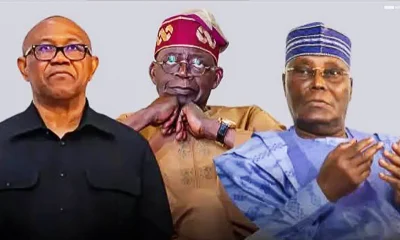
The unfolding 2027 presidential race is beginning to settle into clearer political lines, but the direction of travel in the North is raising fresh questions for the emerging Obi–Kwankwaso arrangement under the National Democratic Congress (NDC).
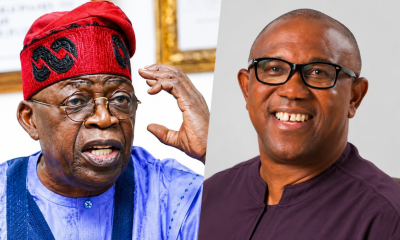
Last week’s announcement of Peter Obi as the sole presidential candidate of the NDC, with former Kano governor, Rabiu Musa Kwankwaso, positioned as his expected running mate, was initially framed as a strategic bridge between southern popularity and northern structure.
The move was seen as an attempt to fuse two major political currents into a single, competitive national ticket.
But that early momentum appears to be losing steam.
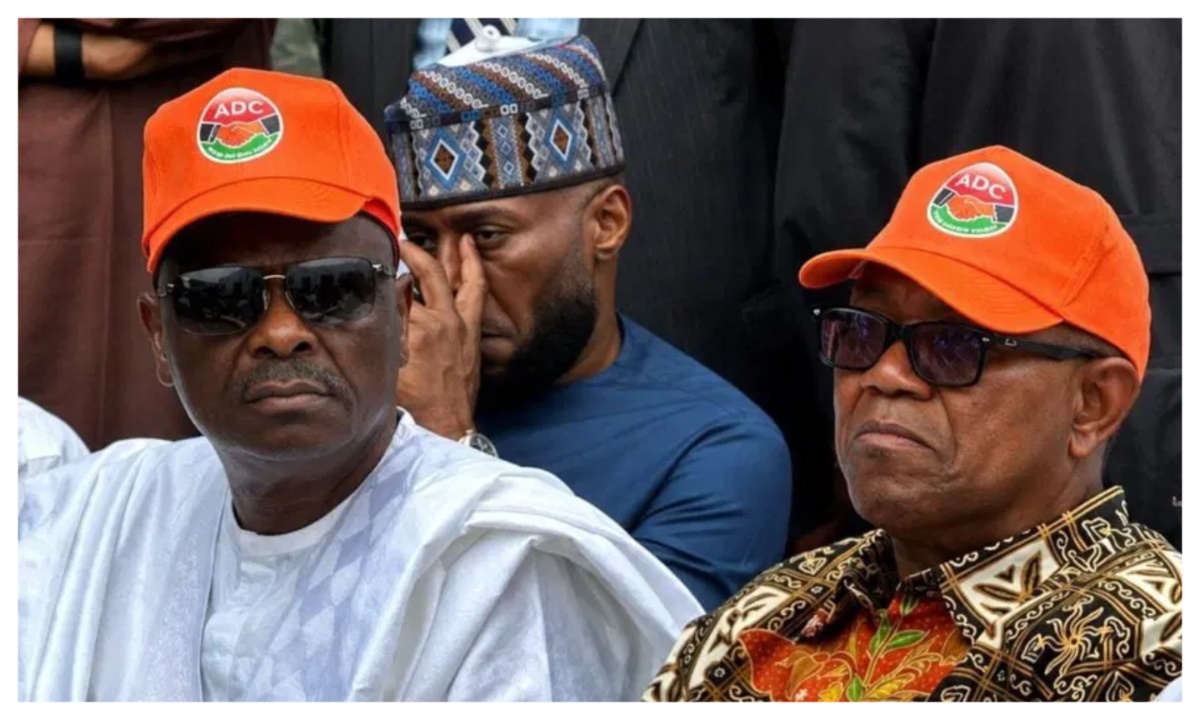
Rather than consolidating northern elites around the NDC project, early political signals suggest a widening realignment in which key northern power brokers are increasingly coalescing around the African Democratic Congress (ADC), weakening expectations that Kwankwaso can seamlessly deliver a unified northern bloc.
Among those now reportedly aligned with the ADC political structure are former Sokoto State Governor, Aminu Waziri Tambuwal; Senator Abdul Ningi; former Attorney-General of the Federation, Abubakar Malami; as well as influential elements linked to the political network of former Kaduna State Governor, Nasir El-Rufai’s family. Several other serving and former political actors across the North are also said to be gravitating toward the same platform as consultations intensify ahead of 2027.
The development has injected fresh uncertainty into Kwankwaso’s expected role in the NDC arrangement, particularly regarding his ability to consolidate a decisive northern voting bloc for Obi.
While the former Kano governor remains a dominant political force in parts of the North-West, analysts say his influence is now being tested by competing alliances, elite fragmentation, and the rising appeal of alternative structures outside the traditional party alignments.
Political observers note that the so-called “NDC wave,” which initially generated excitement within opposition circles, is now showing signs of cooling, especially in the North where elite endorsement often plays a decisive role in shaping electoral direction.
At the same time, President Bola Ahmed Tinubu has already secured the All Progressives Congress (APC) ticket, further tightening the ruling party’s early organisational advantage and reinforcing its national structure ahead of the contest.
This emerging three-bloc dynamic, APC consolidation, ADC elite migration, and a slowing NDC momentum, has introduced new complexity into what was initially expected to be a more straightforward two-front race.
Supporters of the Obi–Kwankwaso alliance insist that the combination still holds electoral promise, arguing that Obi’s southern appeal and Kwankwaso’s northern base remain a strong foundation.
However, critics argue that political structure, not sentiment, will ultimately determine the outcome, and on that front, the opposition appears increasingly divided.
For now, the 2027 race is evolving into a contest defined less by individual popularity and more by shifting elite coalitions and regional recalibrations.
And at the centre of it all remains a growing question: with key northern figures drifting toward the ADC and the NDC wave cooling, can Kwankwaso still deliver the North for Obi when it matters most?


 Follow Us on Google Discover





2027: Kwankwaso a goat in sheep’s clothing, secretly working for Tinubu – Atiku Campaign Council

DSS arrests Maina’s fugitive son in Abuja, hands him over to EFCC

2027: Step down if you are not working for Tinubu – Deji Adeyanju dares Obi, Kwankwaso

2027: ‘I wont join my Uncle to support Tinubu’ – Davido says

Enugu NYSC death: NAFDAC debunks claims linking corps members death to fake drugs

33 Governors cannot be wrong in supporting Tinubu – Bayo Onanuga

Security forces arrest five suspects over abduction of 20 NYSC members in Imo

Rugby star Hyron Andrews dies at 31 after accidental fall in South Africa

LAUTECH Resident Doctors halt 50-day strike as Makinde intervenes

House Officers, Nurses, Radiographers, Others wanted as DELSUTH opens recruitment – Apply Now

FG raises health fund allocation to N40.76bn, extends insurance to prison inmates

Erisco Foods announces 13 job openings across Nigeria – Apply Now

Tinubu reappoints Bala Bila as INEC commissioner, nominates six others

2027: ‘Don’t trust your destiny to ‘kalokalo’ people’ – Wike warns Rivers voters against Atiku, Amaechi, Obi

BREAKING: Cross River PDP Chairman Venatius Ikem resigns, cites leadership crisis
Erisco Foods announces 13 job openings across Nigeria – Apply Now
‘You Betrayed Osun People’ — Adeleke, Davido face backlash over support for Tinubu

2027: Atiku, Obi, Makinde, Adebayo, Duke hold talks with six opposition parties

Ex-Senator Bello Mandiya’s body found in Abuja home three days after he slipped, hit his head in the bathroom
Tinubu reappoints Bala Bila as INEC commissioner, nominates six others

JUST IN: Finnish Appeal Court reduces Simon Ekpa’s jail term to four years, upholds terrorism conviction

Over 10 soldiers, four civilians feared dead as Boko Haram terrorists attack Borno military base

Zamfara govt set to empower 36,176 residents with Dangote shares

‘I love Islam, I’ve sent people to Mecca to pray for me, Nigeria for 25 years’ – Akpabio

Umahi reopens first Niger bridge after emergency repairs, displays Tinubu’s photos

Lagos govt announces 3-day traffic diversion on Independence bridge for emergency repairs

Elon Musk unveils Tesla’s ‘flying’ car in stunning demonstration

Panic in Rivers community as pipeline explosion injures 20, razes over 50 houses

Tension escalates as thugs attack NDC secretariat in Edo, destroy properties
