Politics
ADC leaders rattled as Obi, Kwankwaso near defection to NDC

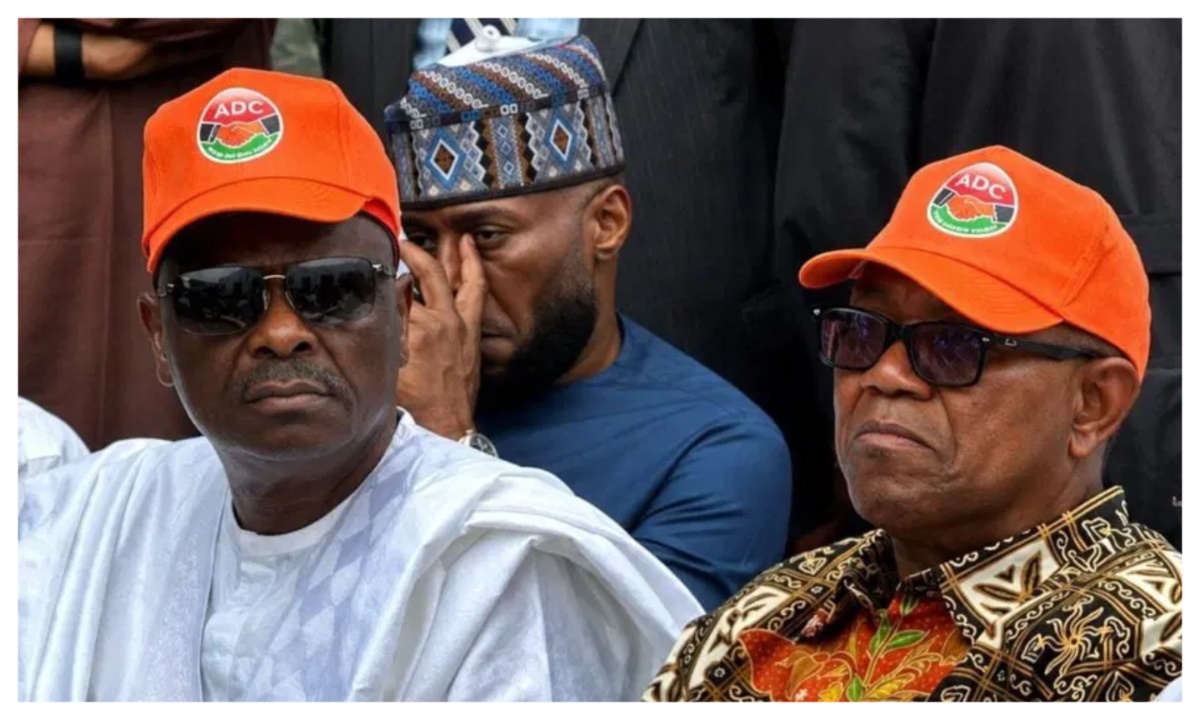
Leaders of the opposition African Democratic Congress (ADC) are facing mounting anxiety following strong indications that two of the party’s most influential figures, Peter Obi and Rabiu Musa Kwankwaso, are on the verge of defecting to the Nigeria Democratic Congress (NDC).
Multiple sources confirmed that both men, alongside close associates, held high-level consultations on Saturday with the NDC’s national leader, Seriake Dickson, in what is widely seen as a decisive step toward formalising their exit from the ADC.
A close ally of Atiku Abubakar disclosed that news of the planned defection reached key stakeholders about 24 hours earlier, prompting quiet verification efforts within political circles. Insiders say the move could be finalised within days.
Why Obi, Kwankwaso Are Leaving
Findings indicate that the looming exit is largely driven by deepening uncertainty within the ADC, particularly following the recent Supreme Court of Nigeria judgment on the party’s leadership crisis.
Beyond the legal turmoil, rising tension among presidential hopefuls within the party has further complicated matters. The struggle for the ADC’s 2027 presidential ticket—reportedly involving Obi, Kwankwaso and Atiku—has intensified behind the scenes.
Sources revealed that while Obi and Kwankwaso had been working toward a joint ticket under the ADC, resistance from Atiku’s camp—insisting on his own candidacy—created a deadlock.
“From the calculations, it became clear that the ticket would be fiercely contested, and possibly skewed,” a source familiar with the negotiations said.
The development is believed to have strengthened the resolve of both camps to seek a more stable platform.
Kwankwasiyya Confirms Advanced Talks
Confirming the development, spokesperson of the Kwankwasiyya movement, Habibu Mohammed, said discussions with the NDC had reached “about 90 per cent completion,” with only minor issues left unresolved.
“I believe him, Peter Obi, and some others will be joining the NDC,” he said, adding that the move could happen within days.
The shift has already begun to reflect at the grassroots. A key Kwankwasiyya figure, Kabiru Adamu Abdullahi, recently resigned from the ADC, citing directives from the movement’s leadership.
Galadima: ADC May Not Field Candidates
Meanwhile, elder statesman and NNPP chieftain, Buba Galadima, has openly warned that the ADC may be unable to field candidates in the 2027 elections due to legal and procedural hurdles.
Speaking at the Obi–Kwankwaso unity summit in Abuja, Galadima described the Supreme Court ruling as a “booby trap” capable of crippling the party’s electoral participation.
According to him, the court’s directive to return the matter to lower courts could create delays that would clash with critical electoral deadlines.
“If these processes cannot be concluded on time, can the ADC present candidates? The answer is obvious,” he said.
He further argued that conducting nationwide direct primaries—across over 8,000 wards—would be nearly impossible for opposition parties lacking state resources.
Fear of Coordinated Political Pressure
Galadima also warned that the anticipated defection could trigger coordinated political and media attacks aimed at discrediting opposition leaders.
“As soon as they declare their platform, expect attempts to discredit them,” he cautioned, urging supporters to counter misinformation with facts.
He alleged broader efforts to weaken opposition platforms, listing parties such as the PDP, NNPP, SDP and PRP as victims of systemic political pressure—though he did not provide verifiable evidence.
A Defining Moment for Opposition Politics
The planned defection of Obi and Kwankwaso is widely seen as a potential game-changer in Nigeria’s opposition landscape ahead of 2027.
Both politicians, who finished third and fourth respectively in the 2023 presidential election, command significant grassroots followings through the Obidient and Kwankwasiyya movements.
Analysts say their possible alliance under a new platform could reshape coalition dynamics and present a more formidable challenge to the ruling party.
For now, attention remains fixed on the coming days, as political stakeholders await what could be one of the most consequential realignments in Nigeria’s recent electoral history.


 Follow Us on Google Discover




BREAKING: Tinubu extends tenure of NCoS, Immigration service chiefs until 2028

Portugal hands Ronaldo 30-Day suspension, €255 fine for walking out of camp

Wike’s son Jordan dragged to EFCC over alleged $2.1m land fraud

Subsidy removal is here to stay, ‘we will never go back to Egypt’ – Tinubu

If Buhari a General could not end insecurity, you cannot blame Tinubu – Yari

Sanwo-Olu reportedly demands LAWMA boss’ resignation over mounting refuse in Lagos

Gregory University founder Gregory Ibe dies at 63

Abia: NAFDAC uncovers suspected N500m fake alcohol factory in Aba

Veteran journalist Christiane Amanpour set to exit CNN after four decades

Gov Otti signs four bills into law, introduces criminal justice reforms in Abia

Pandemonium as fuel tanker goes up in flames under Lagos’ Otedola bridge

FG to introduce fuel taxes when economy stabilises, Oyedele says

10 key facts about late former Delta Governor, Emmanuel Uduaghan

Bauchi NDC governorship candidate Ibrahim Kashim resigns from party

Court throws out El-Rufai’s fundamental rights suit against DSS, ICPC, EFCC
BREAKING: Former Delta Governor Emmanuel Uduaghan is dead

‘₦29,000 Cannot sustain a retired officer’ — Atiku challenges Tinubu on police pensions, proposes initiative

Opposition will front a single candidate against Tinubu, announcement will be made few days to election – Lukman

2027: Tinubu must be stopped, ‘even Buhari saw him as bad news’ — Hakeem Baba-Ahmed

Eight Nigerian Soldiers killed as ISWAP landmine hits Army patrol vehicle in Borno
Bauchi NDC governorship candidate Ibrahim Kashim resigns from party

2027: “Which North? North Korea or North Carolina?” Nigerians mock politicians promising Tinubu Northern votes

2027: NDC will never step down for Atiku, stop attacking us – Kwankwaso replies ADC Campaign Council

Messi’s double fires Inter Miami to 3-1 victory over Atlanta United

Catholic priest dies after Jesus’ statue falls on him during mass in Ecuador (video)

“I saw Akpabio at the State House begging Tinubu to keep his position” — Jake Epelle

FG defends fiscal reforms as World Bank flags ₦7.7tn debt interest

Wike, Akpabio, Uzodimma: Unity at the podium, rival ambitions behind the Scenes? can Tinubu keep his associates together?

‘Nigeria cannot become prosperous in four years’ — Tinubu’s Economic Adviser says
