Politics
North split over Obi’s proposed one-term presidency

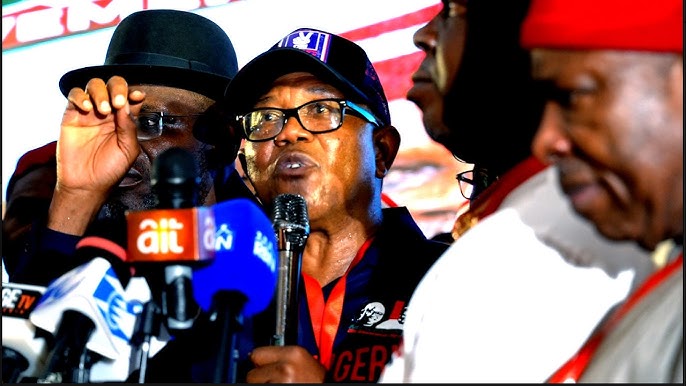
Political opinion across Northern Nigeria appears sharply divided over the renewed promise by Labour Party presidential hopeful, Peter Obi, to serve only one term if elected president in 2027.
Obi recently reiterated that he would spend only four years in office “even at gun point,” presenting the proposal as a political arrangement aimed at reassuring northern interests and preserving Nigeria’s rotational balance of power.
The development followed the decision of the National Democratic Congress to zone its presidential ticket to the South and the vice-presidential slot to the North ahead of the 2027 elections.
The arrangement is widely believed to favour Obi alongside former Kano State governor, Rabiu Musa Kwankwaso, who is reportedly being considered as a possible running mate.
However, political conversations across the North suggest that many stakeholders remain cautious about the proposal, with several analysts and opinion leaders describing it as politically strategic but lacking constitutional guarantees.
Many northern politicians reportedly view the one-term pledge as part of a broader effort to improve Obi’s acceptability in the region as opposition alliances continue to take shape ahead of the 2027 elections.
Concerns Over Trust And Constitutional Reality
A major issue repeatedly raised by northern stakeholders is the question of trust, especially in light of political events that followed the death of former President Umaru Musa Yar’Adua in 2010.
Several northern politicians referenced the decision of former President Goodluck Jonathan to contest for another term in 2011 despite earlier expectations surrounding power rotation.
For many northern political actors, the episode remains a defining moment that shaped the region’s scepticism toward informal zoning arrangements and unwritten political agreements.
Critics of Obi’s proposal argue that the Nigerian Constitution permits any president to seek re-election after completing a first term, regardless of campaign promises made before assuming office.
Political analyst Murtala Abubakar described the proposal as “a political gimmick designed to secure electoral sympathy,” insisting that no constitutional mechanism exists to compel a president to honour such a promise after winning office.
Similarly, National President of the Northern Youth Council of Nigeria, Isah Abubakar, said many northerners now approach such pledges with a “once bitten, twice shy” mentality.
According to him, once incumbency is secured, political interests around the presidency could pressure any leader to seek another term regardless of previous assurances.
Mixed Reactions Within Northern Political Blocs
Within the North-West, particularly among supporters of Kwankwaso, reactions also appear divided.
Some members of the Kwankwasiyya movement reportedly view the proposed arrangement as a strategic pathway toward returning presidential power to the North in 2031 through a negotiated alliance.
Others, however, fear that incumbency could weaken northern bargaining power once a southern-led administration becomes fully established.
Chairman of Northern Star Youths Employment Initiative, Dr. Maina Gimba, offered a more measured position, noting that Obi’s growing political outreach in parts of the North may influence future alignments.
According to him, many northern politicians are carefully studying Obi’s long-term political intentions before taking a final position ahead of the elections.
From within the ruling All Progressives Congress, APC chieftain Bala Ibrahim dismissed the proposal, insisting that constitutional provisions supersede political promises.
He argued that advisers and supporters could eventually persuade Obi to exercise his constitutional right to seek re-election if elected president.
Supporters Defend Obi’s Promise
Despite the scepticism, some supporters insist Obi should be taken at his word.
An ADC chieftain, Faisal Kabir, acknowledged that many Nigerians generally distrust political promises but said there should still be room for credibility and accountability in politics.
Obi supporter Ibrahim Hussaini Abdulkarin argued that the former Anambra governor has demonstrated consistency in honouring political commitments in the past and would likely keep the one-term pledge.
Also speaking, Dr. Muhammad Hamisu, Kano State Coordinator of Kwankwasiyya Diaspora, expressed confidence in Obi’s commitment.
“We Northerners believe in his promise to serve only one term. We remain optimistic because we believe Peter Obi is a man of integrity who will keep his promise,” he said.
Analysts, however, believe the ultimate success of the proposal may depend less on the promise itself and more on whether influential northern political heavyweights eventually endorse and legitimise the arrangement ahead of the 2027 presidential election.


 Follow Us on Google Discover







Wike, Akpabio, Uzodimma: Unity at the podium, rival ambitions behind the Scenes? can Tinubu keep his associates together?

Real reason we removed universities from IPPIS, recruitment waiver – FG

Macron condemns looting, vandalism during cost-of-living protests in France

Lagos State: List of LGAs, population, land mass, government, other key facts

Oyo State: List of LGAs, population, land mass, government, other key facts

Osun State: List of LGAs, population, land mass, government, other key facts

Ondo State: List of LGAs, population, land mass, government, other key facts

Eight Nigerian Soldiers killed as ISWAP landmine hits Army patrol vehicle in Borno

Bauchi Health Agency boss, four children die in Road accident

‘Nigeria cannot become prosperous in four years’ — Tinubu’s Economic Adviser says

2027: Tinubu must be stopped, ‘even Buhari saw him as bad news’ — Hakeem Baba-Ahmed

APC sweeps all 21 chairmanship seats, 239 Councillorship positions in Kogi LG poll

‘₦29,000 Cannot sustain a retired officer’ — Atiku challenges Tinubu on police pensions, proposes initiative

FG ends 17-year blackout in Gombe community with 1MW solar mini-grid

EPL: Leeds hold Man Utd to 1-1 draw as pressure mounts on Carrick

Opposition will front a single candidate against Tinubu, announcement will be made few days to election – Lukman
‘₦29,000 Cannot sustain a retired officer’ — Atiku challenges Tinubu on police pensions, proposes initiative

Gunmen kill four vigilantes in Plateau community

Suspended NSCDC commandant apologises over deaths of suspected illegal miners in Niger

Veteran Journalist, diplomat Dele Cole dies at 86

Tension as traditional ruler collapses, dies in Ondo

Ogun hospital under fire as Nurse dies of asthma attack amid alleged oxygen failure

2027: NDC will never step down for Atiku, stop attacking us – Kwankwaso replies ADC Campaign Council

2027: ‘APM will beat Tinubu in 12 battleground states’ – Makinde’s campaign team

Macky Sall quits race for UN Secretary-General position

COAS arrives Borno as Military moves to clear terrorist camps, rescue abductees

Buhari backed Osinbajo’s presidential ambition four times, Akande tells Babachir Lawal

Messi’s double fires Inter Miami to 3-1 victory over Atlanta United

Dr. Benjamins‑Laniyi urges media to amplify women’s leadership, adopt gender‑sensitive reporting
