National News
Just-In: World Bank approves fresh $1.25bn loan for Nigeria

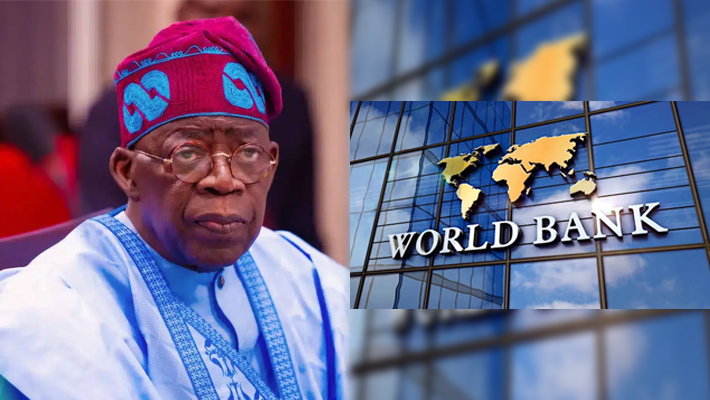
The World Bank has approved a fresh $1.25 billion loan for Nigeria under its Nigeria Actions for Investment and Jobs Acceleration Programme.
The approval was announced on Wednesday alongside the launch of the World Bank’s new Country Partnership Framework (CPF) for Nigeria covering the period from 2026 to 2032.
According to the global financial institution, the six-year framework is designed to support Nigeria’s efforts to create more and better jobs by unlocking private sector-led growth and promoting a more inclusive economy.
The latest loan approval comes amid growing public criticism over Nigeria’s rising debt profile, with many Nigerians questioning the impact of previous borrowings on living standards and economic development.
The World Bank said the new framework builds on recent macroeconomic reforms undertaken by the Federal Government, which it said have strengthened economic growth, improved external reserves and boosted investor confidence.
As part of the framework, the bank plans to support programmes that will provide electricity access to 32 million Nigerians, broadband connectivity to 58 million people, improved healthcare services for 40 million citizens and agricultural support for 9.5 million farmers.
According to the bank, the $1.25 billion facility will also finance reforms aimed at modernising regulations for the digital economy, improving the power sector, reducing trade barriers in line with regional agreements and deepening Nigeria’s domestic capital markets.
Data from the Debt Management Office (DMO) shows that Nigeria’s debt to the World Bank increased from $17.81 billion at the end of 2024 to $19.89 billion by December 31, 2025.
The World Bank now accounts for more than 38 per cent of Nigeria’s total external debt stock of $51.86 billion.
Speaking on the new framework, World Bank Country Director for Nigeria, Mathew Verghis, said the institution’s priority is to help Nigeria translate recent economic reforms into improved living standards through private sector-led job creation.
“Our new Country Partnership Framework provides the strategy for how the World Bank Group will support Nigeria over the coming years, with a strong focus on helping to create more and better jobs, particularly by enabling private sector-led growth,” Verghis said.
“The recent macroeconomic gains have been critical to help stabilise the economy. Translating improved macroeconomic conditions into better living standards will require addressing the structural constraints to spur private sector investment and job creation.”
The International Finance Corporation’s Divisional Director for Nigeria, Dahlia Khalifa, said the country’s long-term economic prospects depend on attracting more investment and improving productivity.
“Nigeria’s long-term growth potential will be shaped by the economy’s ability to attract investment, raise productivity and unleash private sector job creation, building on the capital of a rapidly growing population,” she said.
Also commenting, the Vice-President and Chief Financial Officer of the Multilateral Investment Guarantee Agency (MIGA), Ed Mountfield, said reducing investment risks would be critical to attracting more private capital.
“Nigeria’s reform progress is creating important opportunities for private investment, but risks remain for investors. MIGA’s role is to help manage these risks through guarantees and political risk insurance so that investors can step in with confidence,” Mountfield said.


 Follow Us on Google Discover



BREAKING: Air Force publishes names of 25 victims killed in Ondo aircraft crash (Full list)

Trump approves firing squad execution for Fort Hood shooter Nidal Hasan

2027: ‘Everything I do now is about Tinubu’s re-election, I think of it when I eat, sleep’ – Wike

2027: Wike mocks Atiku-Amaechi ticket, calls it ‘joint ticket of corruption’

2027: Chinda, Duke, Omo-Agege, others in limbo as INEC reviews Supreme Court verdict

Insecurity: Tinubu hold crucial meeting with defence Minister Musa in Lagos

Military aircraft crash: Tinubu declares three-day national mourning

Nigeria vs Russia: Date, time, venue where to stream

2027: 58 deregistered parties back Tinubu, Sokoto gov Aliyu

SSANU threatens University shutdown over unpaid arrears, gives FG 14 days deadline

Niger tragedy: Shettima announces N250m support for families dead miners

JAMB to establish UTME Centre in Canada for Nigerians in North America from 2027

Rivers govt shut down 21 health facilities over alleged child trafficking

Abiy Ahmed reappointed Prime Minister of Ethiopia
BREAKING: 32 persons were on board says FG, as NAF confirms ownership of crashed aircraft

BREAKING: Many feared dead as suspected Military Helicopter crashes in Ondo
BREAKING: 32 persons were on board says FG, as NAF confirms ownership of crashed aircraft

Tinubu meets Uzodinma in Lagos amid rift with Wike’s Rainbow Coalition – Details Emerge

Nine Zamfara lawmakers join ADC after dumping APC

2027: ‘He betrayed APGA’ – Anambra govt tells electorate to reject Obi, NDC

‘I warned El-Rufai to go on exile or they would jail him’ — Buba Galadima

JUST IN: Kidnappers torture 20 corps members, demand N5m ransom each

2027: Anxiety mounts as INEC awaits Supreme Court judgment on party membership rules

BREAKING: 8 Zamfara Assembly members dump APC

BREAKING: Temi Nkem wins BBNaija Season 11 ‘Show Ya Sef’

2027: PDP begins Anambra South campaign, vows to reclaim senate seat

Meet Temi Nkem, winner of BBnaija season 11

‘Tinubu saved Nigeria from economic collapse, be generous to him’ – VP Shettima

BREAKING: Security Forces kill suspected ISWAP leader planning attacks in Southern Nigeria