
Editorials
Six months to polls, South-South takes centre stage in presidential race

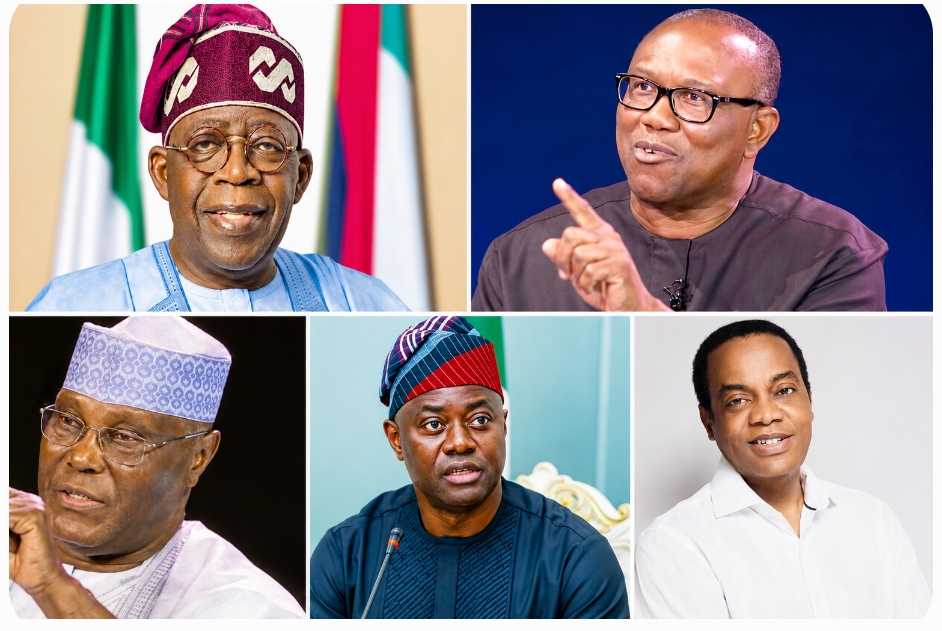
With exactly six months to Nigeria’s 2027 presidential election, the political contest across the South-South is gathering momentum as major political parties intensify campaigns to secure one of the country’s most strategic voting blocs.
The region, comprising Cross River, Rivers, Edo, Delta, Akwa Ibom and Bayelsa states, is expected to play a decisive role in determining the outcome of the presidential race, with incumbency, regional sentiment, grassroots structures and voter mobilisation likely to shape the final verdict.
Cross River: Sandy Onor seeks home advantage
The emergence of former Senator Sandy Onor as the Peoples Democratic Party (PDP) presidential candidate has placed Cross River at the centre of national politics.
Onor, a former senator and the PDP governorship candidate in 2023, enters the race with an established political network, particularly across Cross River Central Senatorial District, where the party has recently recorded defections from the ruling All Progressives Congress (APC).
Political observers believe his emergence could generate sympathy votes as one of the few presidential candidates from Cross River in recent history.
However, analysts note that regional identity alone may not be sufficient to secure victory, as voters are increasingly influenced by economic conditions, security, governance and party structures.
The APC still maintains significant advantages in the state through Governor Bassey Otu’s administration, extensive grassroots structures and incumbency.
For the PDP, the challenge will be converting renewed momentum into effective ward-level mobilisation while expanding beyond its traditional strongholds.
Nationally, Onor must also secure broad support across Nigeria to meet the constitutional requirements for presidential victory.
Rivers: Tinubu, Atiku and Obi battle for strategic votes
Rivers State is shaping up to be one of the country’s most competitive political battlegrounds.
President Bola Tinubu is widely viewed as entering the contest with the advantage of incumbency and the backing of Federal Capital Territory Minister Nyesom Wike, whose political machinery remains one of the strongest in the state.
Wike’s Grassroots Development Initiative (GDI) and the newly formed Rainbow Coalition under the Renewed Hope Family are expected to mobilise support for Tinubu’s re-election, although sections of opposition parties have distanced themselves from the coalition.
Former Vice President Atiku Abubakar, contesting on the platform of the African Democratic Congress (ADC), also retains substantial influence in Rivers through his alliance with former Governor Rotimi Amaechi.
However, the ADC continues to face internal legal and organisational challenges following recent court rulings affecting the party’s state leadership.
Former Anambra State Governor Peter Obi, contesting under the National Democratic Congress (NDC), also enjoys considerable popularity, particularly among youths and urban voters.
While Obi demonstrated strong electoral strength during the 2023 election, political analysts say translating popularity into electoral victory will depend on whether the NDC develops stronger grassroots structures before the polls.
Observers believe Rivers will ultimately be decided by voter turnout, campaign organisation, strategic alliances and effective mobilisation across the state’s 23 local government areas.
Edo: Four-way contest takes shape
Edo State is equally emerging as a key battleground ahead of the 2027 election.
The APC currently enjoys the benefits of controlling both the Federal Government and the Edo State Government under Governor Monday Okpebholo, giving the party significant organisational and mobilisation advantages.
Governor Okpebholo has publicly declared his intention to deliver 3.5 million votes for President Tinubu, although political observers describe the target as highly ambitious when measured against the state’s voter register and historical turnout.
Analysts say the APC’s chances will depend largely on public perception of the Tinubu administration’s performance in areas including the economy, security, infrastructure and employment.
Peter Obi remains one of the APC’s strongest challengers in Edo after building substantial support among youths, professionals and civil society groups during the last election.
His alliance with former Kano State Governor Rabiu Musa Kwankwaso as running mate is also expected to broaden the NDC’s national appeal.
The PDP’s prospects remain uncertain due to lingering leadership disputes and legal challenges.
Political observers say the party could still remain competitive if it resolves its internal crisis and presents a united front before the election.
The ADC is also attracting attention following the influx of prominent opposition figures into the party.
Analysts believe the party could reshape the electoral contest if it successfully builds grassroots structures across Edo’s 18 local government areas and sustains its opposition coalition.
Although the African People’s Movement (APM) is not regarded as a frontrunner, observers say smaller parties could still influence the final outcome by attracting protest votes and disaffected supporters from larger political parties.
South-South expected to remain decisive
Political analysts say the South-South remains one of Nigeria’s most influential electoral regions, where party organisation, economic realities, candidate credibility and voter mobilisation will likely outweigh ethnic or regional sentiments.
While incumbency offers the APC considerable advantages in several states, opposition parties are banking on economic concerns, coalition-building and voter dissatisfaction to improve their chances.
With campaigns expected to intensify in the coming months, the battle for the South-South is shaping into one of the defining contests of Nigeria’s 2027 presidential election.


 Follow Us on Google Discover






APM, Makinde sue Otti over alleged N200m campaign levy in Abia

‘Why are afraid of entering America?’, Atiku blasts Tinibu for missing third consecutive UNGA

Gunmen storm Kebbi community, kill village head

Former Kogi Gov Ibrahim Idris dies in UK

NDLEA seizes N3.4bn drugs, nab fake cop, mechanic

Falconets crash out of 2026 U-20 Women’s World Cup after 1-0 loss to Colombia

BREAKING: Tinubu confirms absence from 81st UN General Assembly in New York, directs Shettima to lead Nigerian delegation

2027: ‘Obi will defeat Tinubu by a wider margin in Lagos’ — NDC

NDC disowns OK Movement campaign council, refers John Ugulu for discipline

Raphinha set to sign new Barcelona contract until 2030

Four Nigerians receive UNGA Humanitarian, Goodwill Ambassador honours in New York

‘We Won’t Go Back to Egypt’ — Showunmi rejects Atiku’s petrol subsidy proposal

NSCDC names new Niger commandant following death of miners in custody

ECOWAS court set to hold 2026 international conference in Dakar

Nigerians already seeing reductions in transport fares – Tinubu
BREAKING: Tinubu confirms absence from 81st UN General Assembly in New York, directs Shettima to lead Nigerian delegation
Nigerians already seeing reductions in transport fares – Tinubu

Tinubu may shun UN General Assembly in New York – Fresh details emerge

‘Before lecturing Tinubu, you must answer questions from your past’ — Presidency to Atiku
‘We Won’t Go Back to Egypt’ — Showunmi rejects Atiku’s petrol subsidy proposal

Deji Adeyanju, Buhari others appointed as FG constitutes committee to probe NSCDC custody deaths (Full List)

‘The Site Belongs To Babangida’ – Survivor links deaths of miners in NSCDC custody to ex-Military Ruler
Four Nigerians receive UNGA Humanitarian, Goodwill Ambassador honours in New York

PL: Brighton thrash Arsenal 3-0, end Gunners’ winning run

Sowore as best president Nigeria refuses to have: by Farooq A. Kperogi
Falconets crash out of 2026 U-20 Women’s World Cup after 1-0 loss to Colombia
ECOWAS court set to hold 2026 international conference in Dakar
Raphinha set to sign new Barcelona contract until 2030

NSCDC detains suspended Niger commandant, 21 officers over deaths of 37 miners
