World
Iran dismisses Trump’s claims of fresh diplomatic engagements

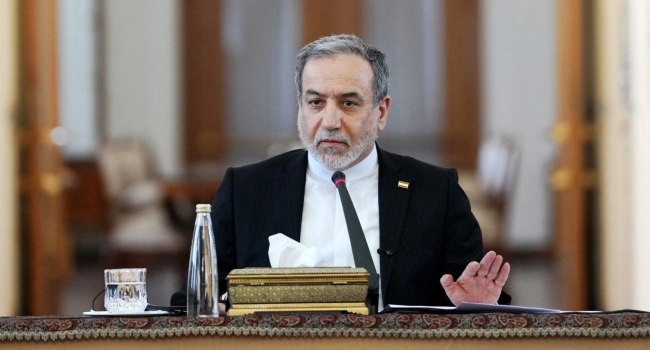
Iran has dismissed claims that it is engaged in fresh negotiations with the United States, contradicting President Donald Trump’s announcement that new talks were set to begin on Monday to help end the conflict between the two countries, now in its sixth month.
In a statement, Iran’s foreign ministry said no negotiations were currently taking place with Washington.
The denial came shortly after Trump claimed he had delayed authorising new military strikes against Iran to create room for renewed diplomatic engagement.
Trump suggested that dialogue remained a possible path to easing tensions, continuing a pattern in which military pressure has alternated with attempts at diplomacy.
The United States and Iran have been locked in conflict since February 28, when the US and Israel carried out coordinated surprise strikes on Iranian targets.
Although the fighting has continued for months, intermittent diplomatic contacts have occasionally reduced tensions without producing a lasting settlement.
Trump last week threatened to hit Iran “very hard”, with the US leader reportedly considering renewed attacks, including against energy infrastructure.
But the president pulled back from that threat Saturday, saying the “perimeters” of a deal were there.
Iran’s foreign ministry, however, denied there were currently negotiations taking place.
“We are not currently negotiating with the United States. Our negotiations are with Oman to secure passage through the Strait of Hormuz,” said foreign ministry spokesman Esmaeil Baqaei during a weekly press briefing.
The Hormuz shipping route is a major sticking point in efforts to end the war. Iran has obstructed vessels attempting to pass the critical trade corridor, firing on commercial ships.
Before the war, there was free passage through the strait, but Iran now insists on retaining control and charging fees, something the US rejects.
Tehran has refused to let ships travel any route other than one which hugs the Iranian coast.
On Sunday, Baqaei told state television that a deal was close on managing Hormuz together with Oman, which sits on the other side of the narrow waterway.
“We are now going to reach an understanding on a route acceptable to both sides — neither the northern route nor the southern route — but one that respects the sovereign rights of both sides and safeguards our national interests and security,” he said.
But he insisted that such an agreement did not mean the reopening of the strait.
‘It Begins Tomorrow’
On Sunday, a tanker off the coast of Oman reported hearing an explosion nearby, the United Kingdom Maritime Trade Operations (UKMTO) Centre reported, but the ship and crew were all reported safe.
Trump told reporters on Sunday that the new talks with Iran would cover Hormuz and ultimately the denuclearisation of Iran.
The US president said at the start of the conflict that the war was necessary to deal with Iran’s nuclear programme. Western nations accuse Iran of seeking a bomb, though Tehran insists the programme is entirely civilian in nature.
“Now what we’re doing is we’re talking to them in the form of a negotiation. It begins tomorrow afternoon,” Trump told reporters aboard Air Force One on Sunday, without providing details of the venue or participants.
The president said he had been asked by Iran as well as US partners Saudi Arabia, the United Arab Emirates and Qatar to hold off on further strikes, which he claimed would have been “the biggest attack since World War II”.
Iranian media denied that Tehran had asked Trump not to strike.
Trump has repeatedly claimed a settlement to end the war is near, only for fighting to resume. He has previously issued apocalyptic warnings to Tehran, only to later backtrack by saying diplomacy was underway.
US Vice President JD Vance disembarks Marine Two as he arrives at Joint Base Andrews, Maryland, on June 20, 2026.
A previous ceasefire deal between the foes fell through last month. It was supposed to open the Strait of Hormuz to ships carrying vital energy exports from the Gulf to feed the global economy.
Iranian lawmaker Hassan Ghashghavi, spokesman for the parliament’s national security commission, said on Sunday that mediators were trying to revive the US-Iran memorandum of understanding that was agreed in June.
That agreement was not intended as a final peace deal, but as a stepping stone to negotiations on a comprehensive agreement, though it did include provisions on Hormuz.
“They know that the main issue and, in fact, the key to the matter right now is the issue of the Strait of Hormuz, so yes, there is an exchange of views,” Ghashghavi said.
Posting on X, Iranian President Masoud Pezeshkian said: “We must strive to compel the enemy to remain committed to what it has signed.”


 Follow Us on Google Discover






UNGA: Tinubu afraid of becoming Trump’s next Nicolas Maduro – Atiku

NSCDC releases names of 37 suspected illegal miners who died in custody (Full list)

Crisis looms in NDC as OK Movement clash with pary chairman, Head of Operations resign over campaign council list

APM, Makinde sue Otti over alleged N200m campaign levy in Abia

‘Why are afraid of entering America?’, Atiku blasts Tinibu for missing third consecutive UNGA

Gunmen storm Kebbi community, kill village head

Former Kogi Gov Ibrahim Idris dies in UK

NDLEA seizes N3.4bn drugs, nab fake cop, mechanic

Falconets crash out of 2026 U-20 Women’s World Cup after 1-0 loss to Colombia

BREAKING: Tinubu confirms absence from 81st UN General Assembly in New York, directs Shettima to lead Nigerian delegation

2027: ‘Obi will defeat Tinubu by a wider margin in Lagos’ — NDC

NDC disowns OK Movement campaign council, refers John Ugulu for discipline

Raphinha set to sign new Barcelona contract until 2030

Four Nigerians receive UNGA Humanitarian, Goodwill Ambassador honours in New York

‘We Won’t Go Back to Egypt’ — Showunmi rejects Atiku’s petrol subsidy proposal
BREAKING: Tinubu confirms absence from 81st UN General Assembly in New York, directs Shettima to lead Nigerian delegation

Nigerians already seeing reductions in transport fares – Tinubu

‘Before lecturing Tinubu, you must answer questions from your past’ — Presidency to Atiku
‘We Won’t Go Back to Egypt’ — Showunmi rejects Atiku’s petrol subsidy proposal
Deji Adeyanju, Buhari others appointed as FG constitutes committee to probe NSCDC custody deaths (Full List)

‘The Site Belongs To Babangida’ – Survivor links deaths of miners in NSCDC custody to ex-Military Ruler
Four Nigerians receive UNGA Humanitarian, Goodwill Ambassador honours in New York

PL: Brighton thrash Arsenal 3-0, end Gunners’ winning run
Why EFCC must prosecute Atiku – Agbonayinma
Raphinha set to sign new Barcelona contract until 2030

NSCDC names new Niger commandant following death of miners in custody

NSCDC detains suspended Niger commandant, 21 officers over deaths of 37 miners
NDC disowns OK Movement campaign council, refers John Ugulu for discipline

Sowore as best president Nigeria refuses to have: by Farooq A. Kperogi