News
Man detained, charged with treasonable felony for destroying Tinubu’s billboards in Katsina

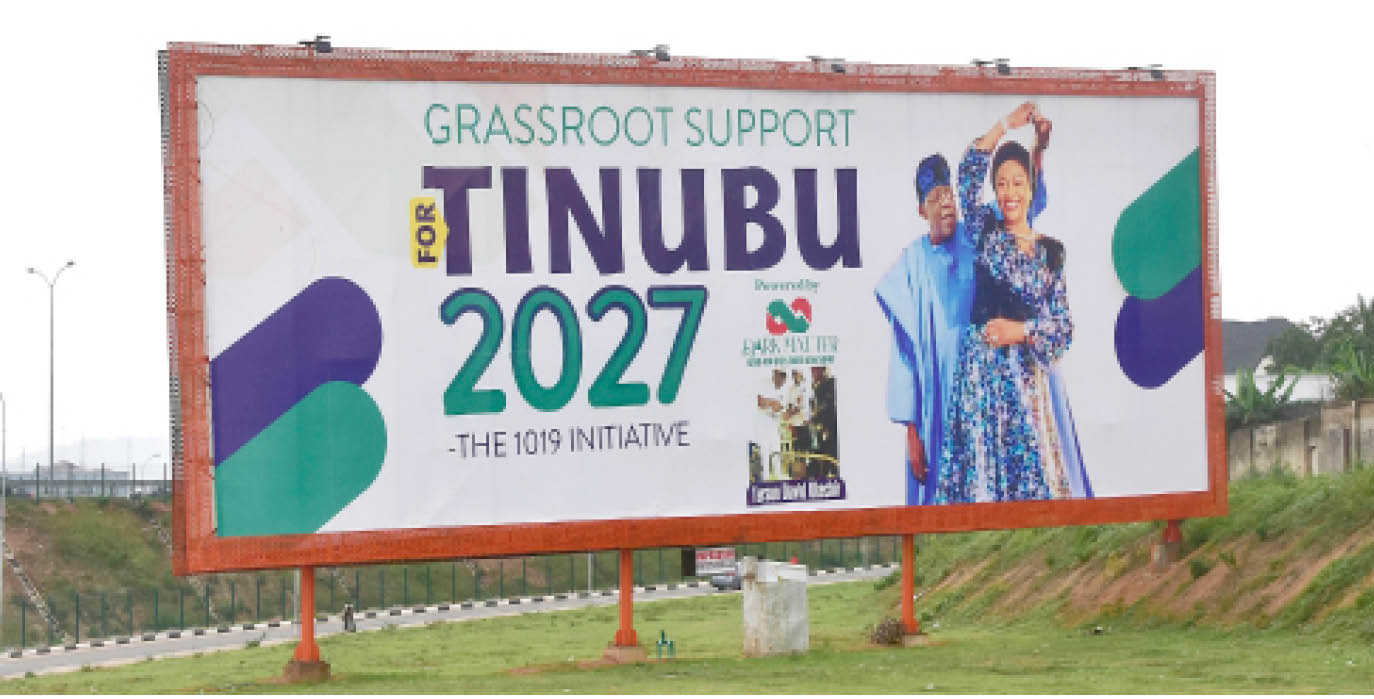
A Katsina State resident, Aminu Sanda, popularly known as Nesta, has been detained and charged with treasonable felony over allegations that he destroyed campaign billboards bearing the image of President Bola Tinubu.
Sanda was initially invited by the police in Katsina before being detained over allegations that he pulled down Tinubu’s billboards and broke into the Katsina State Secretariat of the All Progressives Congress (APC), where he was accused of stealing N35 million.
The suspect, however, has denied the allegations, describing the claims that he destroyed the billboards and broke into the APC secretariat to steal money as unfounded.
He was subsequently transferred to the Force Headquarters in Abuja and later remanded by a Magistrate Court sitting in Jiwa, Federal Capital Territory (FCT).
The police had approached the court through a motion ex parte, seeking an order to remand Sanda for two weeks to enable them to investigate the allegations against him.
However, when his lawyers appeared in court on Tuesday to seek his bail, the police filed another application requesting an additional two weeks to conclude their investigation.
The Magistrate, Huzaifa Macchudo, reserved ruling on the bail application and adjourned the matter to September 15.
According to Sanda’s lawyers, the decision to reserve ruling could enable the police to seek a further extension of his remand while he remains in custody.
A source familiar with the case confirmed that Sanda was arraigned on Tuesday.
Meanwhile, legal experts have questioned the treasonable felony charge brought against the suspect, arguing that the alleged destruction of a political billboard, on its face, does not constitute treasonable felony under Nigerian law.
Human rights lawyer Hameed Ajibola Jimoh described the charge as surprising.
“It’s shocking that removing a billboard would amount to a treasonable felony,” Jimoh said.
“Felony has a definition. Treason also has a definition. Removing a billboard is political.”
Jimoh acknowledged that the allegations could potentially raise other legal issues depending on the circumstances surrounding the incident, but questioned how the alleged act could amount to treasonable felony.
“Such does not, to the best of my knowledge, amount to a treasonable felony, except we look at the section under which they are charging the person and what the law says,” he said.
Another lawyer, Abdurrahman Salis, also described the charge as “surprising”, arguing that pulling down a presidential billboard did not, on the face of it, fall within the legal definition of treasonable felony.
“It is surprising. It would be surprising not only to a lawyer but even to a law student to see this kind of charge pressed against a person alleged to have pulled down the President’s billboard in Katsina State,” Salis said.
He explained that treason and treasonable felony are separate offences under Nigerian law and involve circumstances considerably more serious than the alleged destruction of campaign material.
“Under our laws, for an act to constitute an offence, it must be defined by law. The elements of that offence must be stated by law and the punishment must also be provided,” he said.
According to Salis, treasonable felony could involve an intention to unlawfully remove the President or a state governor outside constitutional means, an intention to wage war against Nigeria, or involvement in instigating an armed invasion of the country.
“Under the treasonable felony provisions that we are talking about, there is nowhere that pulling down a presidential billboard is mentioned as a treasonable felony,” he said.
“If you look at it critically, pulling down a presidential billboard does not qualify as a treasonable felony under our laws.”
Salis, however, noted that the alleged destruction of the billboard could potentially amount to another offence depending on the facts established during investigation.
The case has emerged against the backdrop of growing political tension within the Katsina State chapter of the APC ahead of the 2027 general elections.
The controversy reportedly followed the destruction of campaign billboards bearing the images of Tinubu and his Special Adviser on Political Affairs, Ibrahim Masari, in parts of Katsina State.
The incident had attracted wider attention after two security aides attached to Governor Umar Dikko Radda were reportedly invited to the Nigeria Police Force Headquarters in Abuja for questioning over the alleged destruction of the billboards.
Sanda was subsequently invited and detained by the police over allegations of involvement in the incident.
His defence has also drawn attention, as he reportedly identifies himself as the Katsina State chairman of the Dikko/Tinubu Vanguard, a political support group backing President Tinubu.
He has questioned why he would destroy campaign materials belonging to a president and political movement he claims to support.
The billboard controversy comes amid reported political disagreements within the Katsina APC, particularly between interests associated with Governor Radda’s political structure and influential federal politicians from the state, including Masari.
Against this backdrop, the billboard incident has further fuelled political tension and speculation over the unfolding realignments ahead of the 2027 elections.
For now, Sanda remains in custody as the court considers his bail application, while the police continue their investigation into the allegations against him.


 Follow Us on Google Discover







I fear APC’s internal crisis more than Atiku – Shettima

Why Shettima Insults Atiku: by Farooq Kperogi

Messi’s double fires Inter Miami to 3-1 victory over Atlanta United

Opposition will front a single candidate against Tinubu, announcement will be made few days to election – Lukman

La Liga: Unstoppable Barcelona beat Real Betis 5-2 to extend winning run

EPL: Super Eagles star Iwobi fires Fulham to first league victory

Ogun hospital under fire as Nurse dies of asthma attack amid alleged oxygen failure

Maryam Babangida Center for Women Devt gets first wheel chair ramp after 34 years

Shettima inaugurates Arewa for Asiwaju campaign office in Abuja

2027: ‘APM will beat Tinubu in 12 battleground states’ – Makinde’s campaign team

Veteran Journalist, diplomat Dele Cole dies at 86

Suspended NSCDC commandant apologises over deaths of suspected illegal miners in Niger

EPL: Martinez rushed to hospital after head injury as Chelsea beat Everton

COAS arrives Borno as Military moves to clear terrorist camps, rescue abductees

Macky Sall quits race for UN Secretary-General position

Erisco Foods announces 13 job openings across Nigeria – Apply Now

2027: Step down if you are not working for Tinubu – Deji Adeyanju dares Obi, Kwankwaso

House Officers, Nurses, Radiographers, Others wanted as DELSUTH opens recruitment – Apply Now

Tinubu reappoints Bala Bila as INEC commissioner, nominates six others

2027: Kwankwaso a goat in sheep’s clothing, secretly working for Tinubu – Atiku Campaign Council

33 Governors cannot be wrong in supporting Tinubu – Bayo Onanuga

Atiku fully fit, ready to campaign in all 36 states, interact with Nigerians – ADC PCC

Security forces arrest five suspects over abduction of 20 NYSC members in Imo

2027: ‘Don’t trust your destiny to ‘kalokalo’ people’ – Wike warns Rivers voters against Atiku, Amaechi, Obi

Outrage as suspected cultists unveil renovated police post in Rivers

BREAKING: Oyebanji makes history as first Ekiti Governor to win second consecutive term

LAUTECH Resident Doctors halt 50-day strike as Makinde intervenes

2027: ‘I wont join my Uncle to support Tinubu’ – Davido says

DSS arrests Maina’s fugitive son in Abuja, hands him over to EFCC
