
News
One Week after NAF crash, search for Black Box, victims’ remains continues in Ondo swamp

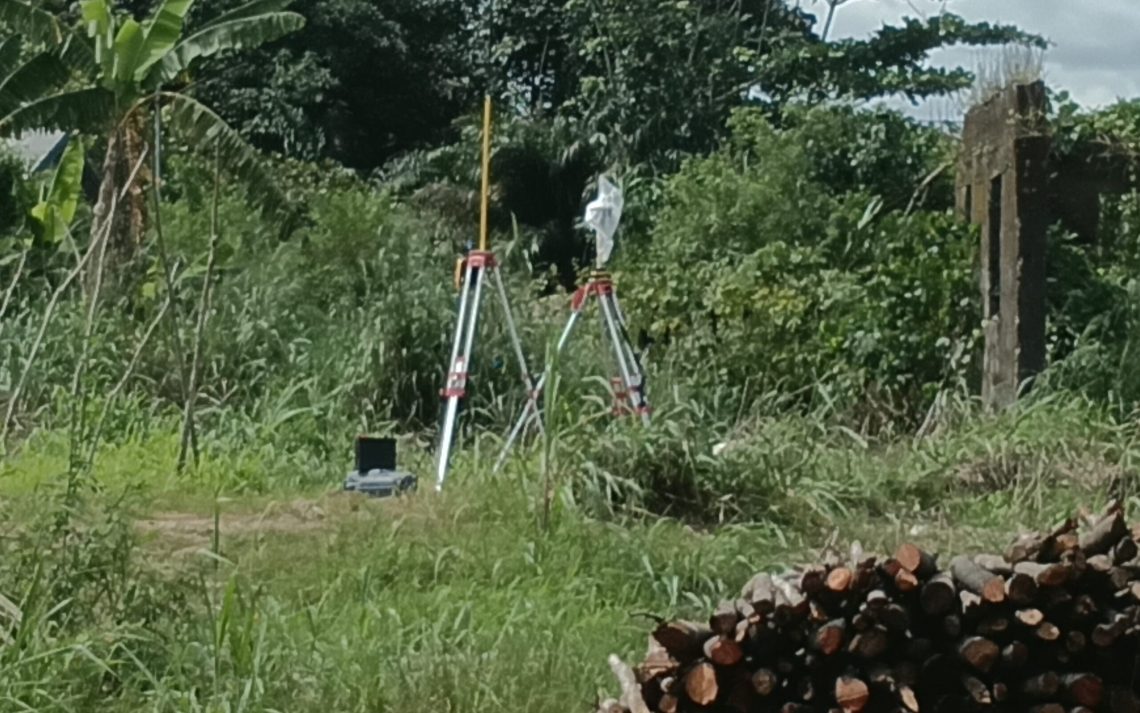
Divers and rescue teams have intensified efforts to recover the black box and remains of victims of the Nigerian Air Force aircraft crash in Igbokoda, Ondo State, one week after the accident.
The ATR-42 aircraft reportedly plunged into a swamp in Igbokoda, headquarters of Ilaje Local Government Area, on October 5, killing all 25 people on board.
The recovery operation, which began shortly after the crash, has yielded fragments of the aircraft and human remains. However, the force of the impact and the difficult swamp terrain have made the recovery and identification of the victims challenging.
When Journalists visited the crash site on Monday, rescuers were still working in the muddy waters in search of the aircraft’s black box, also known as the flight recorder.
The Very Nigerian reports that the search team might have located the precise crash site, although efforts to obtain confirmation from Nigerian Air Force and police officials were unsuccessful.
A source familiar with the recovery operation also indicated that the team had lowered its expectations of recovering the victims’ bodies intact because of the extensive damage to the aircraft.
An operator of the swamp buggies used in the operation, who spoke anonymously because he was not authorised to comment publicly, said part of the pilot’s body had been recovered from a section of the wreckage.
“We found the body of the pilot, but it was cut in the middle and half of it is what was brought out,” the operator said.
He added that the team had recovered small pieces of the aircraft but expressed doubts about finding the main fuselage intact.
“The place is deep, and much of it is muddy. We are now focused on finding the black box. That is the directive we have, and after we find it, I would not know what next will happen,” he said.
More equipment deployed for recovery operation
At the riverbank, technicians were seen assembling a flotation device for the swamp buggies, also known as amphibious excavators, in preparation for further recovery work in the difficult terrain.
A technician told Journalists that the equipment would be attached to the machinery to improve its ability to navigate the muddy waters.
He explained that the team was preparing additional flotation equipment to support the ongoing search operation.
The deployment of the equipment suggests that the recovery team is preparing to continue working in areas where the swamp’s depth and muddy conditions have complicated access to the wreckage.
Residents raise concerns over water pollution
Meanwhile, concerns have emerged over possible contamination of the water around the crash site.
An operator involved in the recovery effort reportedly observed aviation fuel and oil in the water, alongside human remains from the crash.
The development has raised concerns among residents because the river serves as a major source of water for the Igbokoda community.
The community’s traditional ruler, Afolabi Odidiomo, had earlier expressed concern about the possibility of water pollution arising from the crash and the recovery operation.
He also highlighted the difficulties involved in retrieving the victims’ remains from the swamp, particularly given the likelihood that some remains had been submerged in the surrounding water.
The environmental concerns have added another dimension to the recovery operation, with residents facing uncertainty over the safety of their water source.
As the search continues, the recovery of the black box is expected to be important in helping investigators establish the circumstances surrounding the crash. However, the search team had not publicly confirmed its recovery as of the time of the report.


 Follow Us on Google Discover








Press Freedom Advocate Livinus Victor demands public apology from Abike Dabiri-Erewa over Journalism remarks

BREAKING: APC revises Tinubu Campaign Council, names Wike, Adeleke, Soludo as FCT, Rivers, Osun, Anambra coordinators (Full List)

FG demands arrest, prosecution of suspect in stabbing of Medical Scientist in Ogun

2027: Economic hardship, appointments threaten Tinubu’s support in Northern Nigeria

One Week after NAF crash, search for Black Box, victims’ remains continues in Ondo swamp

My Father’s reforms are intended to secure Nigeria’s future – Seyi Tinubu

Real reason INEC excluded Adebutu, Pantami, others from final governorship candidates’ list

‘Oyedele lacks right educational background to manage Nigeria’s economy’ – ADC spokesperson

BREAKING: Police arrest former Imo governor Rochas Okorocha in Abuja

Kwara Gov presents 25 Hilux vehicles to Police, plans 100 for security agencies

Amaechi accuses Akpabio of seizing Cross River oil wells

‘Tinubu Must Go’ – He’s planning to obtain fresh $20bn loan for Coastal Highway project – Atiku

Dangote refinery extends IPO offer period by two weeks, sets new deadline

BREAKING: Publish my name within 72hrs or else…. – Pantami give INEC ultimatum

2027: Shettima meets Yahaya Bello, Badaru, other political leaders at Presidential Villa

Dangote Group opens 86 vacancies in Engineering, Finance, Logistics, HR, other fields

ECOWAS Bank opens applications for 2026 Young Professionals Programme

2027 Elections: INEC publishes final list of governorship candidates nationwide (Full list)
BREAKING: Police arrest former Imo governor Rochas Okorocha in Abuja

Christopher University announces staff recruitment for academic, administrative positions

JUST IN: US publishes names, identities of 24 Nigerians facing deportation

INEC names Tinubu, Atiku, Obi, 15 others in 2027 presidential race (Full List)

‘Our ransom has been refunded’, says parents of abducted NYSC member

Latest World Bank report proves our reforms are working – Tinubu

2027: Obi is a ‘packaged fraud’, he’s secretly working for Atiku, positioning himself to become SGF – Sowere alleges
BREAKING: APC revises Tinubu Campaign Council, names Wike, Adeleke, Soludo as FCT, Rivers, Osun, Anambra coordinators (Full List)

Names of 68 lawyers elevated to SAN rank (Full list)

BREAKING: Makinde appoints Wolekanle as new Chief of Staff

Ex-Akwa Ibom University SUG President dies at Enugu NYSC camp
