
News
Beating The Basin Heat: How Gwagwalada Health Authorities are mobilizing against severe heatwave advisories

GWAGWALADA, FCT —
As the mid-day sun beats down relentlessly on the low-lying basin of Gwagwalada, the shimmering heat off the Gwagwalada–Lokoja expressway does not merely signal a change in weather,it presents an urgent public health challenge.
With temperatures climbing and national meteorology advisories warning of severe heatwaves across Nigeria, local health authorities are mounting a grassroots defense to protect vulnerable residents.
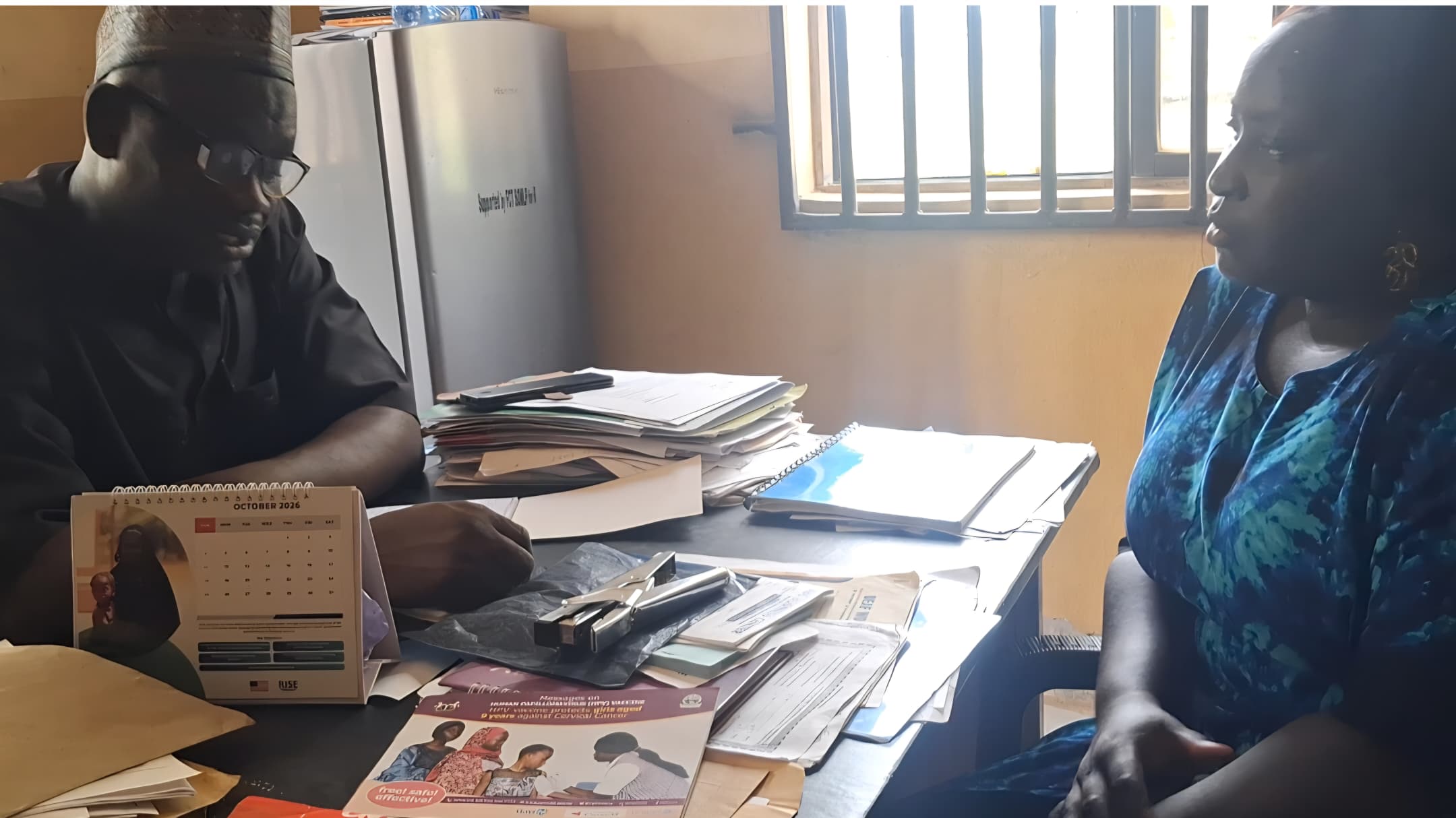
In an exclusive interview, the Acting Director of Primary Health Care for the Gwagwalada Area Council, Alhaji Abdullahi, outlined the health risks confronting the area and detailed the Council’s proactive public health strategy.
“When we speak of a heatwave, we are talking about extreme overheating that spreads right across our entire community,” Alhaji Abdullahi explained. “It is not just about feeling hot; it is a physiological strain that leaves no household untouched.”
According to health officials, local primary healthcare centers are already being sensitized to handle heat-induced ailments. Prolonged exposure to extreme heat rapidly drains core energy, leading to several widespread physical symptoms, profound body weakness,continuous overheating causes extreme fatigue, making basic daily labor exhausting.
Persistent muscle pain, high ambient temperatures trigger general body aches that persist whether a person is resting or awake.
Intense thirst causes increased water intake, which is quickly passed through the body, risking acute electrolyte imbalance if not managed correctly.
Prolonged exposure triggers persistent headaches that often resist standard pain medication until the individual moves into a shaded or well-ventilated space.
“As soon as you get into a cool space,under good ventilation or air conditioning you will see that the dehydration, weakness, body pain, and headaches begin to subside,” Abdullahi noted.
Addressing extreme heat in semi-urban and rural satellite towns requires more than medical advice; it demands structural adaptation.
Alhaji Abdullahi highlighted that home construction habits in the Area Council must evolve to prioritize natural airflow.
He urged prospective homeowners and builders to consult experts to design houses with proper cross-ventilation ensuring opposing windows allow natural breezes to circulate freely.
To balance cooling with safety, he advised residents to install sturdy, secure burglary proofing so windows can remain safely open overnight.
Furthermore, the Director called on public utility providers to prioritize stable electricity supply during heatwave advisories.
“Government and utility providers must keep the light constant,” he stressed. “For residents who cannot afford air conditioning, a steady power supply allows them to run fans, which are vital for indoor air circulation when rooms are properly ventilated.”
To ensure safety advisories reach every corner of the Area Council, from busy market stalls in central Gwagwalada to remote agricultural settlements like Sheda, Checheyi, and Dabi the Health Department is deploying its field teams.
The Council’s Social Mobilization and Health Education Officer has been instructed to integrate heatwave awareness into all ongoing community health campaigns.
“Right now, our officers are conducting community dialogues on zero-dose immunization across various wards,” Abdullahi revealed.
“We have instructed them to include heatwave education in those sessions so that every community knows what is coming and how to safeguard their families.”
As seasonal heat conditions persist across the Federal Capital Territory, local health leaders emphasize that basic precautions staying hydrated, avoiding direct sun exposure during peak afternoon hours, ensuring indoor ventilation, and looking out for children and the elderly remain the most effective line of defense.


 Follow Us on Google Discover











FG set to launch digital export platform to curb revenue leakages December 14

NDLEA storms notorious Edo drug hub, arrests three suspects

Beating The Basin Heat: How Gwagwalada Health Authorities are mobilizing against severe heatwave advisories

UNIJOS names Patricia Lar as first female Vice-Chancellor after five decades

INEC begins distribution of election materials ahead of 2027 general polls

ADC Crisis: INEC will abide by Court ruling on Atiku’s 2027 presidential ambition

UNN VC confirms four deaths, declares three-day mourning over house party tragedy

2027: “We need to complete what we started, please vote for us” — Tinubu begs Edo residents

Kwara State: List of LGAs, population, land mass, government, other key facts

Kogi State: List of LGAs, population, land mass, government, other key facts

Kebbi State: List of LGAs, population, land mass, government, other key facts

Katsina State: List of LGAs, population, land mass, government, other key facts

Kano State: List of LGAs, population, land mass, government, other key facts

Kaduna State: List of LGAs, population, land mass, government, other key facts

Southwest Monarchs reject fuel subsidy return, endorse Tinubu for second term

Six UNN Students found dead in apartment a day after graduation

FG clears 21-Month Pension arrears, pays Federal Workers’ accrued rights up to December 2029 — PenCom

Ex-Obidient Movement Leader, Yunusa Tanko dumps Obi, emerges SDP Campaign Coordinator

BREAKING: Tinubu gifts N100m each to Flamingos winning U-17 World Cup

2027: INEC may take action on ADC next week – Mohammed Haruna

NDC crisis deepens as deputy national publicity secretary Abdulsalami resigns

Army arrests father, son over suspected terrorist links in Sokoto, recovers AK-47

2027: INEC removes AI-generated photos from voters’ register, flags officials in 10 states

Akure socialite Ade Basket dies weeks after wife’s burial

ADC crisis takes new turn as court rejects Nafiu Bala’s alleged resignation letter

Makinde cautions Oyo lawmakers, says he remains Governor until May 2027

Nigerian Navy destroys two illegal refining sites in Rivers, recovers 53,000 litres of petroleum products

Thugs storm Peter Obi’s NDC town hall meeting, attack supporters in Lagos

Nollywood actor Justin UG enlist in US Air Force (Photos)
