
News
Reps consider bill to ban landlords from demanding more than one year’s rent in FCT
The bill aims to prevent landlords and their agents from using other arrangements to bypass the proposed restriction.


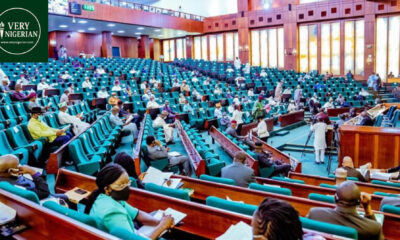
The House of Representatives is considering a bill seeking to stop landlords, property managers and estate agents in the Federal Capital Territory (FCT) from demanding more than 12 months’ rent upfront before granting or renewing tenancy agreements.
The proposed legislation, sponsored by Paul Nnamchi, representing Enugu East/Isi-Uzo Federal Constituency, and Ahmed Doro, representing Bindawa/Mani Federal Constituency of Katsina State, also seeks to establish an authority to regulate rental payments and protect tenants from unlawful practices.
The bill aims to prevent landlords and their agents from using other arrangements to bypass the proposed restriction.
Such practices include using intermediaries, imposing compulsory service charges, creating artificial tenancy renewals, entering into separate agreements or adopting other methods to compel tenants to pay more than one year’s rent upfront.
Under the proposal, tenants could voluntarily pay rent for more than one year if they initiate the arrangement without coercion, threats, discrimination, or retaliation, provided the agreement and payment are documented in writing.
The proposed legislation also requires landlords and authorised agents to provide written tenancy agreements before or at the start of a tenancy, specifying the rent, payment schedule, tenancy duration, refundable deposits, additional charges, and the rights and obligations of both parties.
The bill aims to establish the Federal Capital Territory Rent Regulation and Tenants’ Protection Authority, which would investigate complaints, monitor compliance, facilitate dispute resolution and order refunds of unlawful rental payments.
If the authority finds that a tenant paid rent in violation of the proposed law, it may order a refund of the unlawful amount within 30 days of serving the order.
The bill proposes fines of between N500,000 and N5 million for individuals convicted of knowingly violating the restriction on advance rent payments, while corporate offenders would face fines ranging from N5 million to N20 million.
The proposed law also provides for a fine of up to N1 million for anyone convicted of failing to comply with a valid compliance notice issued by the authority.
Tenants and landlords would retain the right to seek judicial redress, while anyone dissatisfied with the authority’s decisions could appeal to the FCT high court within 30 days.
Last year, the parliament proposed capping rent increases nationwide at 20 percent and urged the federal government to enforce the measure, but the resolution has not been verifiably implemented.


 Follow Us on Google Discover











Seven-Up opens recruitment for 17 positions across Nigeria – Apply Now

Backend Office HQ announces 9 job openings with salaries of up to ₦400,000 – Apply Now

Reps consider bill to ban landlords from demanding more than one year’s rent in FCT

El-Rufai’s N10bn suit: Court approves ICPC’s request to play CCTV footage

2027: ‘If they can match my energy, vote for them’ – Makinde jumps off stage to challenge rivals

Police allegedly invade hospital owned by ex-Super Eagles star Emenike after he criticized Imo Governor

‘Politics Is Not Madness’: Emir of Katsina warns Tinubu Campaign DG Yari

Terrorism: Court sentences Gana’s spy to 40 years in prison for aiding Benue militia leader

Police arrest man over Lexus SUV with concealed ‘presidency’ number plate in Abuja

Ebola: FG bars 46 contacts of infected patient from air travel for 21 days

Bandits intercept vehicle in Sokoto, gun down all passengers

Bauchi Imam removed from position for allegedly campaigning for Tinubu’s second term

Dele Giwa: Forty Years after the parcel that shook Nigeria: by Shu’aibu Usman Leman

Ebola: ‘We’re on top of the situation’ — Tinubu Govt urges Nigerians not to panic

Momodu says Atiku has more national experience than Tinubu, Obi

BREAKING: FG reports confirmed Ebola case in Abuja, identifies 44 contacts for tracing

Seven-year-old boy found dead after suspected kidnappers demand N2.5m ransom in Plateau

Oyebanji appoints four officials, swears in SSG, chief of staff in Ekiti

Toluwanisings: Family announces night of tributes, service of songs for late gospel singer
‘Politics Is Not Madness’: Emir of Katsina warns Tinubu Campaign DG Yari

Tinubu meets NELFUND Chairman Jim Ovia at Aso Rock

History and service have kept us intertwined – Tinubu celebrates Kwankwaso at 70
2027 Election: Court rejects suit to compel INEC to register new party

‘Where is my house?’ – Ortom questions Alia over denial of ex-governor’s benefits

2027: He is a ‘wole wole’ man – APC National Secretary questions Atiku’s ability to fix Nigeria’s economy

Ebola: 10 Warning signs and prevention tips you should know

UCL: Man United suffer 4-1 defeat to Como as pressure mounts on Carrick
Bauchi Imam removed from position for allegedly campaigning for Tinubu’s second term
Ebola: Senate urges FG to release emergency funds, enforce screening at entry points
