Opinion
Why Atiku? The Answer is in The Solutions: by Paul Ibe

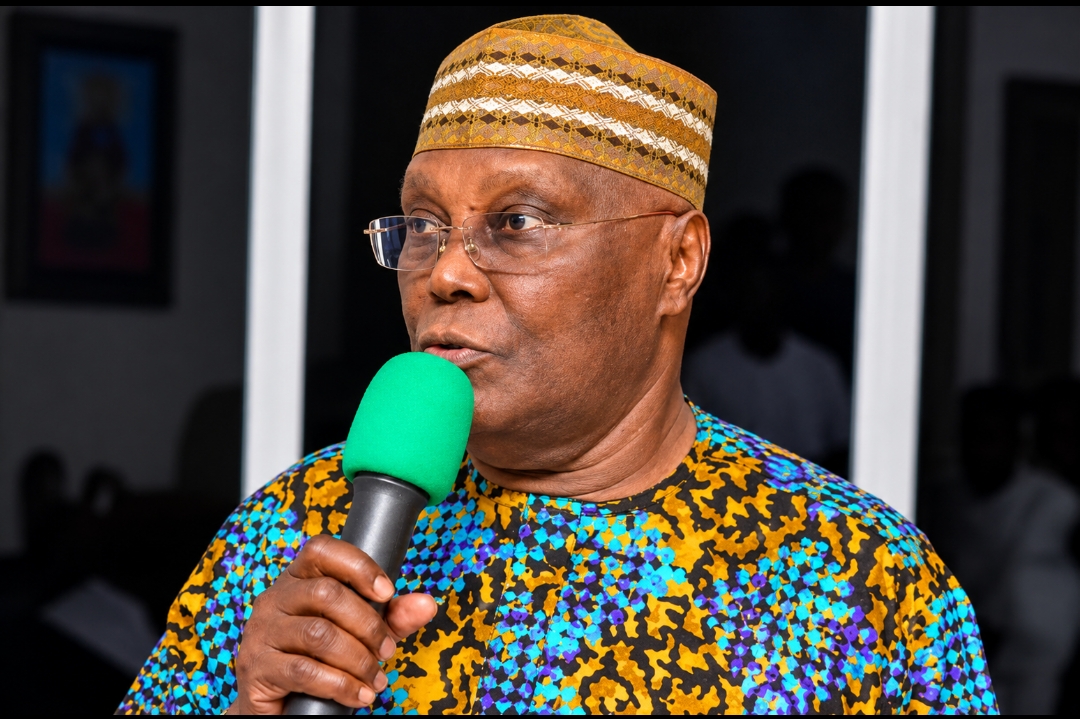
Thank you for your open letter. Your central question—why Nigerians should expect an Atiku Abubakar presidency to deliver better outcomes—is legitimate. It deserves an answer grounded in policies and accountability.
You are right that Nigeria owes nobody the presidency. Neither longevity in politics nor persistence in seeking office creates an entitlement to lead. Atiku must earn the confidence of Nigerians.
Where I respectfully disagree is with the suggestion that familiarity with the same political establishment makes Atiku and President Bola Tinubu equivalent. Shared acquaintances do not establish identical convictions, competence or approaches to government. Treating them as interchangeable is like comparing apples and oranges while overlooking the differences that matter.
The useful comparison concerns what each proposes, how those proposals would work, and what they would mean for ordinary Nigerians.
That is where #AtikuSolutions—affordability, security and economic revival—should become the centre of this conversation.
Affordability: economic policy must make life liveable
For a mother deciding between food and medicine, the most meaningful economic indicator is what her income can buy. For a small business owner, it is whether electricity, transport and financing costs leave enough to remain in business.
Atiku’s proposed production subsidy addresses a major source of these pressures: energy costs.
His published proposal would provide preferentially priced domestic crude to qualifying Nigerian refineries, subject to verified production, domestic supply and conditions requiring the benefit to reach consumers. It envisages a budget ceiling, independent audits and sanctions for abuse. It also acknowledges that discounted crude carries a real cost to public revenue.
The intended connection is practical: lower the cost of producing fuel locally, ensure consumers receive the benefit, and ease the energy burden on households and businesses.
You ask how this would be financed. That question deserves precision. The crude discount represents revenue forgone; it must therefore be explicitly costed and accommodated within the budget. Published reporting also identifies details still requiring disclosure, including the discount rate, eligible volumes and annual ceiling. Those are proper subjects for scrutiny. We strengthen the proposal by answering them.
But a proposal with identifiable mechanisms and costs deserves examination on its merits. Dismissing it as an absence of ideas prevents precisely the policy debate you seek.
Security: protect lives and restore livelihoods
Your description of northern deprivation raises an essential point: a leader’s geographical origin does not guarantee development for people from that region.
A northern presidency is no substitute for effective government. Neither is a southern presidency. Nigerians everywhere need protection, functioning schools, accessible healthcare and opportunities to earn a living.
Atiku’s published security agenda includes decentralising security institutions, strengthening intelligence and border control, improving regional cooperation and addressing the conditions that sustain conflict. His longstanding economic programme also emphasises private investment, infrastructure and education.
The practical test of security policy is whether farmers can return to their land, children can attend school and traders can travel without fear.
Security and affordability are connected. When violence drives farmers away, food supply suffers. When transport routes become dangerous, distribution becomes more expensive. When businesses cannot protect their workers and investments, employment suffers.
Restoring security is therefore part of restoring the economy.
Economic revival: give enterprise room to grow
You ask where the new ideas are. An idea should be judged by whether it addresses the problem and can be implemented successfully.
Atiku’s economic approach places private enterprise at the centre of investment and job creation, with government providing security, infrastructure and credible rules. His published programme advocates wider private participation in infrastructure and stronger education and skills development. These are proposals against which his candidacy can be assessed.
For Nigerians, the questions are concrete: Can a manufacturer obtain dependable power? Can a farmer reach a market? Can a young entrepreneur access finance? Can an investor trust that the rules will remain predictable?
Economic revival requires answers across these areas. Affordable energy helps businesses survive. Security allows production to resume. Investment expands employment. Education equips people to participate.
That is the connection between priorities of #AtikuSolutions.
Accountability must accompany the programme
Your questions about wealth, allegations and public integrity should not be dismissed. Equally, allegations must be distinguished from findings established through due process. Neither political loyalty nor political hostility should determine the standard of evidence.
No candidate should receive immunity from scrutiny.
Your demand for clarity about implementation, financing and accountability is particularly valuable. Nigerians should insist on costed programmes, clear responsibilities, published milestones, transparent procurement and independent scrutiny. Supporting Atiku should strengthen those demands.
Nor should the lifestyle of an associate replace examination of the candidate’s programme. Concerns about political ostentation deserve to be heard, especially amid hardship. But the decisive questions concern who would exercise public responsibility, their competence and the standards governing their conduct.
Inclusion deserves a serious answer
Your concern about rotation also merits respect. Political balance matters in a diverse federation, and apprehensions about exclusion cannot simply be waved away.
Atiku must earn trust across regions through the substance of his commitments to inclusion, equitable appointments, development and devolution of power. Every Nigerian deserves a meaningful stake in the country, whoever occupies the presidency.
Your letter ends with a proposition I share: the presidency belongs to the Nigerian people.
They deserve a choice informed by evidence. They deserve to compare programmes, interrogate costs, examine records and demand measurable results.
Atiku’s experience gives Nigerians a record to scrutinise. His proposals give them an alternative to examine. Neither asks them to surrender their judgment.
The case for Atiku is that his approach to affordability, security and economic revival offers a credible direction that deserves serious consideration.
Let us debate that case with the rigour Nigeria’s circumstances demand.


 Follow Us on Google Discover



Rivers Polytechnic shuts down as ASUP declares indefinite strike over unpaid allowances

14 residents remain in captivity as bandits abduct 12 in fresh attack on Kaduna community

JUST IN: Headline inflation falls to 14.06% in October

2027: Trouble for Tinubu as Atiku, Obi, Makinde, other opposition leaders holds fresh unity summit November 23

Jigawa ADC reaffirms Sani Gumel’s leadership, refutes rumours of false leadership change

UniAbuja unions protest alleged land encroachment by FCT Minister Nyesom Wike

EXCLUSIVE: Gov Abba Yusuf moves to settle marital crisis, sends Ganduje, Islamic clerics on peace mission to Kwankwaso

‘You are not going for Grammy’ — Osita Iheme warns politicians against dancing at rallies

‘Children Are Not Witches’ — Danish worker shares recovery of boy rescued in Akwa Ibom

FG unveils Digital Education Strategy to tackle Out-of-School Children, Teacher shortages

(BREAKING) 2027: Amid convoy attack, Presidency accuses Kwankwaso of telling supporters to improvise weapons

‘This Is Unacceptable’ – Obi demands immediate probe into Kwankwaso’s convoy attack

Nigerians praise FFK, Ambassador to South Africa, over his bold response to Live TV cut during presentation of credentials

Ondo Air Crash: NAF recovers black box, fixes memorial for Nov 26

Why Atiku? The Answer is in The Solutions: by Paul Ibe

Tinubu Northern Youth Forum dumps President, adopts Atiku’s name ahead of 2027

Forgive me for stopping at the airport only during my last visit – Tinubu begs Plateau people at APC presidential rally
EXCLUSIVE: Gov Abba Yusuf moves to settle marital crisis, sends Ganduje, Islamic clerics on peace mission to Kwankwaso

BREAKING: Thugs attack Kwankwaso’s campaign convoy in Kano

Atiku, Makinde near deal to unite against Tinubu in 2027

”A Painful Loss”: Hon. Kasim Mohammed spends night with victims of Gwagwalada market fire

Tinubu approves recruitment of 28,000 Soldiers, 50,000 Police Officers

JUST IN: Emir of Kano Sanusi meets Ladoja in Ibadan, reaffirms Yoruba-Hausa ties

2027: Atiku has 13 northern states, Tinubu has only five in South-West, APM will take Oyo — Amaechi

Massive crowd welcomes Atiku’s campaign motorcade in Yobe ahead of presidential rally

I will restore petroleum, electricity subsidies, just vote for me – Atiku vows in Bauchi

‘You’ve been rejected’ – Dino Melaye mocks Tinubu after Atiku’s triumphant entry into Yobe State

‘Let Tinubu complete his eight years, power will return to North in 2031’ — Bichi appeals to Northerners

‘You’re very selfish, looking for votes like a retired Almajiri’ — Yesufu attacks Tinubu
