
National News
FG unveils Digital Education Strategy to tackle Out-of-School Children, Teacher shortages

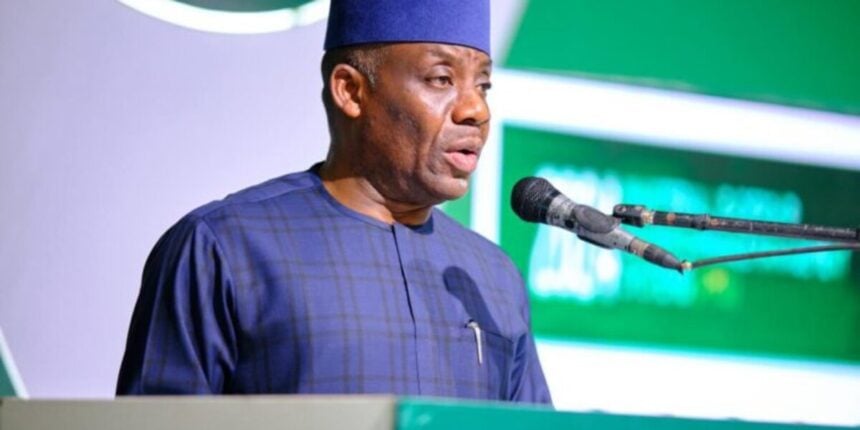
The Federal Government has unveiled a National Education Technology Strategy aimed at tackling the challenges of out-of-school children and teacher shortages through digital learning platforms, improved learner identification and wider access to educational resources.
The National Coordinator of the Special Programmes Operation and Implementation Unit at the Federal Ministry of Education, Adebayo Onigbanjo, disclosed this on Monday during a press briefing in Abuja, where he outlined the strategy designed to integrate 26 government initiatives into a unified digital education system.
Onigbanjo explained that the initiatives were not intended to operate as separate projects but as interconnected interventions to strengthen teaching, learning, education management, skills development and financing.
He said the National Education Verification and Identification initiative would enable the government to identify children outside the formal education system and assign them unique Learner Identification Numbers to support targeted interventions.
According to him, the data would help the government reach out-of-school children, girls and learners enrolled in home education programmes.
He also said the Inspire Live initiative would connect pupils in schools without qualified subject teachers to certified educators through digital platforms.
The programme would be supported by zero-rated data services to remove internet subscription costs as a barrier to accessing online lessons.
“The main message today is that these are not 26 separate projects; they form one connected system. The digital infrastructure is what connects them,” he said.
Onigbanjo said the strategy would also strengthen the connection between education, employment and entrepreneurship through initiatives such as the Digital Training Academy, Technical and Vocational Education and Training programmes, and entrepreneurship schemes.
He identified the NELFund loans, Student Venture Capital Grant and Tertiary Institution Staff Support as interventions intended to ease financial constraints affecting students and educators.
The coordinator added that public portals and dashboards would promote transparency by allowing citizens to monitor government commitments and track the implementation of education programmes.
He said the strategy would be implemented through five pillars, including data and interoperability, digital infrastructure, technology and procurement, and teacher transformation, alongside other measures to improve education delivery.
On data management, Onigbanjo said the government would build on the Nigeria Education Data Infrastructure by introducing common data standards that would enable existing education databases to exchange information automatically while preserving institutional autonomy.
He said priority would be given to information on schools, teachers, enrolment and education financing, while personal records would be protected under the Nigerian Data Protection Act.
On infrastructure, he said the government would prioritise reliable electricity, broadband connectivity and digital devices for schools, particularly in rural and underserved communities.
He added that the strategy would also provide for the maintenance of such facilities and build on existing national connectivity initiatives, including Project BRIDGE and the Universal Service Provision Fund.
The coordinator said the government would adopt vendor-neutral standards and transparent, performance-based procurement systems to encourage Nigerian developers to create technology solutions aligned with the national curriculum.
He further disclosed that the National Teachers’ Digital Competency Framework would establish standards for teachers’ digital skills, certification and career progression, supported by a national teacher professional development portal.
According to him, the strategy aligns with President Bola Tinubu’s Renewed Hope Agenda and the Federal Ministry of Education’s vision of using education to promote national development, innovation and global competitiveness.
Onigbanjo acknowledged the contributions of the Federal Ministry of Communications, Innovation and Digital Economy, state governments, development partners, the private sector, academia and civil society to the development of the strategy.
He particularly recognised the roles of the Mastercard Foundation and the World Bank Group.
The announcement comes amid persistent challenges in Nigeria’s education sector, including the large number of children excluded from formal education and shortages of qualified teachers in public schools.
A 2024 UNICEF report estimated that 18.3 million Nigerian children were out of school, comprising 10.2 million primary school-age children and 8.1 million children of junior secondary school age.
However, the Federal Ministry of Education has cited an estimated 15 million out-of-school children in its more recent interventions.
Teacher shortages also remain a major concern. Data reportedly obtained from the ministry’s digital education database showed that 31.8 million learners in public schools were being served by 592,077 teachers, representing an estimated learner-teacher ratio of 54 to one.
The Universal Basic Education Commission has also estimated that the basic education sector requires an additional 194,876 qualified teachers.
The new strategy builds on the Federal Government’s rollout of the Digital National Education Management Information System (DNEMIS), launched in July 2026 to improve education data collection, planning and accountability.
During its initial nationwide rollout, the platform reportedly captured information from 124,548 schools, covering more than 40 million learners and 1.19 million teachers.
The Federal Government says the National Education Technology Strategy will provide a coordinated framework for deploying technology to address these challenges and ensure that investments in digital education translate into improved learning outcomes.


 Follow Us on Google Discover













Rivers Polytechnic shuts down as ASUP declares indefinite strike over unpaid allowances

14 residents remain in captivity as bandits abduct 12 in fresh attack on Kaduna community

JUST IN: Headline inflation falls to 14.06% in October

2027: Trouble for Tinubu as Atiku, Obi, Makinde, other opposition leaders holds fresh unity summit November 23

Jigawa ADC reaffirms Sani Gumel’s leadership, refutes rumours of false leadership change

UniAbuja unions protest alleged land encroachment by FCT Minister Nyesom Wike

EXCLUSIVE: Gov Abba Yusuf moves to settle marital crisis, sends Ganduje, Islamic clerics on peace mission to Kwankwaso

‘You are not going for Grammy’ — Osita Iheme warns politicians against dancing at rallies

‘Children Are Not Witches’ — Danish worker shares recovery of boy rescued in Akwa Ibom

FG unveils Digital Education Strategy to tackle Out-of-School Children, Teacher shortages

(BREAKING) 2027: Amid convoy attack, Presidency accuses Kwankwaso of telling supporters to improvise weapons

‘This Is Unacceptable’ – Obi demands immediate probe into Kwankwaso’s convoy attack

Nigerians praise FFK, Ambassador to South Africa, over his bold response to Live TV cut during presentation of credentials

Ondo Air Crash: NAF recovers black box, fixes memorial for Nov 26

Why Atiku? The Answer is in The Solutions: by Paul Ibe

Tinubu Northern Youth Forum dumps President, adopts Atiku’s name ahead of 2027

BREAKING: Thugs attack Kwankwaso’s campaign convoy in Kano

Forgive me for stopping at the airport only during my last visit – Tinubu begs Plateau people at APC presidential rally
EXCLUSIVE: Gov Abba Yusuf moves to settle marital crisis, sends Ganduje, Islamic clerics on peace mission to Kwankwaso

Atiku, Makinde near deal to unite against Tinubu in 2027

Tinubu approves recruitment of 28,000 Soldiers, 50,000 Police Officers

”A Painful Loss”: Hon. Kasim Mohammed spends night with victims of Gwagwalada market fire

JUST IN: Emir of Kano Sanusi meets Ladoja in Ibadan, reaffirms Yoruba-Hausa ties

2027: Atiku has 13 northern states, Tinubu has only five in South-West, APM will take Oyo — Amaechi

Massive crowd welcomes Atiku’s campaign motorcade in Yobe ahead of presidential rally

‘You’ve been rejected’ – Dino Melaye mocks Tinubu after Atiku’s triumphant entry into Yobe State

I will restore petroleum, electricity subsidies, just vote for me – Atiku vows in Bauchi

‘Let Tinubu complete his eight years, power will return to North in 2031’ — Bichi appeals to Northerners

‘You’re very selfish, looking for votes like a retired Almajiri’ — Yesufu attacks Tinubu
