
News
Nigerians praise FFK, Ambassador to South Africa, over his bold response to Live TV cut during presentation of credentials

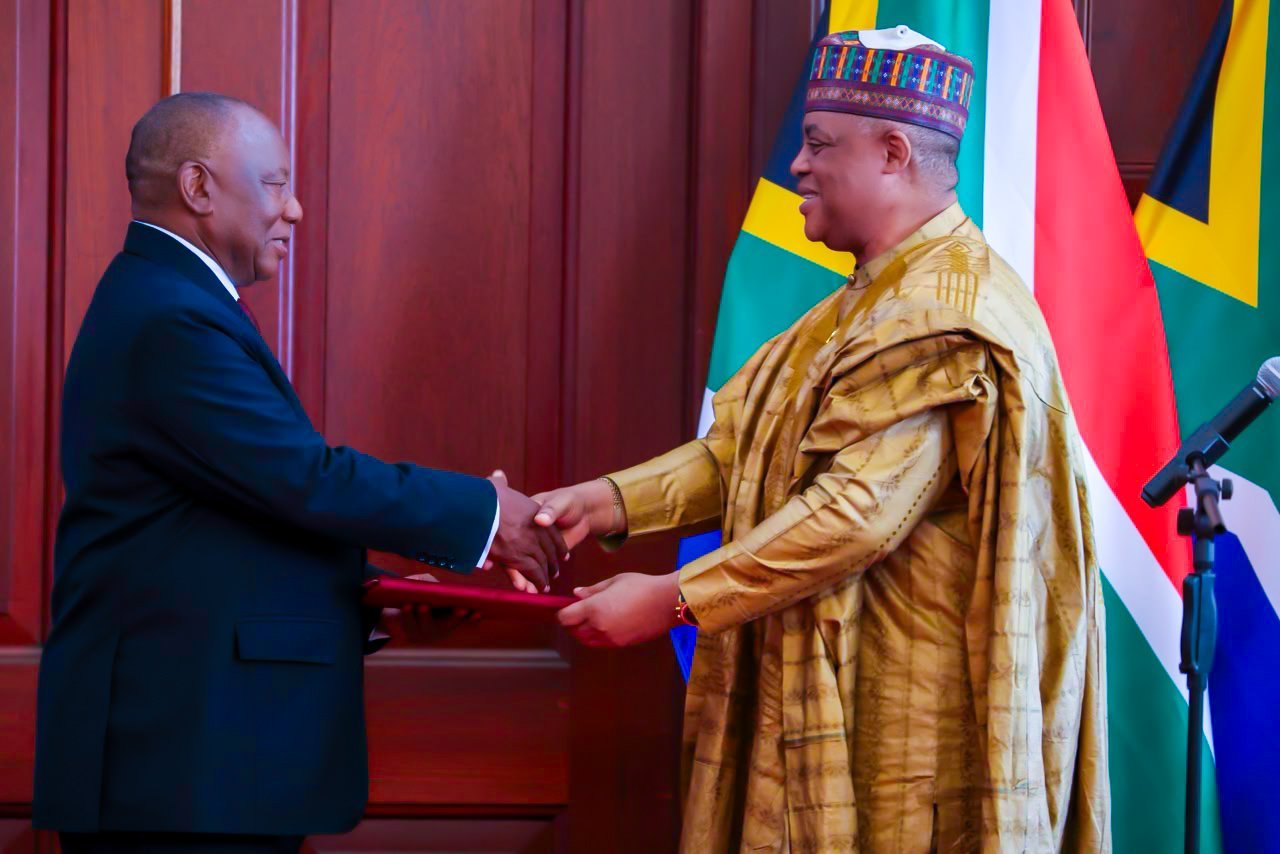
Nigeria’s High Commissioner to South Africa, Femi Fani-Kayode, has attracted reactions following his protest over the omission of his speech from the livestream of a diplomatic ceremony where he presented his letters of credence to President Cyril Ramaphosa.
However, amid commendations for the former Minister of Aviation’s decision to raise the issue directly with the South African President, some Nigerians have questioned whether the attention being given to photographs of the two men is distracting from the more important questions surrounding the incident.
In a commentary on the controversy, critics argued that the focus should not be on Fani-Kayode’s interaction with Ramaphosa or the photograph showing him placing his hands on the South African President’s shoulders, but on why Nigeria’s segment was missing from the initial broadcast.
They questioned why the livestream was interrupted before Fani-Kayode’s turn to speak and why the Nigerian delegation’s introduction and address were not included in the original transmission.
The ceremony, held on Friday, November 13, in Pretoria, involved 15 ambassadors presenting their letters of credence to Ramaphosa. Fani-Kayode alleged that Nigeria was the only country whose introduction and speech were excluded from the livestream.
Although the South African Presidency later released a separate video containing his full address, questions surrounding the initial interruption have continued to generate debate.
Reports indicated that the livestream appeared to experience a disruption while the French ambassador, Antoine Michon, was speaking. However, Fani-Kayode maintained that Nigeria had been unfairly excluded and said he personally raised the matter with Ramaphosa.
The commentary also cautioned Nigerians against interpreting the diplomatic encounter as evidence that South Africa had suddenly developed affection for Nigeria, insisting that the country should instead demand respect and fair treatment.
It further warned against calls for the Nigerian government to expel South Africa’s diplomatic representatives in retaliation, arguing that diplomatic decisions should be guided by a proper understanding of their possible consequences for both countries.
According to the argument, Nigeria should prioritise its national interests and demand respect rather than allow emotions to dictate its diplomatic relations with South Africa.
The controversy has also exposed disagreements over the handling of the incident. While Fani-Kayode said Ramaphosa intervened after he complained, the South African President’s spokesperson, Vincent Magwenya, disputed aspects of the envoy’s account and described his approach as inappropriate.
The central question, however, remains whether Nigeria’s exclusion from the initial livestream was a technical interruption or an act of deliberate discrimination, as alleged by Fani-Kayode.
For critics of the public celebration surrounding the photographs, that question deserves more attention than the viral images of the diplomatic encounter.


 Follow Us on Google Discover







Rivers Polytechnic shuts down as ASUP declares indefinite strike over unpaid allowances

14 residents remain in captivity as bandits abduct 12 in fresh attack on Kaduna community

JUST IN: Headline inflation falls to 14.06% in October

2027: Trouble for Tinubu as Atiku, Obi, Makinde, other opposition leaders holds fresh unity summit November 23

Jigawa ADC reaffirms Sani Gumel’s leadership, refutes rumours of false leadership change

UniAbuja unions protest alleged land encroachment by FCT Minister Nyesom Wike

EXCLUSIVE: Gov Abba Yusuf moves to settle marital crisis, sends Ganduje, Islamic clerics on peace mission to Kwankwaso

‘You are not going for Grammy’ — Osita Iheme warns politicians against dancing at rallies

‘Children Are Not Witches’ — Danish worker shares recovery of boy rescued in Akwa Ibom

FG unveils Digital Education Strategy to tackle Out-of-School Children, Teacher shortages

(BREAKING) 2027: Amid convoy attack, Presidency accuses Kwankwaso of telling supporters to improvise weapons

‘This Is Unacceptable’ – Obi demands immediate probe into Kwankwaso’s convoy attack

Nigerians praise FFK, Ambassador to South Africa, over his bold response to Live TV cut during presentation of credentials

Ondo Air Crash: NAF recovers black box, fixes memorial for Nov 26

Why Atiku? The Answer is in The Solutions: by Paul Ibe

Tinubu Northern Youth Forum dumps President, adopts Atiku’s name ahead of 2027

Forgive me for stopping at the airport only during my last visit – Tinubu begs Plateau people at APC presidential rally
EXCLUSIVE: Gov Abba Yusuf moves to settle marital crisis, sends Ganduje, Islamic clerics on peace mission to Kwankwaso

BREAKING: Thugs attack Kwankwaso’s campaign convoy in Kano

Atiku, Makinde near deal to unite against Tinubu in 2027

Tinubu approves recruitment of 28,000 Soldiers, 50,000 Police Officers

”A Painful Loss”: Hon. Kasim Mohammed spends night with victims of Gwagwalada market fire

JUST IN: Emir of Kano Sanusi meets Ladoja in Ibadan, reaffirms Yoruba-Hausa ties

2027: Atiku has 13 northern states, Tinubu has only five in South-West, APM will take Oyo — Amaechi

Massive crowd welcomes Atiku’s campaign motorcade in Yobe ahead of presidential rally

I will restore petroleum, electricity subsidies, just vote for me – Atiku vows in Bauchi

‘You’ve been rejected’ – Dino Melaye mocks Tinubu after Atiku’s triumphant entry into Yobe State

‘Let Tinubu complete his eight years, power will return to North in 2031’ — Bichi appeals to Northerners

‘You’re very selfish, looking for votes like a retired Almajiri’ — Yesufu attacks Tinubu
