Business News
Deepening Middle East crisis may trigger fuel price increase in Nigeria

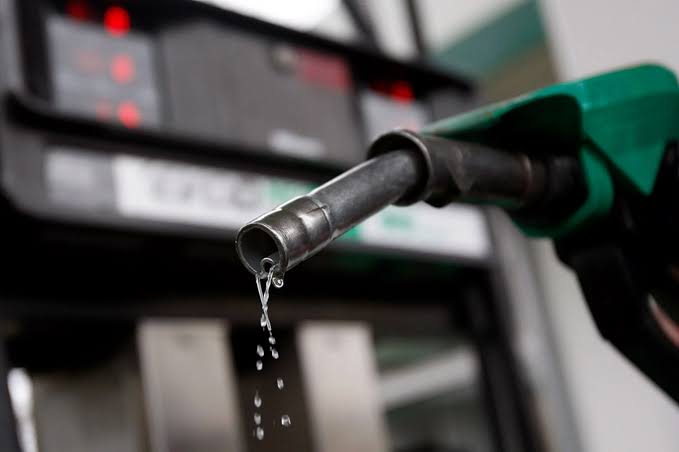
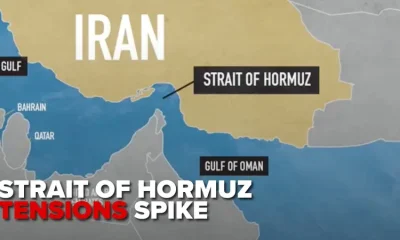
Growing tensions in the Middle East, driven by ongoing military actions involving the United States and Israel against Iran, have triggered fresh volatility in global energy markets, with crude oil climbing to $72.87 per barrel on Sunday.
The escalation, which included coordinated strikes across parts of Iran, including Tehran, has heightened fears of supply disruptions in one of the world’s most strategic oil-producing regions.
For Nigeria, the development carries significant implications. Crude oil accounts for over 85 per cent of the country’s export earnings and nearly half of government revenue.
While rising global prices could boost fiscal inflows, especially as the 2026 budget benchmark stands at $64.85 per barrel, they could also translate into higher domestic petrol prices in the post-subsidy era.
Energy analyst Ayodele Oni noted that although Nigeria may benefit from improved foreign exchange earnings, higher crude prices would likely push up pump prices.
Similarly, energy expert Kelvin Emmanuel observed that refineries, including the Dangote Refinery, would be compelled to adjust petrol prices in line with rising feedstock and operational costs.
Economic analyst Dr. Muda Yusuf, Chief Executive Officer of the Centre for the Promotion of Private Enterprise, explained that geopolitical instability in the Middle East typically fuels oil price spikes due to supply fears.
According to him, Nigeria could benefit from increased export earnings, stronger foreign reserves and improved FAAC allocations.
However, Yusuf cautioned that such gains are heavily dependent on production capacity. Nigeria’s oil output, currently estimated at between 1.4 and 1.6 million barrels per day, remains below installed capacity due to oil theft, pipeline vandalism and underinvestment.
Without addressing these structural challenges, the country may not fully capitalize on higher prices.
He also warned of inflationary pressures, stressing that rising fuel costs could increase transportation, food distribution, manufacturing and logistics expenses, further straining household incomes amid an already high cost of living.
Professor Wumi Iledare advised caution against assuming a prolonged oil shock, noting that modern oil markets respond quickly to real-time data and rational expectations.
Unless there is a sustained disruption to global supply chains, he suggested that price spikes may prove temporary.
Energy law expert Professor Dayo Ayoade echoed similar sentiments, adding that many countries maintain strategic crude stockpiles that could moderate extreme price surges.
Even if oil approaches $80 per barrel, he warned that Nigeria must remain mindful of its debt obligations and oil-backed loans.
Ademola Henry Adigun, CEO of AHA Consultancies, described the crisis as a potential double-edged sword, offering short-term fiscal gains but exposing the economy to inflationary and structural risks.
Analysts agreed that to maximise potential benefits, Nigeria must intensify anti-theft measures, attract upstream investment, expand domestic refining capacity and accelerate economic diversification beyond oil dependence.
They also stressed the need to save excess revenue and implement targeted measures to cushion vulnerable households against inflation shocks.
Ultimately, experts say the unfolding Middle East crisis presents Nigeria with both opportunity and risk, one that will require prudent fiscal management and structural reforms to navigate effectively.


 Follow Us on Google Discover








10 key facts about late former Delta Governor, Emmanuel Uduaghan

Bauchi NDC governorship candidate Ibrahim Kashim resigns from party

Court throws out El-Rufai’s fundamental rights suit against DSS, ICPC, EFCC

Four more Makinde’s appointees quit TESCOM, SUBEB, others

NDC reschedules national campaign council inauguration to October 26

FG makes u-turn on recruitment waivers for varsities, clarifies approval process
BREAKING: Former Delta Governor Emmanuel Uduaghan is dead

Indian actor Tiger Shroff shot dead in Mumbai, three suspects detained

Algerian fans run riot after 2-0 loss to Enugu Rangers, vandalize stadium

“I saw Akpabio at the State House begging Tinubu to keep his position” — Jake Epelle

FG defends fiscal reforms as World Bank flags ₦7.7tn debt interest

2027: “Which North? North Korea or North Carolina?” Nigerians mock politicians promising Tinubu Northern votes

2027: Eight Zamfara lawmakers set to return to APC after meeting Tinubu

‘You will pay taxes beyond your capacity in 2027 if Tinubu is reelected’ – Sen. Kingibe warns Nigerians

N126.46bn election funds: SERAP drags INEC to court, demands accountability
BREAKING: Former Delta Governor Emmanuel Uduaghan is dead

‘₦29,000 Cannot sustain a retired officer’ — Atiku challenges Tinubu on police pensions, proposes initiative

Opposition will front a single candidate against Tinubu, announcement will be made few days to election – Lukman

2027: Tinubu must be stopped, ‘even Buhari saw him as bad news’ — Hakeem Baba-Ahmed

Eight Nigerian Soldiers killed as ISWAP landmine hits Army patrol vehicle in Borno

2027: NDC will never step down for Atiku, stop attacking us – Kwankwaso replies ADC Campaign Council
2027: “Which North? North Korea or North Carolina?” Nigerians mock politicians promising Tinubu Northern votes

Ogun hospital under fire as Nurse dies of asthma attack amid alleged oxygen failure

Messi’s double fires Inter Miami to 3-1 victory over Atlanta United

Catholic priest dies after Jesus’ statue falls on him during mass in Ecuador (video)

2027: ‘APM will beat Tinubu in 12 battleground states’ – Makinde’s campaign team
“I saw Akpabio at the State House begging Tinubu to keep his position” — Jake Epelle

Shettima inaugurates Arewa for Asiwaju campaign office in Abuja

Wike, Akpabio, Uzodimma: Unity at the podium, rival ambitions behind the Scenes? can Tinubu keep his associates together?
