
Politics
All eyes on Supreme Court as it delivers verdict on ADC, PDP crises today

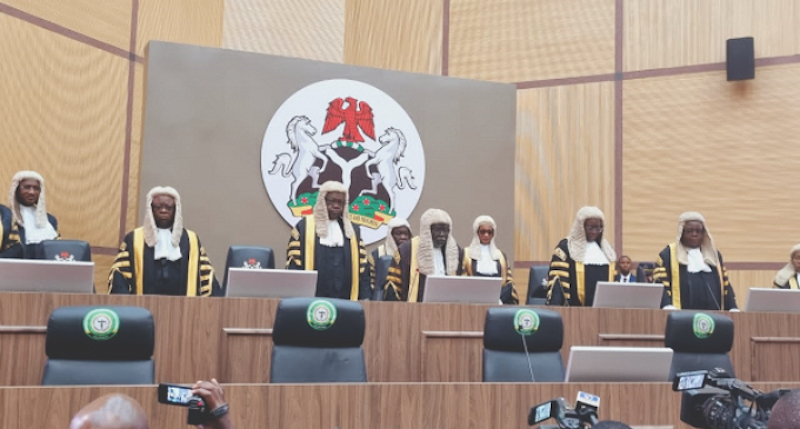
Nigeria’s political landscape is poised for a major turning point as the Supreme Court prepares to deliver a decisive judgment on the leadership crises rocking the African Democratic Congress (ADC) and the Peoples Democratic Party (PDP).
The verdict, scheduled for Thursday, April 30, comes nine days after a five-member panel led by Mohammed Garba reserved judgment in the appeals challenging the legitimacy of leadership factions within both opposition parties.
The ruling is widely seen as a “make-or-mar” decision that could either secure or jeopardise the parties’ participation in the 2027 general elections.
High Stakes for Opposition Parties
If the apex court rules in favour of the David Mark-led faction of the ADC, it would pave the way for the party to field candidates in 2027. However, an adverse ruling could effectively exclude the party from the polls due to the absence of a legally recognised leadership structure.
A similar fate awaits the factional leadership of the PDP led by Tanimu Turaki, whose emergence from the controversial Ibadan convention remains under judicial scrutiny.
The disputes have intensified political manoeuvring among opposition blocs seeking to challenge President Bola Tinubu and the ruling All Progressives Congress (APC) in the next election cycle.
Legal Battles and Court Interventions
The ADC leadership tussle stems from a suit filed by Nafiu Bala Gombe, who is contesting the legitimacy of the Mark-led interim leadership.
While Mark’s legal team, led by Jibrin Okutepa (SAN), argued that the matter is an internal party affair beyond judicial intervention, opposing counsel insisted that constitutional breaches justify court involvement.
Meanwhile, the Federal High Court in Abuja, presided over by Joyce Abdulmalik, has again restrained the Independent National Electoral Commission (INEC) from recognising or participating in ADC state congresses not conducted by duly elected executives.
The court also barred the party’s national leadership from interfering with the tenure of state executives, reaffirming that only constitutionally recognised structures can organise congresses.
PDP Crisis Deepens
Within the PDP, the legal battle centres on the disputed national convention held in Ibadan in November 2025.
The convention, which produced a factional leadership, was nullified by lower courts for violating prior judicial orders. Key figures in the dispute include Sule Lamido and party executives aligned with different power blocs.
The Supreme Court’s ruling will determine whether the convention stands or is permanently voided.
Political Reactions and Rising Tensions
Despite the uncertainty, David Mark has expressed confidence that the ADC will emerge victorious and participate fully in the 2027 elections.
Similarly, the party’s founding chairman, Ralph Nwosu, warned that excluding the ADC from the ballot could have serious implications for Nigeria’s democracy.
“The 2027 elections will not hold if ADC is not on the ballot,” he declared, underscoring the high stakes involved.
Former ADC presidential candidate Dumebi Kachikwu also weighed in, insisting the party is “not for sale” and dismissing attempts to undermine its structure.
What Lies Ahead
With INEC already withdrawing recognition of certain leadership factions based on earlier court rulings, the Supreme Court’s decision is expected to provide clarity on the legal standing of both parties.
Beyond resolving internal disputes, the judgment will significantly shape the configuration of opposition politics and the broader contest for power in 2027.
For now, political actors and stakeholders across the country await the apex court’s pronouncement, which could redefine Nigeria’s opposition landscape.


 Follow Us on Google Discover







Shettima inaugurates Arewa for Asiwaju campaign office in Abuja

2027: ‘APM will beat Tinubu in 12 battleground states’ – Makinde’s campaign team

Veteran Journalist, diplomat Dele Cole dies at 86

Suspended NSCDC commandant apologises over deaths of suspected illegal miners in Niger

EPL: Martinez rushed to hospital after head injury as Chelsea beat Everton

COAS arrives Borno as Military moves to clear terrorist camps, rescue abductees

Macky Sall quits race for UN Secretary-General position

Buhari backed Osinbajo’s presidential ambition four times, Akande tells Babachir Lawal

Dr. Benjamins‑Laniyi urges media to amplify women’s leadership, adopt gender‑sensitive reporting

Pope Leo XIV set to leave hospital after lung cancer surgery

Gunmen kill four vigilantes in Plateau community

Tension as traditional ruler collapses, dies in Ondo

2027: Kwankwaso a goat in sheep’s clothing, secretly working for Tinubu – Atiku Campaign Council

DSS arrests Maina’s fugitive son in Abuja, hands him over to EFCC

2027: Step down if you are not working for Tinubu – Deji Adeyanju dares Obi, Kwankwaso

Erisco Foods announces 13 job openings across Nigeria – Apply Now

House Officers, Nurses, Radiographers, Others wanted as DELSUTH opens recruitment – Apply Now
2027: Step down if you are not working for Tinubu – Deji Adeyanju dares Obi, Kwankwaso

Tinubu reappoints Bala Bila as INEC commissioner, nominates six others

‘I love Islam, I’ve sent people to Mecca to pray for me, Nigeria for 25 years’ – Akpabio

Panic in Rivers community as pipeline explosion injures 20, razes over 50 houses

Elon Musk unveils Tesla’s ‘flying’ car in stunning demonstration

2027: Tinubu to miss rallies in over 20 States as APC releases campaign timetable

33 Governors cannot be wrong in supporting Tinubu – Bayo Onanuga
2027: Kwankwaso a goat in sheep’s clothing, secretly working for Tinubu – Atiku Campaign Council
Gunmen storm Plateau, kill traditional ruler at residence

2027: ‘Atiku, Obi, Duke, Makinde are not threats to Tinubu’, says APC

Osun Police arrest three suspects over murder, recover weapons

2027: ‘Don’t trust your destiny to ‘kalokalo’ people’ – Wike warns Rivers voters against Atiku, Amaechi, Obi
