
News
‘Disclosing his records could endanger lives’ – FBI begs US court to keep parts of Tinubu records secret

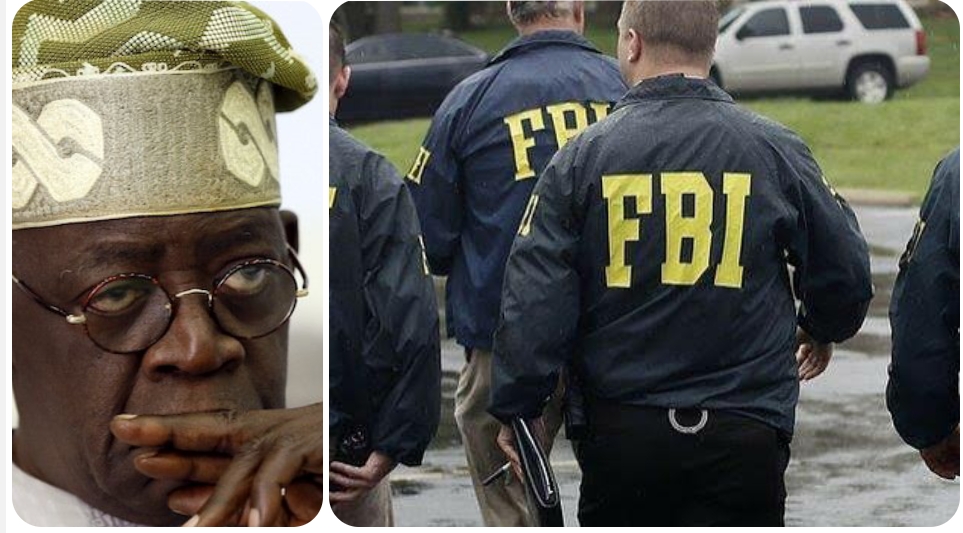
The United States Federal Bureau of Investigation (FBI) has asked a federal court to allow it to submit confidential declarations explaining why it withheld some investigative records relating to allegations of drug trafficking involving President Bola Ahmed Tinubu.
In an application dated August 20, the FBI told the U.S. District Court for the District of Columbia that it could not publicly disclose the full reasons for withholding certain information from records requested under the Freedom of Information Act (FOIA).
The agency therefore asked the court for permission to submit an ex parte, in camera declaration, which is a written statement presented privately to a judge for consideration without being made part of the public record.
The application was published on X by Von Batten-Montague-York, a Washington-based lobbying firm recently retained by former Vice President and African Democratic Congress (ADC) presidential candidate, Atiku Abubakar.
FBI Cites FOIA Exemptions
The FBI said it had relied on several FOIA exemptions in responding to requests for records relating to Tinubu from 1992 and 1993.
According to the agency, releasing some of the information could disclose law-enforcement investigative techniques and procedures or potentially endanger an individual’s life or physical safety.
The FBI specifically referenced FOIA Exemptions 6, 7(C), 7(D), 7(E) and 7(F) in relation to the records.
One of the requests, identified as Request Number 1588244-000, sought the entire FBI file relating to Tinubu.
A second request, numbered 1593615-000, sought FBI 302 interview records involving Tinubu from an FBI case during the 1992–1993 period.
The agency said it had determined that it could not publicly provide the complete basis for relying on Exemptions 7(E) and 7(F) to withhold certain information.
“The FBI has determined that it cannot provide on the public record the full basis for the application of Exemptions 7(E) and 7(F) to certain withholdings and that, therefore, an ex parte, under seal declaration is necessary,” the agency stated in its application.
The FBI said that if the court granted its request, it would provide the confidential explanation before August 28.
Tinubu Previously Joined DOJ Extension Request
The latest development comes amid a wider legal dispute over the release of U.S. government records relating to investigations and allegations involving Tinubu.
The plaintiff in the case is Aaron Greenspan, founder of PlainSite, who filed multiple FOIA requests seeking records from U.S. federal agencies.
The U.S. Department of Justice recently sought an additional 10-day extension to respond to a court order concerning the release of some of the requested records.
U.S. District Judge Beryl Howell reportedly granted only four additional days, moving the deadline to August 21.
Tinubu, through his legal representatives, subsequently joined the Justice Department’s request for the longer extension. The judge reportedly declined Tinubu’s request.
Background of the Case
Greenspan filed 12 FOIA requests between 2022 and 2023 with six U.S. federal agencies seeking records connected to criminal investigations into a Chicago-based heroin trafficking operation that operated in the early 1990s.
The requests included records concerning four individuals, including Tinubu, Lee Andrew Edwards, Mueez Abegboyega Akande and Abiodun Agbele.
Several agencies initially responded with what is known as a Glomar response, declining to confirm or deny whether the requested records existed.
Greenspan challenged the responses and subsequently filed a lawsuit on June 12, 2023.
The FBI, Drug Enforcement Administration (DEA), Internal Revenue Service (IRS), Executive Office for United States Attorneys (EOUSA) and Department of State were initially named as defendants, while the CIA was later added.
In April 2025, Judge Howell ruled that the Glomar responses issued by the FBI and DEA were improper and should be lifted.
The judge held that the agencies had not sufficiently demonstrated that a cognisable privacy interest existed in keeping secret whether Tinubu had been the subject of a criminal investigation.
Tinubu has consistently denied wrongdoing and has rejected allegations linking him to drug trafficking.
His legal team has also maintained that the U.S. forfeiture proceedings involving funds associated with him were civil proceedings against the money and did not amount to a criminal prosecution or conviction against him.
The latest FBI application is now before Judge Howell, who will determine whether the agency may submit its explanation privately and under seal.


 Follow Us on Google Discover





BREAKING: Air Force publishes names of 25 victims killed in Ondo aircraft crash (Full list)

Trump approves firing squad execution for Fort Hood shooter Nidal Hasan

2027: ‘Everything I do now is about Tinubu’s re-election, I think of it when I eat, sleep’ – Wike

2027: Wike mocks Atiku-Amaechi ticket, calls it ‘joint ticket of corruption’

2027: Chinda, Duke, Omo-Agege, others in limbo as INEC reviews Supreme Court verdict

Insecurity: Tinubu hold crucial meeting with defence Minister Musa in Lagos

Military aircraft crash: Tinubu declares three-day national mourning

Nigeria vs Russia: Date, time, venue where to stream

2027: 58 deregistered parties back Tinubu, Sokoto gov Aliyu

SSANU threatens University shutdown over unpaid arrears, gives FG 14 days deadline

Niger tragedy: Shettima announces N250m support for families dead miners

JAMB to establish UTME Centre in Canada for Nigerians in North America from 2027

Rivers govt shut down 21 health facilities over alleged child trafficking

Abiy Ahmed reappointed Prime Minister of Ethiopia
BREAKING: 32 persons were on board says FG, as NAF confirms ownership of crashed aircraft

BREAKING: Many feared dead as suspected Military Helicopter crashes in Ondo
BREAKING: 32 persons were on board says FG, as NAF confirms ownership of crashed aircraft

Tinubu meets Uzodinma in Lagos amid rift with Wike’s Rainbow Coalition – Details Emerge

Nine Zamfara lawmakers join ADC after dumping APC

2027: ‘He betrayed APGA’ – Anambra govt tells electorate to reject Obi, NDC

‘I warned El-Rufai to go on exile or they would jail him’ — Buba Galadima

JUST IN: Kidnappers torture 20 corps members, demand N5m ransom each

2027: Anxiety mounts as INEC awaits Supreme Court judgment on party membership rules

BREAKING: 8 Zamfara Assembly members dump APC

BREAKING: Temi Nkem wins BBNaija Season 11 ‘Show Ya Sef’

2027: PDP begins Anambra South campaign, vows to reclaim senate seat

Meet Temi Nkem, winner of BBnaija season 11

‘Tinubu saved Nigeria from economic collapse, be generous to him’ – VP Shettima

BREAKING: Security Forces kill suspected ISWAP leader planning attacks in Southern Nigeria