
National News
FG announces free daily 100mb data for Nigerian students from October 1

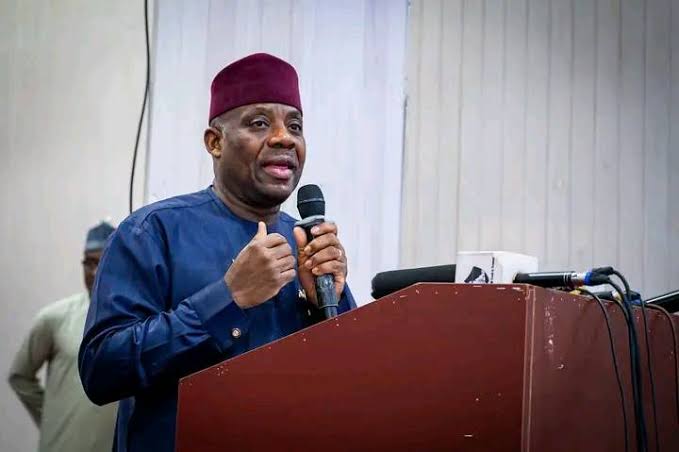
The Federal Government has announced plans to provide Nigerian students with free daily internet data to support online learning and improve access to educational resources.
Beginning October 1, 2026, students will receive 100 megabytes of free data every day to visit approved educational websites and access digital learning platforms without paying for the data.
The programme is being implemented by the Nigerian Communications Commission (NCC) in collaboration with telecommunications companies and the Federal Ministry of Education.
The initiative, which is designed to promote digital learning, will initially benefit students in public senior secondary schools and tertiary institutions across the country.
Minister of Education, Dr Tunji Alausa, disclosed the development on Thursday in Abuja during the launch of the Initiative for Zero-Rated Access to Educational Platforms and Content in Nigeria.
The scheme is expected to make online educational materials more accessible to students while reducing the cost of internet access for learners who depend on digital platforms for their studies.
“Let me let out the secret. This will be made available to Nigerian students from October 1st, 2026,” Alausa said, acknowledging the contribution of the Association of Licensed Telecommunications Operators of Nigeria to the programme.
Under the framework, participating mobile network operators will provide a daily zero-rated data allowance of 100MB, which beneficiaries can use on approved educational websites and platforms.
Speaking further, Alausa said the initiative would begin with senior secondary school and tertiary institution students before being extended to other categories of learners.
“Our ambition must be that, ultimately, no Nigerian learner should be denied access to quality educational content simply because he or she cannot afford data,” the minister said.
He noted that the cost of internet data had become a major barrier to digital education, particularly for children from low-income households.
According to him, providing access to educational platforms without data charges could transform mobile phones, tablets and computers into classrooms and libraries for students who might otherwise struggle to access digital resources.
The minister also disclosed that the government was working on measures to regulate internet access for children below the age of 16, with further details expected to be announced.
He said educational content made available to children must be “appropriate, credible, safe and aligned with our educational objectives and our curriculum.”
Alausa added, “It will be regulating internet access to children below 16 years old,” saying further announcements would follow on the proposed measure.
The minister said the government was also expanding the digitalisation of the education sector through the Nigeria Education Data Infrastructure, Digital Nigeria Education Management Information System and the Learner Identification Number.
He disclosed that more than 240,000 schools had been geo-mapped and geolocated across the country, while the government was digitising the Annual School Census to obtain information on enrolment, teachers, classrooms, laboratories, libraries, connectivity and school safety.
The NCC Director of Policy, Competition and Economic Analysis, Ayuba Shuaibu, said the Federal Ministry of Education and the commission would jointly approve the educational platforms to be whitelisted under the initiative.
He said eligible platforms would include learning management systems, digital libraries, educational repositories, teacher development platforms, as well as technical and vocational training platforms.
“The framework also adopts the operator’s consult model for the initial rollout of the initiative. Under this model, a daily zero-rated data allowance of 100 MB will be provided by the participating MNOs for usage on approved websites and platforms,” Shuaibu said.
He explained that the scheme would provide zero-rated access to public secondary schools and public tertiary institutions, giving students access to selected learning resources at no cost.
According to him, the framework also requires compliance with telecommunications laws and regulations covering cybersecurity, consumer protection, child protection and data protection. It also contains safeguards on net neutrality, fair competition and inclusivity.
Earlier, the NCC Executive Commissioner for Stakeholder Management, Rimini Makama, said millions of students were unable to access digital learning platforms because of affordability challenges.
She said the initiative was designed to ensure that no learner was excluded from educational content because of location or household income.
“The Zero-Rated Access Initiative exists to erase that line. Its principle is simple: no learner should be shut out of educational content because of where they live or what their family earns,” Makama said.
She explained that the NCC, participating mobile network operators under ALTON, the Federal Ministries of Communications and Education, and other partners carried out research, benchmarking, testing and consultations before developing the framework.
The Minister of Communications, Innovation and Digital Economy, Dr Bosun Tijani, represented by the Director, National Frequency Management Council Secretariat, Adetunji Adeyemo, described the initiative as a significant step towards making digital education more affordable and accessible, particularly to learners in underserved communities.
He pledged the ministry’s continued support for programmes promoting digital inclusion, affordable connectivity and access to knowledge.
In his closing remarks, the NCC Executive Commissioner for Technical Services, Abraham Oshadami, identified MTN Nigeria, Airtel Nigeria and Globacom among the major mobile network operators supporting the programme.
He thanked the operators for their “commitment to support its implementation by providing free data allowances for learners to access approved platforms.


 Follow Us on Google Discover








BREAKING: Harry Kane wins 2026 Ballon d’Or

‘Ebola may force postponement of 2027 elections’ – NCDC

‘Nomination Was Unlawful’ — NDC aspirant drags Omo-Agege, party to court

Prof Ochefu rejects NDC Campaign Council appointment, give reason

Burna Boy presents Socrates Award to Bukayo Saka at 2026 Ballon d’Or ceremony

NDC unveils new National Secretariat in Abuja

INEC bows to pressure, makes preliminary Voters’ Register available online for public inspection

‘Atiku wants to push Nigeria back into poverty’ — Shettima

Why data may be used even when mobile data is switched off – MTN

Fani-Kayode arrives in South Africa, pledges to strengthen bilateral ties

“I know what I came into office to do” — President Tinubu

Court remands man at Kuje prison over alleged threat to release nude videos of Kano Governor

Agbara Nla: The Return hits N408.3m, ranks as Nollywood’s second-biggest film of 2026

Obi has nothing to offer Nigerians beyond ‘Dubious Statistics’ – Shettima

Dozens killed, 18 injured in attack on orthodox churches in Ethiopia

BREAKING: NDC unveils 2027 National Campaign Council, names Babachir Lawal, Galadima to key roles (Full List)

2026 Ballon d’Or: Date, time, venue, streaming details revealed

US Pastor marries second wife, describes monogamy as unbiblical

Troops storm bandits’ hideout, rescue three kidnap victims in Kebbi

Blessing CEO regains freedom after four months in prison

Woman killed, two injured as gunmen attack groundnut farmers in Plateau

BREAKING: NCDC identifies two additional suspected Ebola cases, tracks 53 primary contacts

FIFA U-17 Women’s World Cup: Round of 16 fixtures, dates, kick-off times revealed

Outrage as viral video shows JIBWIS members demanding AK-47s, threaten to kill ‘Infidels’ in Enugu, Jos on a Sunday

Lone Ebola patient to be flown out of Nigeria for further treatment

Reaction trails as APC youth leader Dayo Israel gifts 2026 Toyota Prado SUVs to party officials

2027: Sowore accuses Peter Obi of ‘renting’ NDC for election, criticizes party

NCDC approves ₦100,000 weekly support for people isolated over Ebola concerns
“I know what I came into office to do” — President Tinubu
