
News
Muslim Pilgrims depart Mecca after Hajj


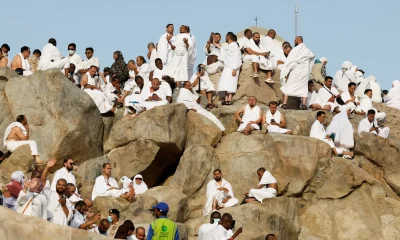
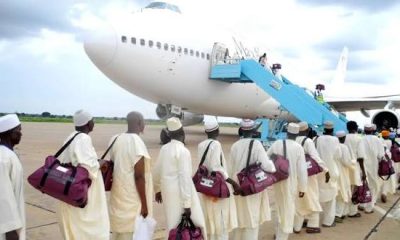
Thousands of Muslim pilgrims on Friday began departing the holy city of Mecca after successfully completing the 2026 hajj pilgrimage under intense heat conditions and growing security concerns linked to the ongoing conflict in the Middle East.
More than 1.7 million worshippers from about 165 countries participated in this year’s hajj, making it one of the largest religious gatherings in the world.
The pilgrimage took place amid rising tensions in the region following the military strikes carried out by the United States and Israel against Iran.
Since the war began in February, Iran has responded with several drone and missile attacks targeting infrastructure and energy facilities across Gulf countries, including Saudi Arabia, which hosts the holy city of Mecca.
More than 30,000 Iranians made the journey to Mecca, about a third of the 86,000 originally expected. Iran’s IRNA state news agency said the “wartime situation” explained the drop.
“I can’t believe I completed the hajj,” said Ahmed Mamdouh, a 37-year-old Egyptian who performed the pilgrimage for the first time.
Fighting back tears, he added: “I am very happy that I completed the rituals safely. Hajj is truly exhausting, especially in such hot weather.”
Algerian pilgrim Al-Zaoui, 74, wrapped his arm around his wife and said, “It was our dream to perform the Hajj together. Now that dream has come true after 50 years of marriage.”
On Friday, the faithful will complete the third day of a stoning ritual in the valley of Mina, southeast of Mecca, during which they throw pebbles at concrete pillars symbolising the devil.
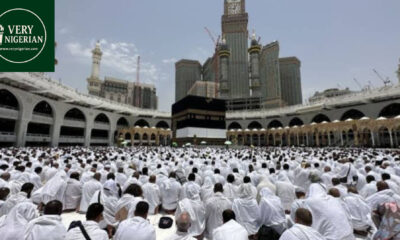
The pilgrims then board buses to the Grand Mosque in Mecca to perform the farewell “tawaf” — walking seven times around the Kaaba, the giant black cube at the Grand Mosque that is the focal point of Islam.
The hajj, one of the five pillars of Islam, must be performed at least once by all Muslims with the means to do so.
It involves a series of mostly outdoor rituals over several days and took place during intense heat this year.
After more than 1,300 people died during the 2024 hajj, when temperatures soared above 50C, Saudi authorities introduced heat-mitigation measures, including more shaded areas and thousands of extra health workers.
The Saudi Red Crescent said Thursday it had provided emergency services to “more than 83,000 people since the beginning of the hajj season”.


 Follow Us on Google Discover










Pope Leo XIV set to leave hospital after lung cancer surgery

Gunmen kill four vigilantes in Plateau community

Tension as traditional ruler collapses, dies in Ondo

2027: Kwankwaso a goat in sheep’s clothing, secretly working for Tinubu – Atiku Campaign Council

DSS arrests Maina’s fugitive son in Abuja, hands him over to EFCC

2027: Step down if you are not working for Tinubu – Deji Adeyanju dares Obi, Kwankwaso

2027: ‘I wont join my Uncle to support Tinubu’ – Davido says

Enugu NYSC death: NAFDAC debunks claims linking corps members death to fake drugs

33 Governors cannot be wrong in supporting Tinubu – Bayo Onanuga

Security forces arrest five suspects over abduction of 20 NYSC members in Imo

Rugby star Hyron Andrews dies at 31 after accidental fall in South Africa

LAUTECH Resident Doctors halt 50-day strike as Makinde intervenes

House Officers, Nurses, Radiographers, Others wanted as DELSUTH opens recruitment – Apply Now

FG raises health fund allocation to N40.76bn, extends insurance to prison inmates

Erisco Foods announces 13 job openings across Nigeria – Apply Now
Erisco Foods announces 13 job openings across Nigeria – Apply Now
‘You Betrayed Osun People’ — Adeleke, Davido face backlash over support for Tinubu

Ex-Senator Bello Mandiya’s body found in Abuja home three days after he slipped, hit his head in the bathroom

Tinubu reappoints Bala Bila as INEC commissioner, nominates six others
House Officers, Nurses, Radiographers, Others wanted as DELSUTH opens recruitment – Apply Now

‘I love Islam, I’ve sent people to Mecca to pray for me, Nigeria for 25 years’ – Akpabio

Over 10 soldiers, four civilians feared dead as Boko Haram terrorists attack Borno military base

Panic in Rivers community as pipeline explosion injures 20, razes over 50 houses

Umahi reopens first Niger bridge after emergency repairs, displays Tinubu’s photos

Elon Musk unveils Tesla’s ‘flying’ car in stunning demonstration
2027: Step down if you are not working for Tinubu – Deji Adeyanju dares Obi, Kwankwaso

Tension mounts as NLC rejects FG’s response to 14-day ultimatum

2027: Tinubu to miss rallies in over 20 States as APC releases campaign timetable

BREAKING: Headline inflation drops to 14.63% in September, third consecutive decline
