News
Ooni, Ogbunechendo clash over Southern Traditional Rulers’ Council

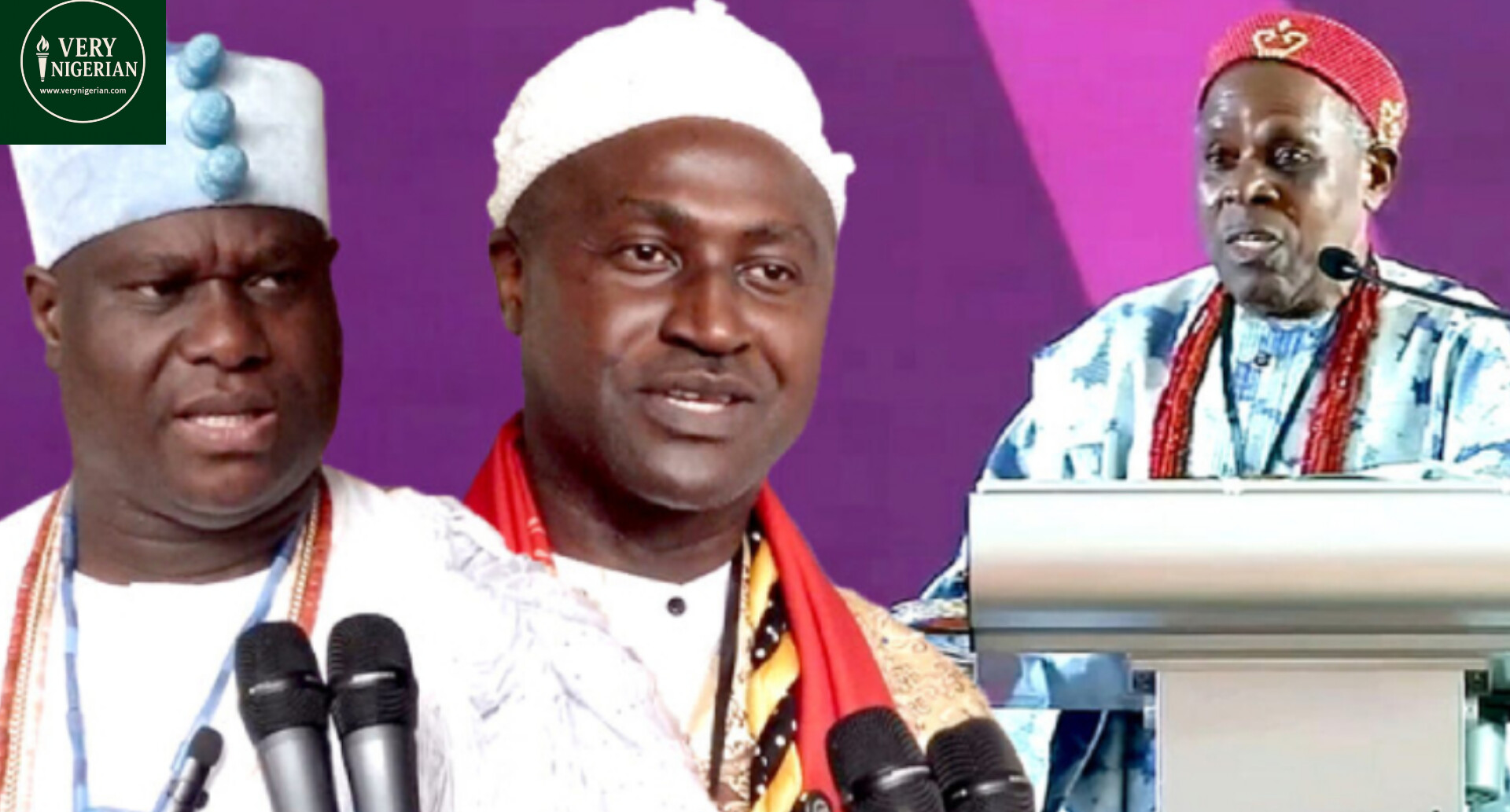
A disagreement erupted on Tuesday between the Ogbunechendo of Ezema Olo Kingdom in Enugu State, Lawrence Agubuzu, and the Adeyeye Ogunwusi over the existence and legitimacy of a Southern Traditional Rulers’ Council.
Speaking at the National Traditional and Religious Leaders Summit on Health in Abuja, attended by Bola Tinubu, Agubuzu declared that “there is nothing like a Southern Traditional Rulers’ Council,” cautioning the Federal Government against disbursing funds to individuals or groups claiming to represent such a body. He stressed that the South operates a different traditional structure from the North and called for engagement along regional lines, particularly with the South-East.
According to him, democracy and traditional leadership must remain representative, warning that anyone presenting themselves without the backing of their people lacks legitimacy. He urged President Tinubu to heed their concerns and ensure proper consultation before allocating resources.
However, Ogunwusi countered that membership of the council is optional, describing it as a voluntary but formidable platform uniting traditional rulers across Southern Nigeria.
He dismissed claims that the body does not exist and maintained that it serves as a collaborative forum rather than a compulsory institution. He also clarified that the council is not limited to the South-West and includes prominent rulers from the South-East and South-South.
Backing the Ooni’s position, Eberechukwu Oji, the Eze Aro of Arochukwu Kingdom and publicity secretary of the Southern Nigerian Traditional Rulers’ Council, described the body as a movement comprising respected monarchs from across the southern region.
He stated that the council was inaugurated in Owerri and recognised by the Federal Government, noting that President Tinubu was present at its inauguration.
The exchange highlighted differing views among southern monarchs over representation and coordination, even as leaders publicly emphasised unity and support for national development.


 Follow Us on Google Discover

2027: Kwankwaso a goat in sheep’s clothing, secretly working for Tinubu – Atiku Campaign Council

DSS arrests Maina’s fugitive son in Abuja, hands him over to EFCC

2027: Step down if you are not working for Tinubu – Deji Adeyanju dares Obi, Kwankwaso

2027: ‘I wont join my Uncle to support Tinubu’ – Davido says

Enugu NYSC death: NAFDAC debunks claims linking corps members death to fake drugs

33 Governors cannot be wrong in supporting Tinubu – Bayo Onanuga

Security forces arrest five suspects over abduction of 20 NYSC members in Imo

Rugby star Hyron Andrews dies at 31 after accidental fall in South Africa

LAUTECH Resident Doctors halt 50-day strike as Makinde intervenes

House Officers, Nurses, Radiographers, Others wanted as DELSUTH opens recruitment – Apply Now

FG raises health fund allocation to N40.76bn, extends insurance to prison inmates

Erisco Foods announces 13 job openings across Nigeria – Apply Now

Tinubu reappoints Bala Bila as INEC commissioner, nominates six others

2027: ‘Don’t trust your destiny to ‘kalokalo’ people’ – Wike warns Rivers voters against Atiku, Amaechi, Obi

BREAKING: Cross River PDP Chairman Venatius Ikem resigns, cites leadership crisis
Erisco Foods announces 13 job openings across Nigeria – Apply Now

2027: Atiku, Obi, Makinde, Adebayo, Duke hold talks with six opposition parties

Ex-Senator Bello Mandiya’s body found in Abuja home three days after he slipped, hit his head in the bathroom
‘You Betrayed Osun People’ — Adeleke, Davido face backlash over support for Tinubu
Tinubu reappoints Bala Bila as INEC commissioner, nominates six others

JUST IN: Finnish Appeal Court reduces Simon Ekpa’s jail term to four years, upholds terrorism conviction

Zamfara govt set to empower 36,176 residents with Dangote shares

Umahi reopens first Niger bridge after emergency repairs, displays Tinubu’s photos

Over 10 soldiers, four civilians feared dead as Boko Haram terrorists attack Borno military base

‘I love Islam, I’ve sent people to Mecca to pray for me, Nigeria for 25 years’ – Akpabio

Lagos govt announces 3-day traffic diversion on Independence bridge for emergency repairs

Tension escalates as thugs attack NDC secretariat in Edo, destroy properties

‘Local champion’ – Donald Duke takes fresh swipe at Gov Diri over Lagos-Calabar coastal highway

Tension mounts as NLC rejects FG’s response to 14-day ultimatum
