News
Reps pass bill to boost local drone manufacturing in Nigeria
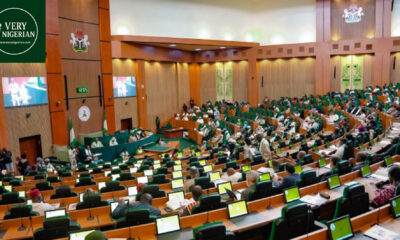
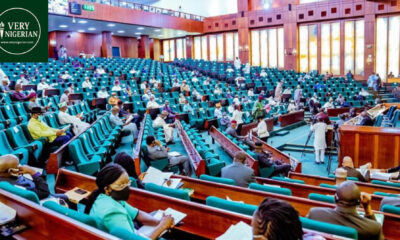
Presenting the bill during plenary on Wednesday, one of its co-sponsors, Hon. Satomi Ahmad, said the proposed law would provide the legal and institutional structures required to build and strengthen Nigeria’s indigenous drone industry.


The House of Representatives has passed for second reading a bill seeking to establish a legal framework for the development, promotion and industrialization of Nigeria’s drone industry.
The proposed legislation, sponsored by Deputy Speaker Benjamin Kalu and 12 other lawmakers, aims to reduce Nigeria’s dependence on imported drone technology by encouraging local research, design, production and commercialisation.
Presenting the bill during plenary on Wednesday, one of its co-sponsors, Hon. Satomi Ahmad, said the proposed law would provide the legal and institutional structures required to build and strengthen Nigeria’s indigenous drone industry.
Ahmad explained that the legislation was designed to support local capacity in drone technology and create an enabling environment for the industry to grow.
The bill’s passage for second reading marks another step in the legislative process towards establishing a framework that could promote domestic drone production and expand the industry’s contribution to Nigeria’s technological and industrial development.
He said the bill aimed to strengthen local content and technical capacity, attract investment, create jobs and position Nigeria as a competitive regional and international hub for drone manufacturing and related services.
Ahmad lamented that Nigeria’s dependence on imported technology limited opportunities for local innovation, job creation and industrial growth.
He said the absence of coordinated support for local manufacturing and commercialisation could prevent indigenous enterprises from turning promising ideas into viable products.
The lawmaker urged his colleagues to support the bill, which he said sought to address the challenges through targeted incentives, government procurement preferences, innovation funding and local-content requirements.
He expressed optimism that the legislation would help transform Nigeria from a consumer of drone technology into a producer of indigenous solutions, skilled professionals and competitive industrial products.
According to him, successful implementation of the proposed law could stimulate investment, create employment, strengthen national security and open new markets for Nigerian innovation.
“The future belongs to nations that can transform technological innovation into industrial capacity, economic prosperity and national security,” Ahmad said.
He noted that drone technology was increasingly important in agriculture, infrastructure development, emergency response, scientific research and defence.
“Nigeria must therefore move beyond dependence on imported technology towards developing its own capacity to design, manufacture and commercialise drones,” he said.
Ahmad added that the bill provided safeguards for aviation safety, cybersecurity, data protection and national security while preserving the statutory responsibilities of relevant regulatory and defence authorities.
He said the proposed legislation contained 49 clauses divided into 12 parts and was designed to build a competitive indigenous drone industry through local manufacturing, research, investment, technology transfer and skills development.
Among its provisions, the bill seeks to establish a National Drone Industrialisation Council to coordinate policies, targets, incentives, partnerships, industrial zones and export development.
It also proposes the development of a National Drone Industrialisation Policy within 12 months of the law’s enactment, with measurable targets for local content, employment, research, manufacturing and exports.
The proposed legislation further provides for performance-based incentives, including customs and import-duty concessions, research and development tax credits, accelerated capital allowances, grants, concessionary financing, certification support and infrastructure and investment assistance, subject to specified conditions.
Following a voice vote, the bill was passed for second reading and referred to the relevant committee for further legislative consideration.


 Follow Us on Google Discover







‘Where is my house?’ – Ortom questions Alia over denial of ex-governor’s benefits

NCDC: FCT Ebola patient is a diplomat suffering multi-organ failure

AAC writes Tinubu, seeks approval to host presidential campaign council inauguration at Aso Rock

Reps pass bill to boost local drone manufacturing in Nigeria

10 injured in Third Mainland bridge crash as rescuers avert train collision in Lagos

Macron arrives in Saudi Arabia for surprise solidarity visit amid Houthi attacks

NDC rejects inclusion of C’River Chairman in APC campaign council

Gov Otu presents N987.8bn 2027 budget to Cross River Assembly

Fresh crisis hits Awka Anglican Diocese as Chancellor demands N5bn damages

Plateau Indigenous Youth Coalition defends DSS, Police, Operation Rainbow

Ebola: Senate urges FG to release emergency funds, enforce screening at entry points

Seven-year-old boy found dead after suspected kidnappers demand N2.5m ransom in Plateau

2027 Election: Court rejects suit to compel INEC to register new party

Cross River Assembly backs constitutional amendment for state police

Rivers Police arrest four suspected Robbers, kidnappers, recover rifles

Proten International opens 18 job positions across states in Nigeria

TeamAce announces 64 job openings across Nigeria, with salaries up to ₦2 Million – Apply Now

R & R recruitment announces 31 job openings across Nigeria – Apply Now

FG to introduce fuel taxes when economy stabilises, Oyedele says

BREAKING: DSS arraigns five suspects over abduction of 20 Prospective Corps Members in Imo

If Buhari a General could not end insecurity, you cannot blame Tinubu – Yari

Subsidy removal is here to stay, ‘we will never go back to Egypt’ – Tinubu
BREAKING: FG reports confirmed Ebola case in Abuja, identifies 44 contacts for tracing

Gregory University founder Gregory Ibe dies at 63

Sanwo-Olu reportedly demands LAWMA boss’ resignation over mounting refuse in Lagos

Petrol subsidy return could crash naira to N4,000/$ – Oyedele warns

Wike’s son Jordan dragged to EFCC over alleged $2.1m land fraud

NLC upholds two-week ultimatum to FG over petrol prices, wage talks

BREAKING: Tinubu extends tenure of NCoS, Immigration service chiefs until 2028
