
Politics
Six out of every 10 university students into ‘Yahoo Yahoo’ — EFCC chair Olukoyede

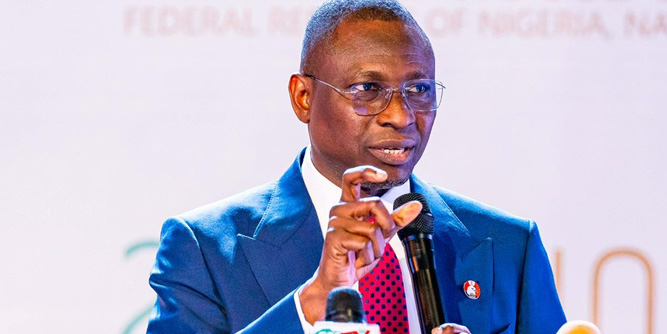
The Executive Chairman of the Economic and Financial Crimes Commission (EFCC), Olanipekun Olukoyede, has raised serious concern over the alleged widespread involvement of Nigerian university students in cybercrime.
Speaking at the 8th Biennial Conference of the Committee of Pro-Chancellors of State-Owned Universities in Nigeria in Kano, themed “Unlocking the Potentials of Artificial Intelligence: University Governance, Internationalization and Rankings,” Olukoyede said intelligence gathered by the commission suggests a troubling trend.
According to him, findings from investigations and field operations indicate that about six out of every ten students in Nigerian universities are involved in internet fraud and related offences.
“My research in the last one year has shown that about six out of 10 students in our universities are into cybercrime. It is a very disturbing situation,” he said.
He described the development as alarming, noting that many of those arrested in recent EFCC operations were undergraduates, with some allegedly deeply embedded in cybercrime networks.
Olukoyede further revealed that in a major operation in Lagos, 792 suspects linked to a transnational cybercrime syndicate were arrested, with a significant number reportedly being students.
He also expressed concern over the growing phenomenon of “Yahoo Plus,” where suspects combine internet fraud with fetish practices.
According to him, the situation points to deeper institutional and societal challenges, including weak oversight mechanisms and vulnerabilities within the education system.
He warned that some students involved in cybercrime had even compromised academic environments by allegedly influencing lecturers and manipulating university systems.
The EFCC boss called on university authorities and governing councils to urgently address the trend by strengthening internal controls and adopting technology-driven governance systems.
He advocated the use of artificial intelligence in university administration, particularly in fraud detection, payroll monitoring, procurement oversight, and academic integrity checks.
Olukoyede stressed that many institutions still rely on manual processes, making them vulnerable to fraud such as ghost workers, contract inflation, and fund diversion.
“A university that lacks financial accountability cannot credibly train future professionals. The integrity of our universities is a matter of national security,” he said.
He also encouraged investment in digital infrastructure and capacity building in cybersecurity, machine learning, and digital governance, while urging stronger collaboration between universities, regulators, and anti-corruption agencies.
The EFCC chairman added that although artificial intelligence is a powerful tool for accountability and investigation, it must complement human oversight and be deployed within legal frameworks.


 Follow Us on Google Discover








Wike’s son Jordan dragged to EFCC over alleged $2.1m land fraud

Subsidy removal is here to stay, ‘we will never go back to Egypt’ – Tinubu

If Buhari a General could not end insecurity, you cannot blame Tinubu – Yari

Sanwo-Olu reportedly demands LAWMA boss’ resignation over mounting refuse in Lagos

Gregory University founder Gregory Ibe dies at 63

Abia: NAFDAC uncovers suspected N500m fake alcohol factory in Aba

Veteran journalist Christiane Amanpour set to exit CNN after four decades

Gov Otti signs four bills into law, introduces criminal justice reforms in Abia

Pandemonium as fuel tanker goes up in flames under Lagos’ Otedola bridge

FG to introduce fuel taxes when economy stabilises, Oyedele says

10 key facts about late former Delta Governor, Emmanuel Uduaghan

Bauchi NDC governorship candidate Ibrahim Kashim resigns from party

Court throws out El-Rufai’s fundamental rights suit against DSS, ICPC, EFCC

Four more Makinde’s appointees quit TESCOM, SUBEB, others

NDC reschedules national campaign council inauguration to October 26
BREAKING: Former Delta Governor Emmanuel Uduaghan is dead

‘₦29,000 Cannot sustain a retired officer’ — Atiku challenges Tinubu on police pensions, proposes initiative

Opposition will front a single candidate against Tinubu, announcement will be made few days to election – Lukman

2027: Tinubu must be stopped, ‘even Buhari saw him as bad news’ — Hakeem Baba-Ahmed

Eight Nigerian Soldiers killed as ISWAP landmine hits Army patrol vehicle in Borno
Bauchi NDC governorship candidate Ibrahim Kashim resigns from party

2027: “Which North? North Korea or North Carolina?” Nigerians mock politicians promising Tinubu Northern votes

2027: NDC will never step down for Atiku, stop attacking us – Kwankwaso replies ADC Campaign Council

Messi’s double fires Inter Miami to 3-1 victory over Atlanta United

Catholic priest dies after Jesus’ statue falls on him during mass in Ecuador (video)

“I saw Akpabio at the State House begging Tinubu to keep his position” — Jake Epelle

FG defends fiscal reforms as World Bank flags ₦7.7tn debt interest

Wike, Akpabio, Uzodimma: Unity at the podium, rival ambitions behind the Scenes? can Tinubu keep his associates together?

‘Nigeria cannot become prosperous in four years’ — Tinubu’s Economic Adviser says
