
Politics
Why Tinubu could win the 2027 election without winning any state: New analysis reveals

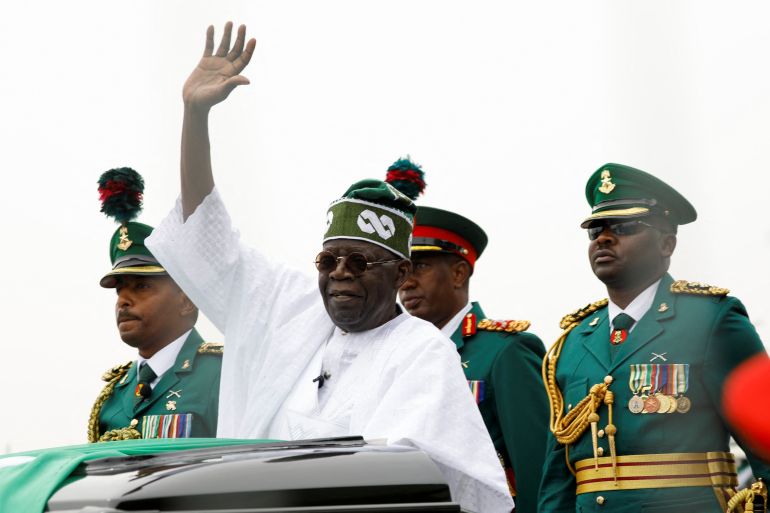

As political parties begin positioning themselves ahead of the 2027 presidential election, one possibility that deserves attention is how President Bola Ahmed Tinubu could secure another four years in office without necessarily winning a single state.
While political discussions often revolve around the number of states a presidential candidate can win, Nigeria’s electoral system does not make winning individual states the primary condition for becoming president.
A closer examination of the 2023 presidential election results offers an interesting illustration of this reality, particularly when the votes recorded by the All Progressives Congress (APC), Peoples Democratic Party (PDP) and Labour Party (LP) are combined across selected states.
The figures reveal an interesting electoral pattern: the APC recorded the highest combined votes among the three parties across the 15 locations presented, despite failing to finish first in any of them.
This raises an important question ahead of 2027: could Tinubu repeat such a pattern across the country and still emerge as president?
APC Lost All 15 Locations but Had the Highest Combined Votes
The 2023 election figures covering 14 states and the Federal Capital Territory, Abuja, show that the APC accumulated 3,929,048 votes, representing 38.08 per cent of the combined votes recorded by the three parties in those locations.
The PDP followed with 3,486,528 votes, representing 33.79 per cent, while the Labour Party secured 2,901,954 votes, representing 28.13 per cent.
The total votes recorded by the three parties stood at 10,317,530.
What makes the figures particularly interesting is that the APC did not win any of the 15 locations when the actual state winners are considered.
In Kano, for instance, the APC secured 517,341 votes, more than the PDP and Labour Party combined individually. However, the party lost the state to the New Nigeria Peoples Party (NNPP), whose candidate, Rabiu Kwankwaso, polled 997,279 votes.
In Osun, the PDP defeated the APC, while the Labour Party emerged victorious in locations including Lagos, Enugu, Edo, Ebonyi, Plateau and the FCT.
The PDP also secured more votes than the APC in several other locations, including Yobe, Gombe, Katsina, Akwa Ibom, Bauchi, Kaduna and Kebbi.
Nevertheless, when the votes across all 15 locations were added together, the APC emerged with the highest total among the three parties.
The figures demonstrate that a party can lose individual states but still accumulate more votes across a wider geographical area.
Why Winning States Is Not the Same as Winning the Presidency
Under Section 134(2) of the 1999 Constitution, where more than two candidates contest a presidential election, a candidate is deemed elected if the candidate obtains the highest number of votes cast nationwide and not less than one-quarter of the votes cast in at least two-thirds of all the states in the federation and the Federal Capital Territory.
In other words, the constitutional requirement is not that a candidate must win the highest number of states.
A candidate could finish second in every state and still emerge as president, provided the candidate obtains the highest nationwide votes and satisfies the required geographical spread.
This distinction is important because Nigeria operates a presidential electoral system in which the entire country constitutes one constituency for the presidential election.
Consequently, the total votes accumulated across the federation matter significantly.
The number of states won may provide an indication of a candidate’s geographical strength, but it does not independently determine who becomes president.
The Mathematics of a Three-Horse Race
The possibility becomes particularly interesting when three major candidates are involved.
Imagine a presidential election in which three candidates enjoy substantial support across the country.
Candidate A wins some states, Candidate B dominates other states, while Candidate C consistently finishes second in several locations.
Although Candidate C may not record the highest votes in individual states, the candidate could accumulate a larger nationwide total if the margins separating the candidates are relatively small and the opposition votes are divided.
For instance, if one candidate secures 40 per cent in a state, another gets 35 per cent and the third obtains 25 per cent, the candidate with 35 per cent still accumulates a substantial number of votes despite finishing second.
Repeated across several states, such performances could produce a significant national vote total.
This is why a three-horse race could make the distribution of votes particularly consequential.
However, the candidate must still secure at least 25 per cent of the votes in the constitutionally required number of states and the FCT.
The 25 Per Cent Requirement
The APC’s performance in the supplied breakdown also draws attention to the importance of geographical spread.
According to the compilation, the party secured at least 25 per cent of the votes in 12 of the 15 locations presented.
Although this does not establish compliance with the nationwide constitutional requirement, it illustrates how a party can maintain a substantial level of support in different locations without necessarily winning them.
For a candidate to be declared president in a contest involving more than two candidates, the constitutional requirement is at least 25 per cent in 24 states and the FCT.
This means that a candidate who finishes second in several states can still satisfy the geographical spread requirement, provided the candidate reaches the 25 per cent threshold in the required number of locations.
The 2023 election offers a real example of the distinction between winning states and meeting the constitutional spread requirement.
Tinubu won 12 states, the same number as Atiku Abubakar, while Peter Obi won 11 states and the FCT. Kwankwaso won Kano State.
However, Tinubu emerged with the highest nationwide vote total of 8,794,726 and secured the required geographical spread. https://inecnigeria.org/wp-content/uploads/2024/02/2023-GENERAL-ELECTION-REPORT-1.pdf
The Power of Incumbency
Beyond the electoral mathematics, Tinubu enters the 2027 contest as the sitting President, giving the APC an established political structure across the country.
The ruling party has elected governors, senators, members of the House of Representatives, political appointees and grassroots networks that could play important roles in its campaign.
Incumbency also provides the President with an opportunity to present his administration’s record, defend its policies and make a case for another term.
These factors could help the APC maintain a competitive presence across several states, even where opposition parties have stronger electoral structures.
However, incumbency does not guarantee electoral victory.
The administration’s economic policies, security record, cost-of-living pressures and public perception of its performance will remain important considerations for voters.
The opposition’s ability to unite, agree on a candidate and prevent the fragmentation of its support could also influence the electoral calculations.
Opposition Votes Could Become a Decisive Factor
One of the major questions ahead of 2027 is whether the opposition will enter the election with a single presidential candidate or repeat the divided contest witnessed in 2023.
In the last presidential election, Atiku Abubakar, Peter Obi and Rabiu Kwankwaso contested separately, with each attracting significant support from different parts of the country.
The division of opposition votes meant that Tinubu emerged with the highest nationwide total, despite not winning the majority of states.
If three or more major candidates again contest the presidency in 2027, the distribution of votes could become important.
A fragmented opposition could allow the ruling party to remain competitive across several states, even where it does not finish first.
On the other hand, a more consolidated opposition could change the pattern by bringing together voters who previously supported different candidates.
Neither scenario should be treated as a guaranteed outcome. The actual result will depend on candidates, campaigns, voter turnout, political alliances and the choices Nigerians make at the ballot box.
The Real Electoral Lesson
The 2023 figures offer an important lesson about Nigeria’s presidential electoral system: winning states and accumulating the highest nationwide votes are two different things.
The APC’s combined performance across the 15 locations in the supplied breakdown shows how a party can record the highest aggregate votes among the three major parties while losing every individual location.
For Tinubu, the challenge ahead of 2027 will be to maintain a nationwide vote base, secure the constitutionally required geographical spread and obtain more votes than every other presidential candidate.
Ultimately, the presidential election will not be decided by the number of governors, states or political endorsements a candidate can claim.
It will be decided by the votes cast by Nigerians and the constitutional conditions governing the declaration of a winner.
In a three-horse race, Tinubu could theoretically finish second in every state and still win the presidency. He could even fail to win a single state. But he would still need the highest nationwide votes and at least 25 per cent in the required number of states and the FCT.
That is the electoral mathematics that makes the 2027 presidential contest worth watching.

 Follow Us on Google Discover





Nine Political Parties rally behind ADC, warn against alleged plot to weaken Opposition

Flamingos vs Japan U-17 World Cup Final 2026: Date, kick-off time, where to watch

2027: Peter Obi holds meeting with EU Ambassadors in Abuja

Why Tinubu could win the 2027 election without winning any state: New analysis reveals

MultiChoice disables GOtv stream App, directs subscribers to decoders

Trump signs executive order to protect Oval office from future changes

FG sets 24-month deadline to complete national library headquarters in Abuja

Kenyan tribunal declines petition against Dangote’s planned refinery

2027: Opposition dumps G100 name, adopts new identity to challenge Tinubu

NAWOJ ELECTION: Chizoba Ogbeche, Mohammad disqualified as Aisha Ibrahim returns unopposed

CBN sets N15bn minimum capital requirement for USDT, USDC stablecoin issuers in Nigeria

Teenage girl shot as bandits open fire on farmers in Nasarawa

Oshiomhole: N2,000 can still buy food in Nigeria, unlike $1 in US

2027: Amupitan seeks monarchs’ support for peaceful, credible polls

2027: ‘He is a trader, has no alternative to Tinubu’s policies’ – Oshiomhole slams Peter Obi
BREAKING: Atiku candidacy voided as Court sacks David Mark-Led ADC leadership, recognises Nafiu Gombe as party chairman

FG unveils five digital banks to receive N50,000 monthly cash support

How Peter Obi’s convoy was attacked in Calabar – Details Emerge

After Sokoto rally, Tinubu officials held late night meeting to plot judgement against Atiku, we are gathering facts to engage Trump administration – US Lobby Firm

Atiku tsunami as ADC holds successful presidential campaign rally in Sokoto

“We cannot allow Peter Obi to fund the election alone” — Aisha Yesufu seeks donations for Obi-Kwankwaso

Nafiu Gombe celebrates nullification of David Mark-led excos, releases official portrait as ADC chairman

“They Are Making Him More Popular” — Reactions trail nullification of Atiku, other ADC candidacies

BREAKING: Tinubu seeks fresh $7.7bn foreign borrowing, writes Senate

BREAKING: Nigeria beat Brazil 3-1 to reach first-ever U-17 Women’s World Cup final

Nigerian Army announces release of shortlisted candidates for 2027 short service course

‘There Is No Shaking’ — Atiku reacts to Court judgment, vows to continue ADC campaign, says APC afraid after Sokoto rally

ADC Court Verdict: Step down for Obi, support NDC – Isaac Fayose tells Atiku

PSC sacks three senior Police officers, demotes 16 others over misconduct
