
Politics
2027: APC blocs reject Wike’s Rainbow Coalition as Tinubu’s re-election bid intensifies

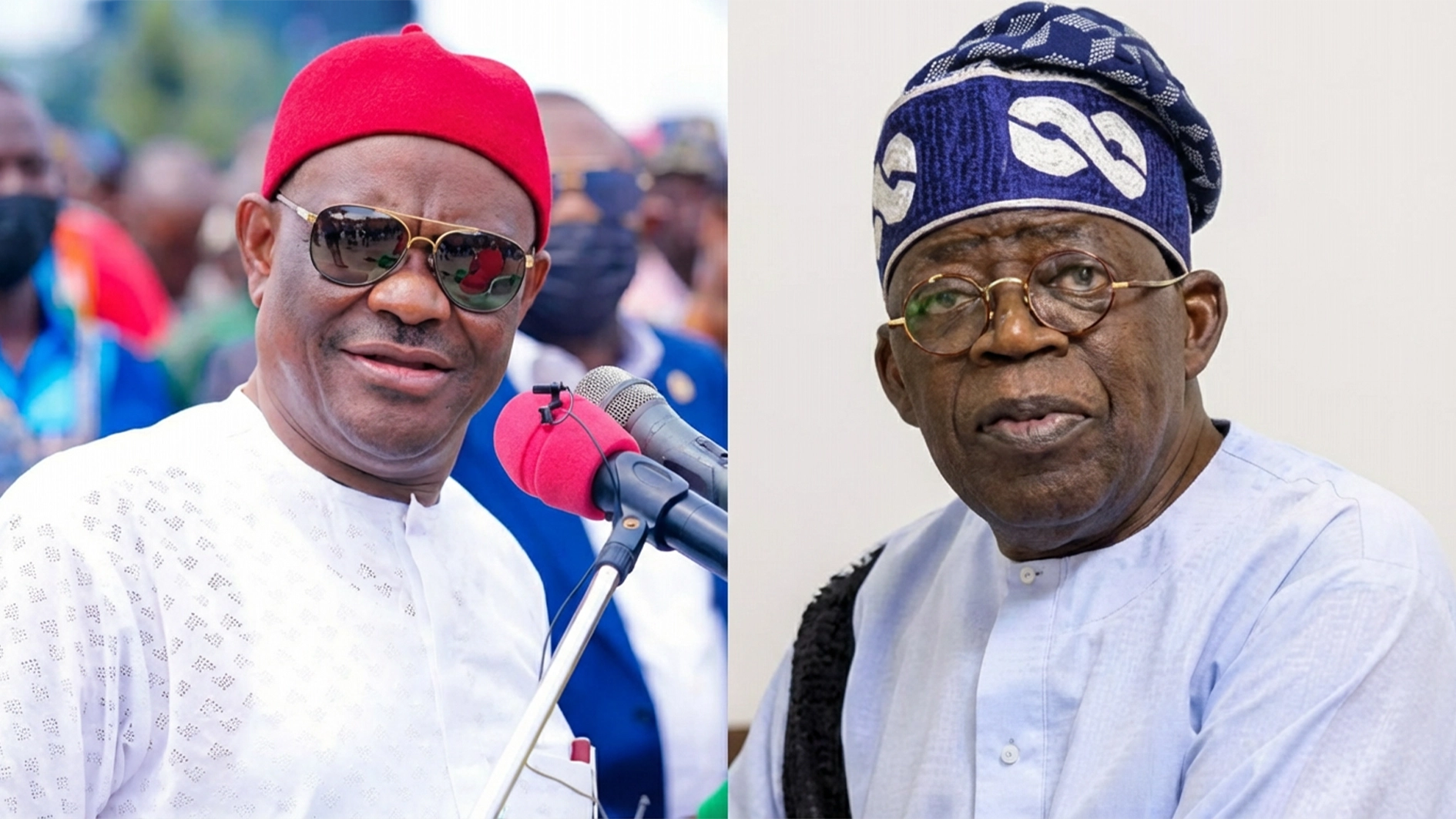
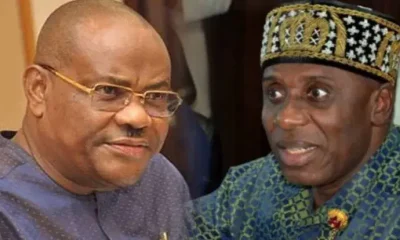
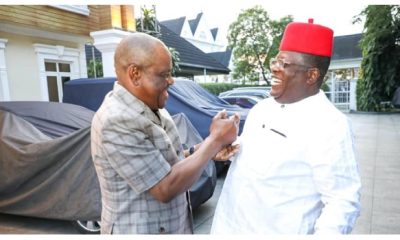
As the 2027 general election approaches, an unusual political alliance championed by Federal Capital Territory Minister Nyesom Wike is increasingly becoming a source of concern within the ruling All Progressives Congress.
The coalition, which brings together politicians from different political parties and is publicly presented as a vehicle for President Bola Tinubu’s re-election, is already generating controversy across several states.
At the heart of the disagreement is a seemingly contradictory political arrangement: politicians working together to support President Tinubu’s presidential bid while simultaneously fielding candidates against APC candidates in legislative and governorship elections.
For some APC stakeholders, the arrangement could ultimately weaken the party’s electoral strength and even reduce Tinubu’s presidential votes.
Wike, however, has remained unapologetic. The former Rivers State governor and influential Peoples Democratic Party figure insists that his priority is to secure Tinubu’s re-election and has accused those opposing the coalition of acting against the President because of their personal disagreements with him.
The minister recently took particular aim at Imo State Governor Hope Uzodinma, Chairman of the Progressive Governors’ Forum, and Kwara State Governor AbdulRahman AbdulRazaq, whom he accused of leading opposition to his political activities.
Wike argued that the coalition had provided an alternative platform for aggrieved politicians who might otherwise have joined the opposition against Tinubu.
But that explanation has done little to calm concerns within the APC.
APC governors raise alarm
Sources within the APC have reportedly warned that the Rainbow Coalition could create confusion among voters, particularly in rural communities where voters may find it difficult to distinguish between candidates campaigning under different party platforms.
The concern is straightforward.
If a coalition member campaigns for Tinubu at the presidential level but supports a PDP candidate for the National Assembly or governorship election, voters may either follow the party symbol they recognise or simply vote for one party across all positions.
Such a scenario could hurt APC candidates even if Tinubu himself benefits from the coalition’s support.
The concern is particularly significant because presidential, governorship and legislative elections are decided separately, but are conducted within the same broader electoral environment.
Nigeria’s electoral history already contains examples of voters making strategic choices that affected parties at different levels.
The 2023 election in Oyo State has been cited as one such example, while the political developments in the South-West during the 2003 presidential election also demonstrated how presidential voting patterns could influence legislative and governorship contests.
For APC governors, therefore, the Rainbow Coalition may represent a political gamble whose consequences could extend beyond 2027.
Rivers becomes a major testing ground
Rivers State is perhaps the clearest example of the contradictions surrounding the coalition.
The state has historically been a stronghold of the PDP, but the political crisis of recent years has dramatically altered the balance of forces.
The Rainbow Coalition, which cuts across the APC, PDP, Labour Party and other political platforms, was initially formed during the fierce political struggle between Wike and Governor Siminalayi Fubara.
With Fubara subsequently joining the APC, the coalition has assumed a new dimension, particularly as Wike continues to insist that its ultimate objective is to support President Tinubu.
The emergence of former PDP lawmaker Kingsley Chinda as the coalition’s preferred governorship candidate has, however, introduced another layer of controversy.
Chinda, who previously served as the PDP Minority Leader in the House of Representatives, is now associated with the APC ticket, while Wike himself remains in the PDP.
The arrangement has raised questions among coalition members, particularly over the choice of an upland candidate in a state where riverine interests remain politically influential.
The coalition’s choice of Major Jack as Chinda’s running mate has also added to the political calculations, especially because of his connection to other political actors in the state.
Consequently, Rivers voters may eventually be confronted with competing political messages from actors who claim to belong to the same coalition.
The fundamental question is therefore becoming unavoidable: if coalition members are contesting under different party platforms, which party should their supporters vote for?
Some political observers believe this could produce voter confusion, while others argue that Rivers voters are sufficiently politically sophisticated to make independent choices.
Cross River presents another dilemma
The political situation in Cross River is equally complicated.
The PDP remains active in the state, with Professor Sandy Onor already identified with the party’s presidential ticket and several candidates contesting legislative and governorship positions.
At the same time, the Rainbow Coalition is working to challenge the APC’s political dominance, including the administration of Governor Bassey Otu.
Recent defections from the APC to the PDP have further complicated the situation, with political groups and former APC supporters declaring support for the opposition party.
Yet the question remains whether PDP supporters are aware of the coalition’s reported plan to support Tinubu at the presidential level.
That uncertainty could become critical on election day.
Political analyst Dr Lyon Ebamane believes the arrangement may have limited impact on PDP supporters who have already identified with the party’s presidential candidate.
His argument is that many grassroots voters are likely to vote according to familiar party symbols rather than complex coalition arrangements negotiated among political elites.
If that happens, Wike’s attempt to transfer PDP votes to Tinubu could face serious resistance in parts of the South-South.
Gombe and Kwara widen the political battle
The coalition’s activities in Gombe and Kwara States have also attracted attention.
In Gombe, former Minister of Communications and Digital Economy Isa Pantami’s movement into the PDP has added another dimension to the political realignment.
The arrangement is being interpreted as part of a broader strategy in which political actors may support Tinubu at the presidential level while pursuing separate interests in state-level contests.
Kwara, meanwhile, has become one of the most fiercely contested theatres of the coalition’s activities.
Former Senate President Bukola Saraki and other political actors have aligned with politicians who became dissatisfied with the APC’s internal arrangements in the state.
The defection of Senator Saliu Mustapha from the APC to the PDP and his emergence as the PDP candidate for Kwara Central has further intensified the battle against Governor AbdulRahman AbdulRazaq.
Other former APC members have also moved to the PDP and secured tickets for the 2027 elections.
The emergence of the Kwara chapter of the Rainbow Coalition has therefore created an unusual situation in which politicians who once operated under the APC umbrella are now campaigning against the party’s candidates while maintaining support for Tinubu.
That contradiction is precisely what APC critics and supporters alike are struggling to reconcile.
The bigger question for Tinubu
Beyond the immediate battles in individual states lies a broader question for President Tinubu.
Can the President benefit from a coalition that is simultaneously weakening the electoral structures of his own party?
For Wike and his allies, the answer appears to be yes. Their argument is that presidential elections should be treated separately from state and legislative contests, allowing politicians to support Tinubu without necessarily supporting every APC candidate.
But Nigerian electoral history suggests that such a strategy carries considerable risks.
Political parties are built around structures, symbols and mobilisation networks. At the grassroots, particularly in rural communities, voters may not always follow sophisticated political arrangements negotiated by national elites.
The possibility therefore exists that a voter who supports Tinubu could also vote for a PDP candidate in another election, but there is equally a possibility that the voter may simply vote for the same party across the ballot.
For the APC, the latter possibility is the source of anxiety.
Wike’s political calculation
Wike’s critics believe his current strategy is motivated by interests that extend beyond the 2027 election.
Some argue that the minister is positioning himself within the national political structure ahead of the 2031 presidential contest, when the political equation could change considerably.
Others believe Wike is simply attempting to maintain his influence by becoming indispensable to the President while retaining political relevance within the PDP.
Whatever his ultimate calculation may be, one thing is clear: the former Rivers governor remains one of the most influential political actors operating across party lines.
His ability to maintain relationships within the Presidency, the PDP and different political blocs gives him an unusual advantage in Nigeria’s fluid political environment.
But influence also comes with risk.
If the Rainbow Coalition succeeds in delivering substantial votes for Tinubu while helping its preferred candidates defeat APC candidates, Wike could emerge as one of the biggest political winners of the 2027 election.
If, however, the arrangement fragments the APC’s vote base and reduces Tinubu’s margins in strategically important states, the same coalition could become a political liability for the President.
The 2027 test
The Rainbow Coalition has therefore moved beyond being a political arrangement centred on Wike.
It has become a test of whether Nigeria’s electorate can successfully navigate multi-party alliances in an election where presidential, governorship and legislative interests may not always align.
For Tinubu, the immediate challenge is to determine whether the coalition strengthens his re-election bid or creates unintended weaknesses within the APC’s own structure.
For APC governors, the priority is to protect their candidates and political structures from being undermined by allies who claim to support the President.
For Wike, the task is to prove that his political strategy can deliver the votes he has promised without damaging the very party structure through which Tinubu seeks to secure another term.
And for Nigerian voters, the ultimate question remains simple: when the ballots are presented, will political alliances matter more than party identities?
The answer could determine not only the fate of the Rainbow Coalition but also the shape of Nigeria’s political landscape after 2027.


 Follow Us on Google Discover








APC state youth leaders deny receiving SUVs from Dayo Israel

37 miners’ deaths: Presidential panel blames extreme heat, overcrowding in NSCDC custody

2027: Court reserves judgment in SDP suit challenging INEC over Adebayo’s candidacy

BREAKING: Tinubu seeks Senate approval for $20.51bn, €1.045bn external borrowing

Troops repel terrorists, recover two AK-47 rifles in Benue

Reps move to tighten rules on electric, CNG vehicle imports in Nigeria

Troops kill 8 suspected terrorists, rescue 3 kidnap victims in Katsina, Kaduna, Zamfara

Tinubu seeks National Assembly approval to settle N269.44bn outstanding debts

Atiku returns to Nigeria from overseas trip, set to lead ADC campaign across all 36 states

‘Tinubu must go, he lacks capacity, energy to govern Nigeria’ – Peter Obi

2027: Withdraw from Presidential race, back Tinubu – Kaduna APC tells Atiku

Newborn, parents cheat death as fire destroys buildings in Kwara

Kalu: Tinubu approves 500,000 solar lights for South-East communities

DSS charges Kaduna man over fake Tinubu letter to US president

‘I won’t steal Nigeria’s money, wont allow anyone steal’ — Obi

BREAKING: NDC unveils 2027 National Campaign Council, names Babachir Lawal, Galadima to key roles (Full List)

US Pastor marries second wife, describes monogamy as unbiblical

BREAKING: NCDC identifies two additional suspected Ebola cases, tracks 53 primary contacts

FIFA U-17 Women’s World Cup: Round of 16 fixtures, dates, kick-off times revealed

‘Ebola may force postponement of 2027 elections’ – NCDC

Outrage as viral video shows JIBWIS members demanding AK-47s, threaten to kill ‘Infidels’ in Enugu, Jos on a Sunday

Why data may be used even when mobile data is switched off – MTN

Lone Ebola patient to be flown out of Nigeria for further treatment
Reaction trails as APC youth leader Dayo Israel gifts 2026 Toyota Prado SUVs to party officials

NCDC approves ₦100,000 weekly support for people isolated over Ebola concerns

“I know what I came into office to do” — President Tinubu

Bandits storm Kaduna community, abduct two farmers

INEC bows to pressure, makes preliminary Voters’ Register available online for public inspection

Burna Boy presents Socrates Award to Bukayo Saka at 2026 Ballon d’Or ceremony
