
Special Features
22 Traits that truly define what it means to be Nigerian

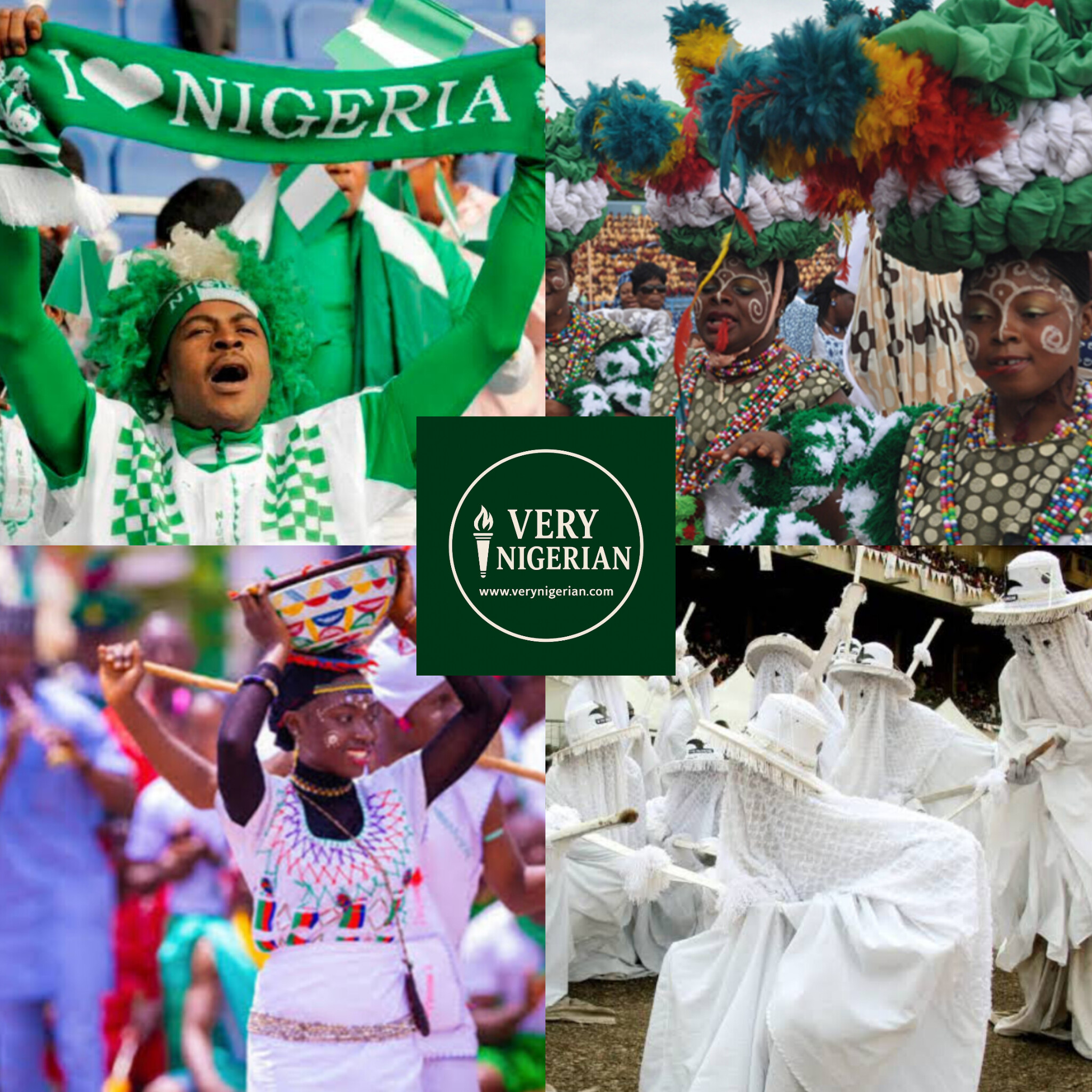
Nigeria, Africa’s most populous nation, is home to over 230 million people whose diversity, energy, and creativity make the country truly unique.
From the crowded streets of Lagos to the quiet farms of Benue, Nigerians shine through their identity, unity, and deep optimism.
We live life with laughter, pride, and faith, even when times are hard.
Below are 22 traits that define who we are, the heart and soul of being Nigerian.
1. Strong Family Bonds
Family is the first school every Nigerian attends.
It’s where we learn love, loyalty, and responsibility.
In Nigeria, the concept of “family” goes far beyond parents and children, it stretches to cousins, aunties, uncles, in-laws, and even close friends who become family by heart.
Think of the Adeleke family, whose unity shone brightly during Davido and Chioma’s wedding.
Every relative showed up, dressed in pride, standing together in joy. From family gatherings in villages to Lagos parties, Nigerians never walk alone, because family always shows up.
2. Respect for Elders
In Nigeria, respect is a way of life. From childhood, we’re taught that elders are walking libraries of wisdom.
You don’t argue carelessly with them, and you don’t talk while they’re speaking.
Across the country, culture defines how we show respect, Yoruba people kneel or prostrate, Igbo people bow slightly, while in the North, greetings are often followed with blessings.
Even in city life, people still greet with a cheerful “Good morning, sir!” or “Good evening, ma!”, small gestures that carry deep meaning.
3. Warm Hospitality
A true Nigerian home never runs out of food for guests.
Whether you visit unannounced or not, someone will still rush to bring you rice, stew, and maybe a chilled drink.
Hospitality isn’t just kindness; it’s a duty of the heart.
From homes in Enugu to compounds in Ilorin, visitors are treated like royalty.
It’s why even a stranger can leave a Nigerian home feeling like family.
4. Deep Religious Faith
Faith is the heartbeat of Nigeria. We are a people who believe strongly in divine timing and grace.
Churches fill up every Sunday, mosques overflow every Friday, and during religious festivals, the air feels sacred.
You’ll often hear phrases like “It is well” or “Na God dey do am.”
Even in traffic, traders shout “God bless you!” to customers.
In both good and bad times, Nigerians turn to God first before anyone else.
Africa’s most famous churches like The Redeemed Christian Church, Living Faith Church, Christ Embassy are founded in Nigeria.
5. Hardworking and Ambitious
If there’s one thing that defines Nigerians, it’s hustle.
From dawn till dusk, people chase opportunities with fierce determination.
Whether it’s a woman selling puff-puff at Ojuelegba or a tech start-up owner in Yaba, the spirit of “make am” drives us all.
We dream big, work hard, and believe that no condition is permanent.
That’s how many of our stars, from Osita Iheme (Paw Paw) to Tobi Amusan, turned sweat into success.
Nigeria houses Africa’s richest man, Aliyu Dangote.
Most cities in Nigeria stays busy for 24 hours, e.g, Lagos, Aba, Porth Harcourt, Kaduna.
6. Resilient and Resourceful
Life in Nigeria teaches you to adapt.
Even when things fall apart, we always find a way to stand again.
From power outages to inflation, Nigerians invent their own solutions, turning problems into opportunities.
During fuel scarcity, people form businesses from power banks and jerry cans.
During lockdown, tailors began sewing face masks overnight.
That ability to bend without breaking, that’s the Naija spirit.
7. Strong Community Support
In Nigerian communities, everyone looks out for one another.
You can’t be hungry when your neighbour has cooked, and you can’t be lonely when the street has events.
When tragedy strikes or celebrations arise, people come together.
They donate money, cook, dance, and support one another, not because they must, but because that’s who we are.
E.g is the Endsars period when youths protested against Police brutality. There was provision of enough food meat and drinks for everyone.
This is just how we are as Nigerians.
8. Value for Education
Education is seen as the ladder to greatness.
Nigerian parents will sell land or jewellery just to pay school fees.
They believe that learning is the one inheritance no one can steal.
From village schools in Taraba to universities in Lagos, children are raised to value books and certificates.
Nearly every family has a graduate in Nigeria.
Even when jobs are scarce, Nigerians still study hard, because they believe one day, knowledge will open the door.
9. Love for Music and Dance
Music is the soul of Nigeria.
Every mood, every celebration, has its sound Afrobeats in clubs, Fuji at weddings, Highlife in traditional events, and Gospel on Sunday mornings.
From Burna Boy to Tiwa Savage, our artistes have taken African sound to the world.
But even at home, you’ll find people dancing anywhere, at markets, parties, or inside traffic.
When the beat drops, Nigerians move without care.
10. Thriving Film Industry (Nollywood)
Nollywood is more than entertainment; it’s a reflection of our daily lives.
Our films carry lessons, laughter, and the drama that fills our homes and streets.
From classics like Living in Bondage to modern hits like King of Boys, Nollywood tells stories that every Nigerian can relate to, stories of struggle, survival, and triumph.
Nigeria has produced Africa’s most iconic actors like Nkem Owoh, Pete Edochie, Patience Ozokwo.
11. Rich and Diverse Cuisine
Food in Nigeria isn’t just for eating; it’s for bonding. Each dish carries a story, Jollof rice for parties, Pounded yam for respect, and Suya for relaxation.
Travel to Calabar and you’ll taste Afang soup; go to Kano and smell grilled meat from the streets. Nigerian food is love, culture, and community served on a plate.
Recently, Nigerian chef Hilda Baci broke Guinness Book of Records for the largest serving of Nigerian style jollof rice ever, this shows are Nigerians are good with delicacies.
12. Colorful Traditional Fashion
In Nigeria, we don’t just dress, we announce our presence.
Our traditional attire is bright, bold, and beautiful, just like our personalities.
Whether it’s the Yoruba Aso Oke, Igbo George wrapper, or Hausa Babban Riga, our outfits tell stories of identity and pride.
Designers like Veekee James and Deola Sagoe have made Nigerian fashion shine across the world.
Every tribe in Nigeria is identified with its own traditional attire.
13. Cultural Festivals
Festivals are a celebration of our roots. They remind us of where we came from and the beauty of our unity in diversity.
From the Argungu Fishing Festival in Kebbi to the Osun-Osogbo Festival and Calabar Carnival, these events showcase our heritage through music, colour, and dance.
Every drumbeat and masquerade costume tells the story of a people proud of their past.
Nigeria values cultural festivals a lot, in most communities, the New Yam festival serves as a symbol of prosperity and progress evey year.
14. Passion for Football
Football in Nigeria is more than a sport; it’s a national emotion.
When the Super Eagles play, the whole country feels it, markets slow down, viewing centres overflow, and even strangers cheer together.
From local matches in dusty fields to international tournaments, football binds us.
It’s one of the few things that makes every Nigerian forget tribe or religion, at least for 90 minutes.
Nigeria also houses one of the largest fans base for European club like, Manchester United, Chelsea, Barcelona, Arsenal, Real Madrid.
Football is played in every corner of Nigeria.
15. Expressive Communication
We don’t just talk; we perform our emotions.
Nigerians are expressive people, our words come alive with hand gestures, tone, and body language.
A simple “Wetin happen?” can mean ten different things depending on how it’s said.
That’s why our conversations are always full of laughter, drama, and energy, like a daily movie scene.
16. Love for Social Gatherings
No one throws parties like Nigerians.
We celebrate everything, birthdays, promotions, weddings, naming ceremonies, even house warmings.
An Owambe isn’t complete without loud music, rich food, and vibrant fashion.
Whether it’s a big city bash or a village get-together, celebration is in our DNA.
17. Market Bargaining Culture
In Nigeria, shopping is an experience.
Prices aren’t fixed, negotiation is part of the fun.
Sellers expect it, buyers enjoy it.
In markets like Balogun, Wuse, or Ariaria, people argue, joke, and laugh before sealing a deal.
It’s not just about saving money; it’s about connection and skill.
A Buyer can be like: Madam how much is your fish
Seller: Madam na N500 only.
Buyer: No be N300.
Seller: Oya add N50 make I sale am for you.
This is the vibe in Nigeria.
18. Vibrant Street Enterprise
Our streets are full of life, vendors, hawkers, artisans, everyone hustling with pride.
Nigerians are entrepreneurs by nature; if there’s a need, someone finds a way to fill it.
From Gala sellers in traffic to phone repairers at Computer Village, street enterprise keeps the economy alive.
We see opportunity where others see obstacles.
19. Self-Reliant Infrastructure
Because basic amenities often fail, Nigerians have learned to build their own systems.
Generators roar through the night, boreholes provide water, and solar panels now light up homes.
We no longer wait for government, we fix, build, and provide for ourselves.
It’s the Nigerian way of survival.
20. Widespread Use of Pidgin English
Pidgin English is our unofficial national language.
It’s how we connect across tribes, playful, expressive, and full of creativity.
From street slang like “How far?” to phrases like “E go better,” Pidgin breaks barriers and brings laughter.
Even in movies, music, and politics, Pidgin has become a proud part of our identity.
21. Cultural Etiquette on Left Hand
In most Nigerian cultures, using your left hand to greet, serve, or hand something to someone is considered rude.
It’s not superstition, it’s a mark of respect and decency.
From family tables to political events, Nigerians observe this cultural rule carefully.
It’s one of those unwritten codes that define proper upbringing.
22. Joyful and Humorous Spirit
No matter what life throws at us, Nigerians always find a reason to laugh. From social media memes to street banter, humour is our therapy.
Even in tough times, fuel scarcity, traffic, or inflation, we make jokes that turn pain into laughter.
That’s how we survive: smiling through the storm, confident that brighter days will come.
That’s what makes us Very Nigerian.


 Follow Us on Google Discover








Enugu NYSC death: NAFDAC debunks claims linking corps members death to fake drugs

33 Governors cannot be wrong in supporting Tinubu – Bayo Onanuga

Security forces arrest five suspects over abduction of 20 NYSC members in Imo

Rugby star Hyron Andrews dies at 31 after accidental fall in South Africa

LAUTECH Resident Doctors halt 50-day strike as Makinde intervenes

House Officers, Nurses, Radiographers, Others wanted as DELSUTH opens recruitment – Apply Now

FG raises health fund allocation to N40.76bn, extends insurance to prison inmates

Erisco Foods announces 13 job openings across Nigeria – Apply Now

Tinubu reappoints Bala Bila as INEC commissioner, nominates six others

2027: ‘Don’t trust your destiny to ‘kalokalo’ people’ – Wike warns Rivers voters against Atiku, Amaechi, Obi

BREAKING: Cross River PDP Chairman Venatius Ikem resigns, cites leadership crisis

Real Madrid call for immediate resignation of La Liga President over controversial remarks

BREAKING: Oyebanji makes history as first Ekiti Governor to win second consecutive term

Atiku fully fit, ready to campaign in all 36 states, interact with Nigerians – ADC PCC

2027: Tinubu afraid to face Nigerians, has no business seeking re-election — Atiku campaign council
Erisco Foods announces 13 job openings across Nigeria – Apply Now

2027: Atiku, Obi, Makinde, Adebayo, Duke hold talks with six opposition parties

Ex-Senator Bello Mandiya’s body found in Abuja home three days after he slipped, hit his head in the bathroom

‘You Betrayed Osun People’ — Adeleke, Davido face backlash over support for Tinubu

JUST IN: Finnish Appeal Court reduces Simon Ekpa’s jail term to four years, upholds terrorism conviction
Tinubu reappoints Bala Bila as INEC commissioner, nominates six others

Zamfara govt set to empower 36,176 residents with Dangote shares

Umahi reopens first Niger bridge after emergency repairs, displays Tinubu’s photos

Over 10 soldiers, four civilians feared dead as Boko Haram terrorists attack Borno military base

‘I love Islam, I’ve sent people to Mecca to pray for me, Nigeria for 25 years’ – Akpabio

Tension escalates as thugs attack NDC secretariat in Edo, destroy properties

Lagos govt announces 3-day traffic diversion on Independence bridge for emergency repairs

Tension mounts as NLC rejects FG’s response to 14-day ultimatum

‘Local champion’ – Donald Duke takes fresh swipe at Gov Diri over Lagos-Calabar coastal highway
