
National News
30-Day Petrol discount is not a return to subsidy – Presidency

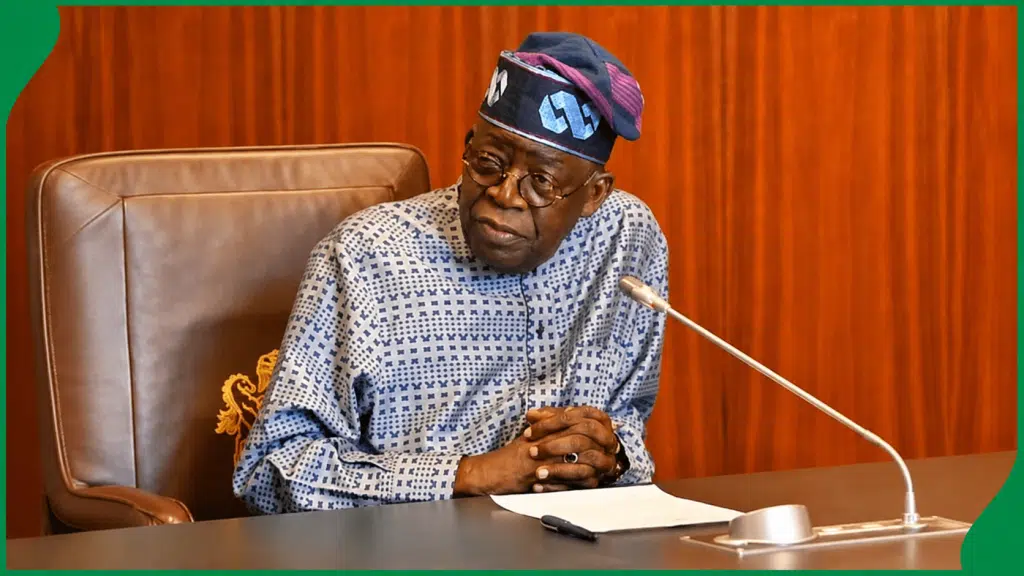
The Federal Government has announced that the Nigerian National Petroleum Company Limited (NNPCL) will temporarily forgo its retail profit margin on petrol and sell the product at cost as part of measures to cushion Nigerians against rising global oil prices.
The government said the arrangement, backed by President Bola Tinubu, would provide temporary relief to households and commercial transport operators without reinstating the petrol subsidy removed in May 2023.
The Minister of Finance and Coordinating Minister of the Economy, Taiwo Oyedele, announced the measures on Thursday during a press briefing in Abuja.
In a statement issued on Thursday, the Special Adviser to the President on Information and Strategy, Bayo Onanuga, said NNPC Retail would implement the arrangement within 30 days.
According to the statement, the initiative would allow the company to sell petrol at its landing cost without adding its usual retail profit margin.
“This means if NNPC’s landing cost is N1,300, it will sell fuel to Nigerians, especially commercial vehicles, at the same price,” the statement read.
Oyedele said the Federal Government hoped other petroleum marketers would adopt a similar approach, noting that the sharp increase in crude oil and petrol prices was not expected to persist indefinitely.
The government also announced plans to negotiate a ceiling of N1,350 per litre on the ex-gantry or landing cost of petrol in a bid to limit sudden price increases.
Under the arrangement, where costs exceed the ceiling, refiners and importers would bear the shortfall initially and recover it later when crude oil prices or exchange rates become more favourable, without exceeding the agreed ceiling.
Oyedele said the measure was intended to moderate price fluctuations rather than impose fixed prices.
“This is neither a subsidy nor a price control: it is designed to smooth prices over time rather than suppressing them,” he said.
He added that a more stable price would help households and businesses plan their expenses, particularly because transport fares often rise quickly when petrol prices increase but do not fall at the same pace when fuel becomes cheaper.
The minister said the ceiling would be reviewed monthly and adjusted when necessary, with the figures published to promote transparency.
FG Plans Forward Crude Sales to Domestic Refineries
The Federal Government also plans to sell crude oil forward to domestic refineries, a move it said would help shield petrol prices from global market volatility as production increases and previously committed crude supplies become available.
The government said it was also working with state governments and security agencies to curb the collection of road taxes and levies that increase transport and logistics costs.
Other measures include increased funding for cash transfers to vulnerable households and subsidised credit for small businesses and consumers.
On compressed natural gas, the government said it was expanding the rollout in partnership with state governments and expected transport operators to pass on the resulting savings to passengers through lower fares.
The statement said compressed natural gas was between 60 and 70 per cent cheaper than petrol.
The government also said it would consider an excess-profit tax for operators found to be taking undue advantage of consumers across the energy value chain.
According to the statement, proceeds from the proposed measure would be used exclusively to cushion fuel costs through transport support or vouchers for urban minimum-wage earners.
The Federal Government further said it would work with the National Assembly on enhanced tax relief for low-income earners under the 2027 Finance Bill.
FG Targets Supply Disruptions, Market Manipulation
The Presidency said the government was cutting regulatory costs that contribute to the cost of doing business and, indirectly, the prices of goods and services.
It also disclosed plans to establish a reserve of refined petroleum products that could be released into the market under published rules whenever global disruptions or hoarding threaten supply and price stability.
According to the government, the measure would help prevent artificial scarcity and market manipulation without fixing prices.
Other interventions include improved traffic management in major urban centres to reduce fuel consumption and the use of address codes introduced by the Nigerian Postal Service (NIPOST) to make logistics more efficient and affordable.
The Presidency maintained that the measures did not amount to a return to the blanket petrol subsidy removed in 2023.
It argued that reinstating the subsidy would create long-term economic problems in exchange for temporary relief.
“Removing the fuel subsidy came at a price. But the alternative has been tried. Nigeria has already lived through that cycle: scarcity, smuggling, a collapsing currency and a fiscal crisis. We cannot afford to live through it again, least of all in response to a temporary disruption, and at the very moment the results of reform are gathering pace,” the statement said.
The Presidency added that the government’s objective was not to reverse the subsidy-removal policy but to ensure that the benefits of its economic reforms reached more Nigerians.
“Government is not out to reverse a necessary reform designed to set our country on the path towards sustained prosperity. It is to ensure its gains reach more Nigerians, faster and in more tangible ways. That is our work, and we are committed to doing it,” the statement added.
The Federal Government also disclosed that it was working on a broader package of fiscal measures aimed at sustainably reducing inflation to single digits in the near term.


 Follow Us on Google Discover



30-Day Petrol discount is not a return to subsidy – Presidency

Atiku rejects FG’s 30-Day petrol discount, questions what Nigerians will do in Day 31

BREAKING: Tinubu’s Govt announces 30-Day petrol discount at filling stations for Nigerians

TCN schedules transformer maintenance, announces power outage in Ogun

Lakurawa terrorists kill two soldiers, Chinese national in Kebbi

FBI busts alleged Ghana scam network, arrests over 130

JUST IN: Idowu Sobowale, veteran journalist, communication scholar dies at 85

Umahi dismisses rift with Wike, says ‘we’re one family’

NYSC Kidnap: How I paid N6m to secure my son’s release from kidnappers – Mother

Veteran rapper Lord of Ajasa becomes US citizen

Canadian Poet Anne Carson clinches 2026 nobel prize in Literature

Amaechi ally, Sokonte Davies dumps ADC, returns to APC

NAF Crash: Aiyedatiwa orders sustained search for missing victims, aircraft

2027: Taraba is 100% behind Tinubu — Governor Kefas

Abuja court grants alleged fake JAMB registrar N50m bail
BREAKING: Tinubu’s Govt announces 30-Day petrol discount at filling stations for Nigerians
2027: Over 1,000 Islamic Clerics urge Tinubu not to contest, cite hardship, insecurity

‘Nigerians don’t hate Tinubu’ — Presidency rejects The Economist’s report

2027: Tinubu, Govs afraid of contest, offering N50m, N200m, cars to opposition candidates to step down

BREAKING: Security forces rescue 20 NYSC members from abductors in Imo

FG yields to SSANU ultimatum, releases eight months’ salary arrears

Military launches underwater search for crashed NAF ATR-42 aircraft in Ondo, deploys advanced sonar (Photos)

Court sentence man to death for killing father in Kogi

Wave of resignations hits Radda administration as appointees quit amid gov’s rift with Masari

BREAKING: NLC begins indefinite strike over Teachers’ promotion in FCT

Tragedy as passenger dies during Kenya Airways flight from Nairobi to Lagos

Rainbow Coalition: Wike, Chinda, Abe visit Fubara in Port Harcourt

2027: INEC commences training for supervisors

AAU lecturer found dead in Edo hotel after alleged encounter with sex worker
