Politics
‘Nigerians don’t hate Tinubu’ — Presidency rejects The Economist’s report
The Special Adviser to the President on Media and Public Communications, Sunday Dare, described the publication’s assessment as “intellectual fraud”

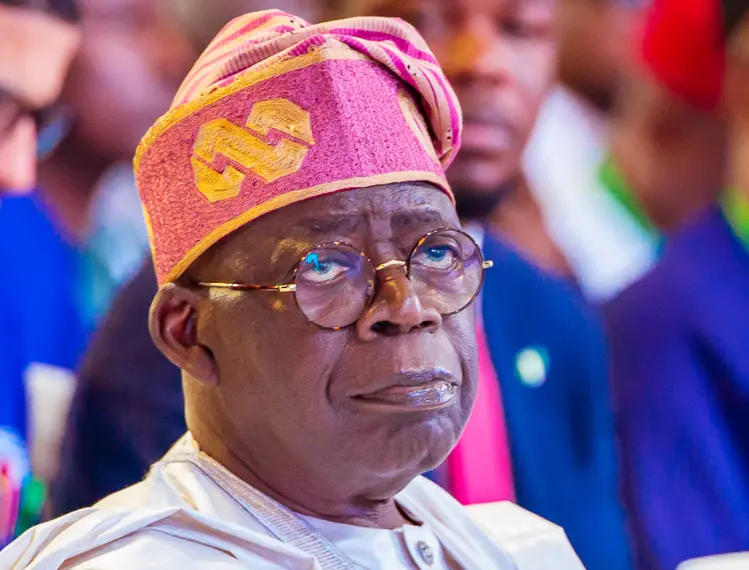
The Presidency has rejected claims attributed to The Economist about President Bola Ahmed Tinubu’s standing among Nigerians, accusing the publication of presenting a distorted assessment of the country’s political and economic situation.
The Special Adviser to the President on Media and Public Communications, Sunday Dare, described the publication’s assessment as “intellectual fraud” and defended the economic reforms implemented by the Tinubu administration since May 2023.
Dare stated this in a response titled, “Beyond the Economist Condescension: Nigeria’s Re-engineering Under Tinubu is Unstoppable.”
He argued that the publication’s assessment failed to adequately consider the economic conditions inherited by the Tinubu administration and the impact of its reforms.
“The Economist claims Nigerians dislike their President, but it’s a claim that smells of opposition and is riddled with inconsistencies,” Dare said.
The presidential aide accused some foreign publications of relying on what he described as “sensationalist half-truths” when reporting developments in Nigeria.
He rejected the suggestion that there was widespread rejection of Tinubu, describing such an assessment as an oversimplification of the country’s complex political and economic realities.
“It has become a tired, predictable ritual of external commentary, most notably from the comfortable, insulated drawing rooms of foreign publications, to look at the complex, dynamic, and pulsating canvas of the Federal Republic of Nigeria through a cracked, distorted lens,” he said.
Dare added that foreign commentators were too quick to portray Nigeria as being on the verge of collapse while overlooking what he described as changes taking place under the Tinubu administration.
He said the narrative that Nigerians “hate President Bola Ahmed Tinubu” amounted to a false representation of the President’s standing in the country.
“They love to peddle the lazy, hollow fiction that ‘Nigerians hate President Bola Ahmed Tinubu,’ packaging localised administrative growing pains into neat, uniform narratives of national rejection,” Dare said.
“This is not merely analytical laziness; it is an intellectual fraud. It completely overlooks the monumental, Herculean task of national salvage undertaken by the Tinubu administration since May 2023.”
Presidency defends Tinubu’s reforms
Dare argued that Tinubu’s performance should be assessed against the economic conditions that existed when he assumed office.
According to him, the President inherited what he described as a “broken economic ecosystem” characterised by fiscal pressures, distortions in the foreign exchange market and the burden of fuel subsidies.
“To evaluate President Bola Tinubu’s stewardship fairly, one must first confront the catastrophic baseline from which this administration began exercising its mandate,” he said.
“President Tinubu did not inherit a functioning, well-oiled state; he inherited a broken economic ecosystem on the precipice of total sovereign bankruptcy.”
The Presidency criticised the former fuel subsidy regime, describing it as a major drain on government resources, and also pointed to multiple foreign exchange windows, high debt-service obligations and years of underinvestment in infrastructure and other national assets.
Dare argued that the scale of the challenges meant that the reforms could not be implemented without transitional difficulties.
“To suggest that these structural cancers could be excised overnight without transitional pain is economically illiterate,” he said.
He maintained that the Tinubu administration had instead chosen to address what it regarded as longstanding structural problems.
“Yet, rather than kicking the can down the road like his predecessors, President Tinubu summoned the political courage to confront these structural contradictions head-on,” Dare added.
The presidential aide listed the removal of fuel subsidy and the unification of the foreign exchange market among the administration’s major reforms.
He claimed that the policies had helped reduce financial leakages, improve fiscal sustainability and strengthen investor confidence.
“Far from presiding over stagnation, the Tinubu administration has systematically dismantled decades of economic distortion through a series of hard-core, visionary policies that have fundamentally altered Nigeria’s trajectory,” Dare said.
Presidency highlights NELFUND, minimum wage, CNG buses
The Presidency also highlighted the Nigerian Education Loan Fund (NELFUND), local government financial autonomy, the increase in the national minimum wage and the deployment of Compressed Natural Gas-powered buses as some of the administration’s interventions.
It said NELFUND had enabled hundreds of thousands of students from financially disadvantaged backgrounds to pursue higher education without paying tuition upfront.
The Presidency also credited Tinubu’s administration with supporting local government autonomy and increasing the national minimum wage.
It said the deployment of CNG buses, alongside other interventions, was aimed at reducing transportation costs and cushioning the impact of economic pressures on Nigerians.
The administration also pointed to fertiliser distribution, agricultural loans and the deployment of tractors and other farming equipment as measures designed to increase food production and support rural economies.
On claims of widespread public hostility towards Tinubu, Dare argued that the administration’s policies had benefited different categories of Nigerians.
“The notion that millions of Nigerians harbour blind hatred for President Tinubu collapses when you meet everyday reality,” he said.
“Walk into the lecture halls of federal and state universities, and you will find students and relieved parents whose educational dreams have been rescued by NELFUND.”
The Presidency maintained that assessments of Tinubu’s administration should take into account both the economic difficulties faced by Nigerians and the government’s stated objectives and interventions since May 2023.


 Follow Us on Google Discover



Gov Yusuf approves promotion of 18,984 SUBEB workers in Kano

Wave of resignations hits Radda administration as appointees quit amid gov’s rift with Masari

Court sentence man to death for killing father in Kogi

‘Nigerians don’t hate Tinubu’ — Presidency rejects The Economist’s report

2027: Over 1,000 Islamic Clerics urge Tinubu not to contest, cite hardship, insecurity

2027: Tinubu, Govs afraid of contest, offering N50m, N200m, cars to opposition candidates to step down

AAU lecturer found dead in Edo hotel after alleged encounter with sex worker

Alleged $4.5bn fraud: Court shifts Emefiele’s trial to November 11

FG settles N758bn pension arrears, pays 957,045 beneficiaries

Rainbow Coalition: Wike, Chinda, Abe visit Fubara in Port Harcourt

Messi bows out of Argentina career with goal, two assists in 3-0 win over Benin

Argentine University honors Lionel Messi with honorary doctorate

Akor Adams’ late goal seals thrilling 3-3 draw for Super Eagles against Russia

BREAKING: FG opens 2026 oil bid round, puts 40 blocks up for investors

NAF opens condolence register for 32 victims of Ondo aircraft crash in Abuja

OPay Microfinance Bank opens recruitment for multiple positions across Nigeria – Apply Now

UBA opens recruitment, seeks Direct Sales, POS, Lending Officers across Nigeria

BREAKING: 32 persons were on board says FG, as NAF confirms ownership of crashed aircraft

BREAKING: Many feared dead as suspected Military Helicopter crashes in Ondo

2027: Lagos leads as INEC unveils Top 10 States with highest number of voters
BREAKING: Air Force publishes names of 25 victims killed in Ondo aircraft crash (Full list)

2027: Chinda, Duke, Omo-Agege, others in limbo as INEC reviews Supreme Court verdict

2027: ‘He betrayed APGA’ – Anambra govt tells electorate to reject Obi, NDC

2027: Anxiety mounts as INEC awaits Supreme Court judgment on party membership rules

Nigeria vs Russia: Date, time, venue where to stream

2027: Wike mocks Atiku-Amaechi ticket, calls it ‘joint ticket of corruption’

Military aircraft crash: Tinubu declares three-day national mourning

No tribe buys bread cheaper, insecurity affects all Nigerians – Obi

2027: ‘Everything I do now is about Tinubu’s re-election, I think of it when I eat, sleep’ – Wike
