
News
Obasanjo faults Tinubu’s handling of insecurity, ECOWAS crisis

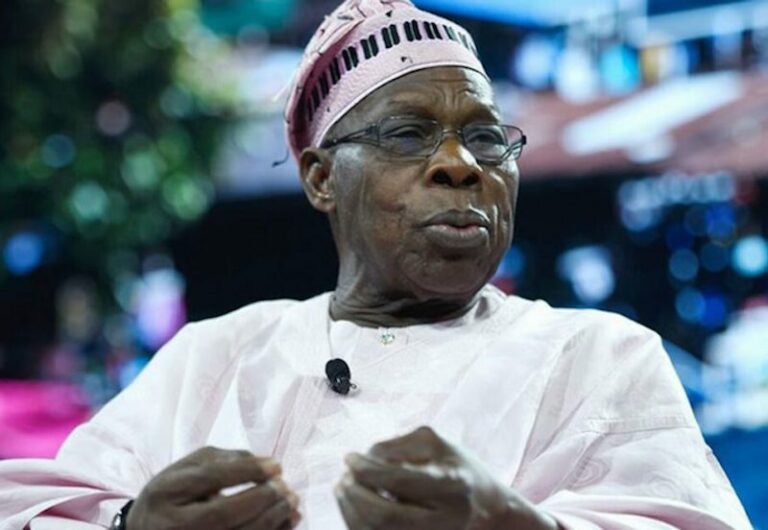
Former President Olusegun Obasanjo has delivered a scathing assessment of Nigeria’s worsening insecurity and governance challenges, declaring that any government that fails to protect lives and property has forfeited its legitimacy.
Speaking during an interview, the elder statesman said the country’s deepening crisis is rooted in poor leadership, warning that Nigeria has steadily lost its voice and influence in global affairs. According to him, the primary duty of any administration remains the protection of citizens, stressing that failure in that regard is fundamental.
“A government that cannot give security of life and property to its citizens has forfeited the right of existence,” he said.
Obasanjo expressed concern that kidnapping and violent crimes are gradually becoming accepted as part of daily life in Nigeria, a trend he described as dangerous and unacceptable.
He recalled a time when Nigerians could travel freely across regions without fear, contrasting it with the current climate of insecurity.
He linked the crisis to long-standing structural issues, including unchecked arms proliferation after the civil war, as well as governance failures over the years.
He also pointed to external influences, including the fallout from the collapse of Muammar Gaddafi’s regime, which he said contributed to the spread of arms and mercenaries across the region.
The former president warned that Nigeria’s estimated 20 million out-of-school children pose a long-term national security threat, describing them as a vulnerable population that could be exploited by extremist groups if left unaddressed.
He further lamented Nigeria’s declining relevance on the global stage, insisting the country is no longer influencing international decisions as it once did.
“Today, Nigeria is not at the table,” he said, attributing the situation to a lack of strategic leadership.
Obasanjo also criticised Nigeria’s handling of relations within the Economic Community of West African States (ECOWAS), particularly in response to the Niger Republic coup. He faulted the administration of President Bola Ahmed Tinubu, who chairs the bloc, for what he described as a poorly managed approach that weakened decades of regional cooperation.
Measures such as border closures, electricity cuts and financial sanctions against Niger Republic, he argued, undermined long-standing economic and cultural ties, with the fallout contributing to the exit of Niger, Mali and Burkina Faso from the bloc.
On the economy, Obasanjo reiterated his long-held stance that government-owned refineries under the Nigerian National Petroleum Company Limited (NNPC) are structurally inefficient and unlikely to succeed, citing corruption, poor maintenance and lack of scale as persistent issues.
He noted that billions of dollars spent over the years have yielded little results, contrasting this with private-sector driven successes and advocating for stronger public-private partnerships.
The former president also cautioned against any drift toward a one-party system, warning that such a development would undermine democracy and accountability.
While acknowledging assurances from Tinubu that he does not support a one-party state, Obasanjo said it would be detrimental to Nigeria if it ever materialised.
Despite his criticisms, Obasanjo maintained that Nigeria still has the potential to recover, pointing to the resilience of its people, but stressed that meaningful progress would depend on a decisive shift in leadership quality, governance approach and strategic thinking.


 Follow Us on Google Discover






Macky Sall quits race for UN Secretary-General position

Buhari backed Osinbajo’s presidential ambition four times, Akande tells Babachir Lawal

Dr. Benjamins‑Laniyi urges media to amplify women’s leadership, adopt gender‑sensitive reporting

Pope Leo XIV set to leave hospital after lung cancer surgery

Gunmen kill four vigilantes in Plateau community

Tension as traditional ruler collapses, dies in Ondo

2027: Kwankwaso a goat in sheep’s clothing, secretly working for Tinubu – Atiku Campaign Council

DSS arrests Maina’s fugitive son in Abuja, hands him over to EFCC

2027: Step down if you are not working for Tinubu – Deji Adeyanju dares Obi, Kwankwaso

2027: ‘I wont join my Uncle to support Tinubu’ – Davido says

Enugu NYSC death: NAFDAC debunks claims linking corps members death to fake drugs

33 Governors cannot be wrong in supporting Tinubu – Bayo Onanuga

Security forces arrest five suspects over abduction of 20 NYSC members in Imo

Rugby star Hyron Andrews dies at 31 after accidental fall in South Africa

LAUTECH Resident Doctors halt 50-day strike as Makinde intervenes

Erisco Foods announces 13 job openings across Nigeria – Apply Now
‘You Betrayed Osun People’ — Adeleke, Davido face backlash over support for Tinubu

Ex-Senator Bello Mandiya’s body found in Abuja home three days after he slipped, hit his head in the bathroom

Tinubu reappoints Bala Bila as INEC commissioner, nominates six others

House Officers, Nurses, Radiographers, Others wanted as DELSUTH opens recruitment – Apply Now

‘I love Islam, I’ve sent people to Mecca to pray for me, Nigeria for 25 years’ – Akpabio

Over 10 soldiers, four civilians feared dead as Boko Haram terrorists attack Borno military base
2027: Step down if you are not working for Tinubu – Deji Adeyanju dares Obi, Kwankwaso

Panic in Rivers community as pipeline explosion injures 20, razes over 50 houses

Umahi reopens first Niger bridge after emergency repairs, displays Tinubu’s photos

Elon Musk unveils Tesla’s ‘flying’ car in stunning demonstration

Tension mounts as NLC rejects FG’s response to 14-day ultimatum

2027: Tinubu to miss rallies in over 20 States as APC releases campaign timetable

INEC refutes claims of missing voters’ register in Lagos wards
