
News
2027: Era of ballot box snatching, result manipulation is over — INEC

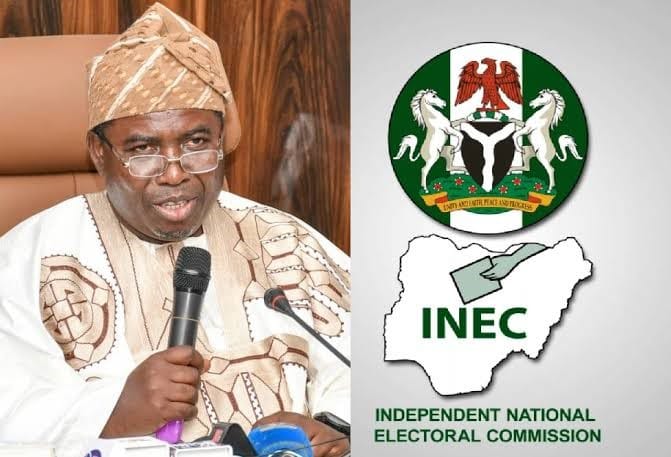
The Independent National Electoral Commission (INEC) has assured Nigerians that ballot box snatching and election result manipulation will no longer determine the outcome of elections, declaring that stronger legal and technological safeguards are now in place ahead of the 2027 general elections.
INEC Chairman, Professor Joash Ojo Amupitan (SAN), gave the assurance on Wednesday in Abuja during a courtesy visit by the Director-General of the National Orientation Agency (NOA), Mallam Lanre Issa-Onilu, to the commission’s headquarters.
The meeting centred on strengthening collaboration between both agencies, particularly in voter education and public awareness ahead of the 2027 elections.
Amupitan said Nigeria’s electoral process has undergone significant reforms, with technology greatly reducing opportunities for electoral fraud.
According to him, innovations such as the Bimodal Voter Accreditation System (BVAS) and the INEC Result Viewing Portal (IReV) have enhanced transparency and made manual alteration of election results increasingly difficult.
He also reminded Nigerians that preparations for the 2027 general elections are already underway, with the presidential election scheduled for January 16, 2027, while governorship elections will hold on February 6, 2027.
The INEC chairman stressed that although technology has strengthened the electoral process, public confidence and active voter participation remain essential for credible elections.
“We need to teach them why their vote matters and how our new legal and technological safeguards protect their choices. We must look the rural farmer, the marketplace woman, and the disillusioned urban youth in the eye and explain to them, in the language they understand, that because of the current technological infrastructure, the era of snatching ballot boxes or rewriting results manually is gone,” he said.
Amupitan pointed to the February 21 Federal Capital Territory Area Council elections and the June 20 Ekiti State governorship election as evidence of improvements in the electoral process.
According to him, both elections recorded early opening of polling units in more than 90 per cent of locations, successful biometric accreditation through BVAS, and faster uploading of results to the IReV portal.
Despite the operational successes, he expressed concern over persistent voter apathy and poor public understanding of evolving electoral procedures.
He noted that many eligible voters, particularly in urban centres, either stayed away from the polls or experienced confusion over polling unit relocation and voter transfer processes.
“This is a clear indicator that while our technology is moving forward, civic familiarity with the evolving system is lagging. It is a loud diagnostic signal that far more needs to be done in the area of intensive, deep-rooted voter education, and it proves that we cannot afford to wait until the eve of the 2027 polls to start talking to our people,” he said.
Amupitan maintained that technological reforms alone cannot strengthen democracy unless citizens remain actively engaged in the electoral process.
“We can purchase the finest BVAS machines, we can optimise the IReV to international standards, and we can map out the most logistical routes for material deployment. But all of these technological and administrative triumphs mean nothing if the citizens remain detached, cynical, or completely uneducated about the power of their votes,” he added.
The INEC chairman described the National Orientation Agency as a strategic partner in promoting civic responsibility and democratic participation across the country.
He called for an expanded grassroots voter education campaign and stronger public enlightenment efforts against misinformation, fake news and vote-buying ahead of the 2027 elections.
“Together, INEC and the NOA must rewrite this narrative. We need to co-create a decentralised, grassroots voter education campaign that goes beyond simply telling people when to vote,” he said.
Amupitan also pledged the commission’s full support for closer collaboration with the NOA.
“Our doors are wide open. We are ready to pool our resources, share our data, and give your teams all the institutional support required to make this collaboration a resounding success,” he stated.
Earlier, NOA Director-General Lanre Issa-Onilu expressed concern over low voter turnout despite the large number of registered voters across the country.
He said increasing citizens’ participation in elections must become a national priority.
“We are going into communities with our advocacy to the people.
“We both have in our hands civic education and voter education. We humbly seek support from INEC, which we are already having, but we believe it can be better. We need to increase the number of people who come out to vote.
Those who come out to vote are very low compared to those on the register. We need to even let them know everything beyond the elections to ensure that Nigerians can keep track of cases in court,” Issa-Onilu said.


 Follow Us on Google Discover






Insecurity: Tinubu hold crucial meeting with defence Minister Musa in Lagos

Military aircraft crash: Tinubu declares three-day national mourning

Nigeria vs Russia: Date, time, venue where to stream

2027: 58 deregistered parties back Tinubu, Sokoto gov Aliyu

SSANU threatens University shutdown over unpaid arrears, gives FG 14 days deadline

Niger tragedy: Shettima announces N250m support for families dead miners

JAMB to establish UTME Centre in Canada for Nigerians in North America from 2027

Rivers govt shut down 21 health facilities over alleged child trafficking

Abiy Ahmed reappointed Prime Minister of Ethiopia

BREAKING: 32 persons were on board says FG, as NAF confirms ownership of crashed aircraft

2027: INEC to begin PVC distribution October 8

Shettima arrives Niger, visits families of NSCDC custodial death victims

2027: ‘He betrayed APGA’ – Anambra govt tells electorate to reject Obi, NDC

Ondo APC names 228-member campaign council for Tinubu’s 2027 re-election

BREAKING: Many feared dead as suspected Military Helicopter crashes in Ondo
BREAKING: Many feared dead as suspected Military Helicopter crashes in Ondo
BREAKING: 32 persons were on board says FG, as NAF confirms ownership of crashed aircraft

Tinubu meets Uzodinma in Lagos amid rift with Wike’s Rainbow Coalition – Details Emerge

Nine Zamfara lawmakers join ADC after dumping APC

‘I warned El-Rufai to go on exile or they would jail him’ — Buba Galadima
2027: ‘He betrayed APGA’ – Anambra govt tells electorate to reject Obi, NDC

Panic as fuel tanker catches fire, destroys shops, vehicles in Cross River

JUST IN: Kidnappers torture 20 corps members, demand N5m ransom each

2027: Anxiety mounts as INEC awaits Supreme Court judgment on party membership rules

BREAKING: 8 Zamfara Assembly members dump APC

BREAKING: Temi Nkem wins BBNaija Season 11 ‘Show Ya Sef’

2027: PDP begins Anambra South campaign, vows to reclaim senate seat

Meet Temi Nkem, winner of BBnaija season 11

‘Tinubu saved Nigeria from economic collapse, be generous to him’ – VP Shettima
