
News
Financial autonomy: Why INEC cannot be truly independent — Amupitan

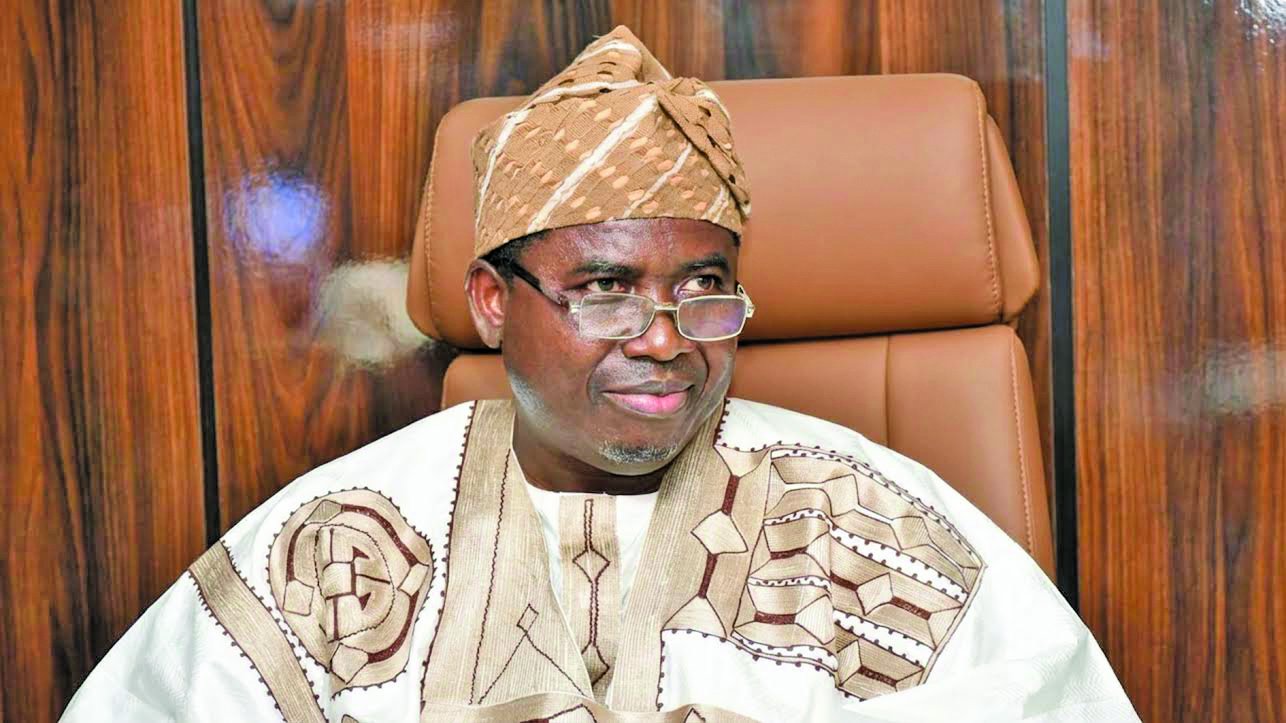
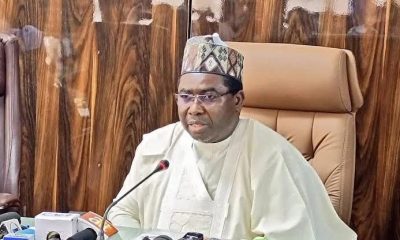
The Chairman of the Independent National Electoral Commission (INEC), Prof. Joash Amupitan, has called for greater financial autonomy for the electoral body, warning that its continued dependence on the normal budgetary process could undermine its independence and weaken public confidence ahead of the 2027 general elections.
Speaking at the public presentation of Shadows: Protest Essays on Africa’s Most Consequential Country (1999–2023), a book authored by THISDAY Managing Director, Eniola Bello, at the Shehu Musa Yar’Adua Centre in Abuja, Amupitan said genuine electoral independence cannot be achieved without financial freedom.
According to him, while debates on electoral reforms often focus on legal and constitutional changes, the issue of financial autonomy remains fundamental to strengthening the credibility of Nigeria’s electoral system.
“Can INEC truly be independent without financial autonomy? If we are serious about strengthening our institutions and conducting free, fair and credible elections, then financial autonomy is essential,” he said.
Amupitan noted that although the Constitution provides that INEC’s funding should come from the Consolidated Revenue Fund, the commission still depends on the normal budget approval process, limiting its operational independence.
“The Constitution places INEC’s funding on the Consolidated Revenue Fund, and many believe that is sufficient. However, experience has shown that as long as INEC remains subject to the normal appropriation process and depends on budgetary approvals by other institutions, genuine financial independence remains difficult,” he stated.
The INEC chairman explained that the commission’s responsibilities extend beyond organising elections, noting that it conducts federal and state elections, registers voters and political parties, monitors political parties, and maintains the national voter register used across the country.
He argued that these extensive responsibilities justify granting the commission greater operational and financial autonomy to improve efficiency and enhance public trust in the electoral process.
Amupitan also stressed that credible elections require the active participation of all democratic institutions, not just INEC.
According to him, political parties, security agencies, the media, civil society organisations and the electorate all have critical roles to play in safeguarding Nigeria’s democracy.
“When we talk about strengthening institutions, there are several institutions involved in the conduct of elections. Most times, people think only of the Independent National Electoral Commission, but beyond INEC, we also have the media, the security agencies, civil society organisations and, indeed, the Nigerian people. The health of our democracy is reflected in the strength of this wider institutional framework,” he said.
Citing international democratic principles, Amupitan recalled that the Inter-Parliamentary Council has long maintained that building democratic institutions is a shared responsibility involving governments, voters and political actors.
He added that only through collaboration among all stakeholders can Nigeria achieve peaceful, free, fair and credible elections in 2027.
On concerns surrounding the appointment of INEC leadership, the commission’s chairman said the Constitution already provides safeguards by requiring the President to appoint the Chairman and National Commissioners in consultation with the Council of State and subject to confirmation by the Senate.
However, he argued that the country’s challenge often lies in the implementation of existing laws rather than the laws themselves.
Quoting former Chief Justice of Nigeria, Justice Aloma Mukhtar, Amupitan said Nigeria’s democratic challenges stem more from the failure to faithfully implement the Constitution and the Electoral Act than from deficiencies in the legal framework.
He described Bello’s two-volume publication as an important contribution to Nigeria’s democratic development, noting that the over 900-page work documents the country’s political journey from the return to democratic rule in 1999 to 2023 and offers useful lessons ahead of the next general election.
“Every election teaches us lessons, and every electoral cycle provides an opportunity to improve on the last,” he added.


 Follow Us on Google Discover








Atiku dares Tinubu to name ministers, appointees involved in alleged bribery

Flamingos beat North Korea 3-1 to reach U-17 WWC knockout stage

EFCC opens portal for 2026 recruitment – Step-by-step guide to apply

Tinubu reinstates Mohammed Danjuma as permanent secretary after suspension

Nigerian Electricity Supply Corporation (NESCO) opens recruitment for five positions – Apply Now

Chevron opens recruitment for five console operator positions in Nigeria – Apply

Remi Tinubu, Seyi Tinubu clash over APC Youth leadership appointment

EXCLUSIVE: Rainbow Coalition emerges in Ogun Central as Iyabo Obasanjo moves to back Peter Obi

Kwara Gov promotes 5,956 SUBEB staff, approves October benefits

JUST IN: Bayern Munich Boss Vincent Kompany hospitalized after collapsing during training

Ebola: Tinubu approves ₦10bn, appoints Gbajabiamila to lead Presidential Task Force

CBN grants JPMorgan approval-in-principle to establish Merchant Bank in Nigeria

653 terrorists convicted as FG prosecutes 1,060 in Abuja

PSG vs Lyon Ligue 1 match postponed amid violent protests in Paris

Panic as multi-storey building collapses during construction in Nairobi

Seven-Up opens recruitment for 17 positions across Nigeria – Apply Now

Backend Office HQ announces 9 job openings with salaries of up to ₦400,000 – Apply Now

CDCFIB Recruitment: Portal opens October 28 for shortlisted candidates
Chevron opens recruitment for five console operator positions in Nigeria – Apply

‘Politics Is Not Madness’: Emir of Katsina warns Tinubu Campaign DG Yari

10 things you never knew about late Nollywood veteran, Francis Duru
EFCC opens portal for 2026 recruitment – Step-by-step guide to apply

BREAKING: Veteran Nollywood actor Francis Duru is dead
Remi Tinubu, Seyi Tinubu clash over APC Youth leadership appointment

Tinubu’s Gov’t only about him, his wife, son and bank account; ‘Renewed Hope’ Is ‘Renewed Hunger’ — Emir of Katsina

2027: He is a ‘wole wole’ man – APC National Secretary questions Atiku’s ability to fix Nigeria’s economy

Hardship: NLC, TUC threaten nationwide action, give FG October 27 deadline
Ebola: Tinubu approves ₦10bn, appoints Gbajabiamila to lead Presidential Task Force
EXCLUSIVE: Rainbow Coalition emerges in Ogun Central as Iyabo Obasanjo moves to back Peter Obi
