
National News
We will soon disclose to Nigerians how fuel subsidy, forex reforms savings were spent – FG

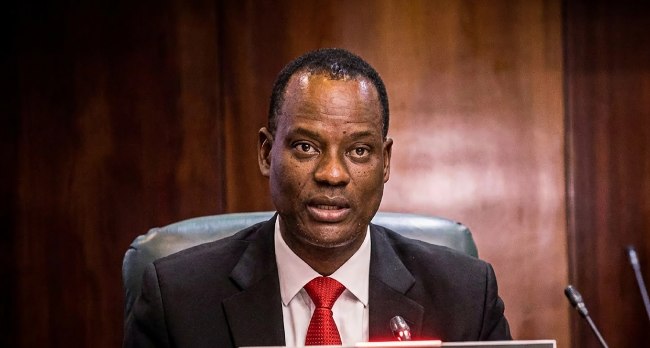
The Federal Government has assured Nigerians that it will soon publish a comprehensive report detailing how funds saved from the removal of fuel subsidy and foreign exchange subsidies have been spent.
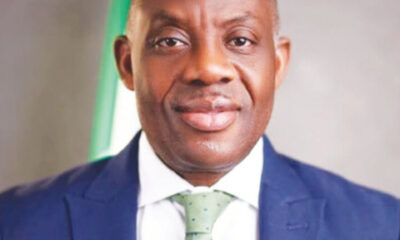
The assurance was given by the Minister of Finance and Coordinating Minister of the Economy, Taiwo Oyedele, during discussions at the 7th Africa Emerging Markets Forum in Abuja on Thursday.
The issue resurfaced after participants at the forum questioned how the savings from the reforms had been utilised, with many Nigerians saying they were yet to see clear evidence of the benefits in their daily lives.
Responding, Mr Oyedele acknowledged that the concerns were legitimate and said the government owed Nigerians a transparent explanation.
“There was a question about the subsidy savings. Where has it gone to? I’ve heard this question so many times. And guess what? It’s a valid question,” he said.
The minister disclosed that a detailed breakdown of how the funds were spent would be released within days.
“So where has the money gone to? And in a few days, you will see the detailed analysis, because we believe that we owe a duty to explain what we do to the Nigerian people. That’s what transparency looks like,” Taiwo stated.
According to him, the combined impact of removing fuel subsidy and ending what he described as foreign exchange subsidies amounted to about five per cent of Nigeria’s Gross Domestic Product (GDP), making the reforms among the most significant fiscal measures undertaken by the current administration.
Mr Taiwo explained that the reforms were designed not only to generate savings but also to eliminate long-standing distortions in the economy and establish a more sustainable fiscal framework.
He noted that a portion of the savings had gone toward servicing rising public debt, while substantial resources had also been allocated to social intervention programmes and key government obligations.
Among the initiatives financed by the reforms, he highlighted the implementation of the new ₦70,000 national minimum wage and the Nigerian Education Loan Fund (NELFUND).
According to the minister, more than 1.5 million students have already benefited from tuition support and monthly stipends under the student loan programme.
Taiwo also defended the Federal Government’s continued borrowing despite improvements in revenue generation.
He explained that higher revenue collection does not automatically eliminate borrowing where government expenditure still exceeds available income.
“If you have a budget to spend 10 and you have a target of revenue of six, you need to borrow four. If you collect revenue of seven, you have exceeded your revenue target. But it doesn’t change the fact that you still need to borrow three,” he explained.
The minister maintained that borrowing remains a sound economic strategy when the funds are invested in projects capable of generating returns that exceed the cost of the loans.
On concerns over worsening poverty, Taiwo argued that the current hardship was largely the result of years of economic distortions and unsustainable fiscal policies rather than the reforms themselves.
“The reform itself was a reset. We were living in fiscal illusions. So, we needed to stop deceiving ourselves so the country can move forward,” he said.
He added that the government’s focus is now on ensuring that the reforms translate into job creation, higher productivity and improved living standards for Nigerians.
Taiwo also revealed that the government is working on measures to reduce the cost of capital for businesses and investors without introducing new subsidy programmes, adding that the initiative would complement efforts by the Central Bank of Nigeria (CBN) to curb inflation and stimulate economic growth.
Also speaking at the forum, the Director of Statistics at the CBN, Dr. Okpanachi Moses, said research covering 36 Sub-Saharan African countries showed that food price volatility and inflation reinforce each other, making inflation more difficult to control.
He explained that food price shocks have a greater impact in Africa because households spend a large proportion of their income on food.
“What we found is, interestingly, a mutually reinforcing relationship between food price volatility and inflation persistence,” Moses said.
He added that countries experiencing conflict face even greater inflationary pressures due to disruptions in food production and supply chains, stressing that restoring food systems and implementing structural reforms remain essential for long-term price stability.


 Follow Us on Google Discover







APM, Makinde sue Otti over alleged N200m campaign levy in Abia

‘Why are afraid of entering America?’, Atiku blasts Tinibu for missing third consecutive UNGA

Gunmen storm Kebbi community, kill village head

Former Kogi Gov Ibrahim Idris dies in UK

NDLEA seizes N3.4bn drugs, nab fake cop, mechanic

Falconets crash out of 2026 U-20 Women’s World Cup after 1-0 loss to Colombia

BREAKING: Tinubu confirms absence from 81st UN General Assembly in New York, directs Shettima to lead Nigerian delegation

2027: ‘Obi will defeat Tinubu by a wider margin in Lagos’ — NDC

NDC disowns OK Movement campaign council, refers John Ugulu for discipline

Raphinha set to sign new Barcelona contract until 2030

Four Nigerians receive UNGA Humanitarian, Goodwill Ambassador honours in New York

‘We Won’t Go Back to Egypt’ — Showunmi rejects Atiku’s petrol subsidy proposal

NSCDC names new Niger commandant following death of miners in custody

ECOWAS court set to hold 2026 international conference in Dakar

Nigerians already seeing reductions in transport fares – Tinubu
BREAKING: Tinubu confirms absence from 81st UN General Assembly in New York, directs Shettima to lead Nigerian delegation
Nigerians already seeing reductions in transport fares – Tinubu

Tinubu may shun UN General Assembly in New York – Fresh details emerge

‘Before lecturing Tinubu, you must answer questions from your past’ — Presidency to Atiku
‘We Won’t Go Back to Egypt’ — Showunmi rejects Atiku’s petrol subsidy proposal

Deji Adeyanju, Buhari others appointed as FG constitutes committee to probe NSCDC custody deaths (Full List)

‘The Site Belongs To Babangida’ – Survivor links deaths of miners in NSCDC custody to ex-Military Ruler

PL: Brighton thrash Arsenal 3-0, end Gunners’ winning run

Anambra Debt Row: Expect more Peter Obi’s records in coming days – Presidency
Four Nigerians receive UNGA Humanitarian, Goodwill Ambassador honours in New York

Why EFCC must prosecute Atiku – Agbonayinma

Sowore as best president Nigeria refuses to have: by Farooq A. Kperogi
ECOWAS court set to hold 2026 international conference in Dakar

NSCDC detains suspended Niger commandant, 21 officers over deaths of 37 miners