National News
Nigerians already seeing reductions in transport fares – Tinubu

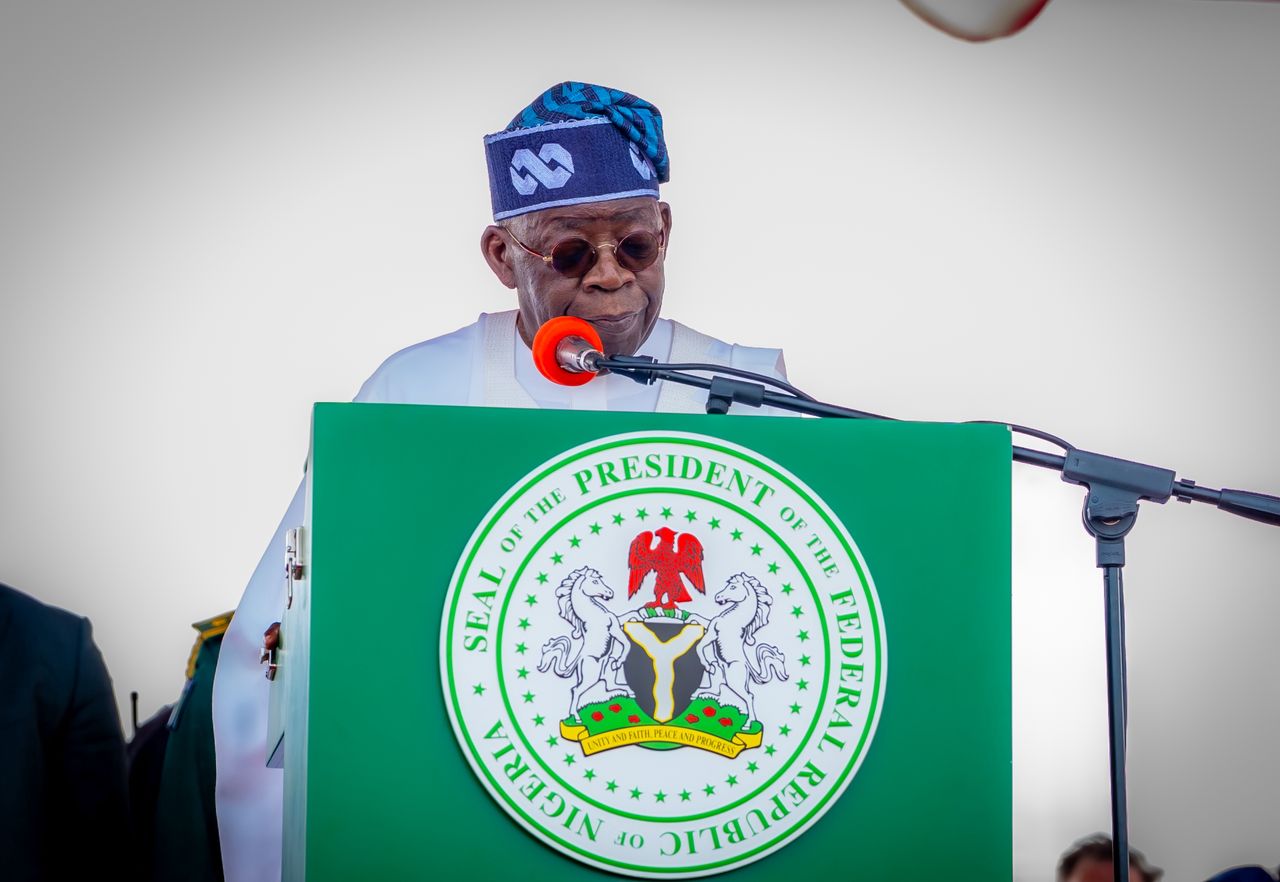
President Bola Ahmed Tinubu has said Nigerians are already experiencing reductions in transportation costs in some parts of the country as the Federal Government and state governments expand the use of compressed natural gas (CNG) and electric-powered public transport.
The President made this known while providing an update on his administration’s plan for more Nigerians to begin experiencing measurable reductions in transportation costs from October 1, 2026.
Tinubu had met with the governors of the 36 states on August 27 to discuss measures aimed at reducing transportation costs and cushioning the impact of economic pressures on Nigerians.
Following the meeting, he said an implementation committee for the National Affordable CNG Transit Programme was established under the auspices of the Nigeria Governors’ Forum.
According to the President, work is already ongoing among the committee, PI-CNG and EV, state governments and other stakeholders to identify priority transport corridors, determine appropriate interventions and make the necessary arrangements for implementation.
Tinubu cited several examples across the country where CNG-powered and electric public transport services have already reduced fares.
“In Borno, CNG-powered and electric public transport services are moving commuters for between ₦50 and ₦100 on routes where commercial operators charge between ₦300 and ₦600,” he said.
He also highlighted the experience in Kaduna, where 100 CNG-powered buses provide free transportation on major routes.
According to Tinubu, the buses transported about 3.2 million passengers in their first year of operation, resulting in reported savings of more than ₦3.5 billion for commuters.
In Oyo State, he said CNG buses deployed to Pacesetter Transport reduced the Lagos-Ibadan fare from about ₦8,000 to ₦3,200 during the initial deployment.
The President said alternative-energy transit services in Adamawa had reduced fares by as much as 50 per cent, from ₦8,000 to ₦4,000.
He added that in Enugu, the deployment of 100 CNG buses had brought the Enugu-Nsukka fare down from ₦2,500 to ₦1,500.
In Plateau State, Tinubu said government-supported buses transport about 13,000 commuters daily at ₦200, compared with fares of more than ₦500 charged by commercial operators.
The President also cited the Federal Government’s partnership with the National Union of Road Transport Workers (NURTW), saying passengers using CNG-converted commercial vehicles on some Abuja routes were benefiting from a 40 per cent fare reduction.
He listed examples including Area 1-Gwagwalada, where fares had fallen from ₦1,500 to ₦900; Nyanya, from ₦700 to ₦420; and Wuse, from ₦400 to ₦240.
Tinubu further said passengers travelling on the Suleja-Abuja route in Niger State were paying ₦550, compared with about ₦800 previously, while Abia State had deployed 40 electric buses with fares subsidised by 50 per cent.
“These are not projections. Nigerians are already experiencing these savings,” the President said.
While commending governors who have adopted CNG-powered transportation, Tinubu said more needed to be done to expand the programme and ensure that the benefits reach more Nigerians.
He said the Federal Government would continue to support states in scaling up their CNG and alternative-energy transport initiatives.
Tinubu linked the need for cheaper transportation to renewed pressure on global energy markets, noting that disruptions to energy supplies could further affect petrol and diesel prices and, consequently, transportation costs.
“Nigeria cannot control events in global energy markets. But as a gas-rich nation, we can reduce our exposure. That is what we have been doing,” he said.
The President said his administration had, over the past three years, invested in developing a CNG transportation ecosystem across the country.
He disclosed that more than 120,000 vehicles had been converted to CNG, while the country now has more than 400 certified conversion centres and over 90 CNG refuelling stations.
Tinubu said the figures were continuing to rise as the programme expanded.
He also defended the decision to move away from the petrol subsidy regime, arguing that returning to the system would expose the economy to fluctuations in international oil prices.
“At a time like this, our answer cannot be to return to the ruinous petrol subsidy regime that consumed trillions of naira and left our economy exposed to every movement in international oil prices, as some have suggested,” he said.
Instead, he urged Nigerians and state governments to accelerate the adoption of cheaper energy alternatives.
The President said Edo State currently had 50 CNG buses in active service, while Kano had converted more than 1,000 commercial vehicles and was expanding its conversion and refuelling infrastructure.
He added that Delta, Kwara and Lagos were expanding CNG-supported transport services, while Akwa Ibom had taken delivery of 50 CNG buses ahead of their commercial deployment.
Tinubu urged all state governments to sustain efforts towards the October 1 target by working with transport unions and commercial operators, supporting vehicle conversions and fleet deployment, and facilitating the infrastructure required for alternative-energy transportation.
He also stressed that the savings generated from cheaper energy should be reflected in the fares paid by commuters.
“Nigeria has the gas. We are building the infrastructure. We are already seeing the savings. Now we must move faster and scale this so more Nigerians feel those savings in the fares they pay every day,” Tinubu said.


 Follow Us on Google Discover




2027: ‘Obi will defeat Tinubu by a wider margin in Lagos’ — NDC

NDC disowns OK Movement campaign council, refers John Ugulu for discipline

Raphinha set to sign new Barcelona contract until 2030

Four Nigerians receive UNGA Humanitarian, Goodwill Ambassador honours in New York

‘We Won’t Go Back to Egypt’ — Showunmi rejects Atiku’s petrol subsidy proposal

NSCDC names new Niger commandant following death of miners in custody

ECOWAS court set to hold 2026 international conference in Dakar

Nigerians already seeing reductions in transport fares – Tinubu

PL: Brighton thrash Arsenal 3-0, end Gunners’ winning run

Sowore as best president Nigeria refuses to have: by Farooq A. Kperogi

‘Before lecturing Tinubu, you must answer questions from your past’ — Presidency to Atiku

Why EFCC must prosecute Atiku – Agbonayinma

NSCDC detains suspended Niger commandant, 21 officers over deaths of 37 miners

‘The Site Belongs To Babangida’ – Survivor links deaths of miners in NSCDC custody to ex-Military Ruler

Deji Adeyanju, Buhari others appointed as FG constitutes committee to probe NSCDC custody deaths (Full List)

INEC opens 2027 election Ad Hoc staff recruitment (Step-by-step guide to apply)

Nigerian Army opens 92 regular recruits intake recruitment (Guide to Apply)

ABSU Recruitment: Abia State University seeks Lecturers, Professors, Graduate Assistants, Others (Apply Now)

Federal University Otuoke (FUOTUOKE) announces fresh recruitment for academic, administrative positions

Just-In: Macron hosts Tinubu to private dinner at Élysée Palace in Paris (Photos)

Atiku’s World Press Conference: Address on fuel prices, palliatives and the cost of living (FULL TEXT)

BREAKING: Court of Appeal overturns Lokoja ruling, upholds NDC’s registration

‘I’m not a part of it’ – Nollywood actress Toyin Abraham distance self from APC campaign list

FG suspends Niger NSCDC Commandant over deaths of suspected illegal miners

Nigeria at 66: Tinubu to address Nigerians October 1, as FG announces low-key celebration

Florida Mother, 46, allegedly admits having sex with 22-Year-Old Son ‘about 100 times’

I would resist alternative candidate sponsored against me as Governor – Orji Kalu speaks on Wike, APC Govs feud

Charly Boy celebrates daughter Adaeze’s engagement to female partner

Don’t be ashamed, steal my idea and crash petrol price to reduce hardship for Nigerians — Atiku to Tinubu
