
Politics
I won’t back down on my vow to restore fuel subsidy, 100 TINUBUs cannot stop me – Atiku

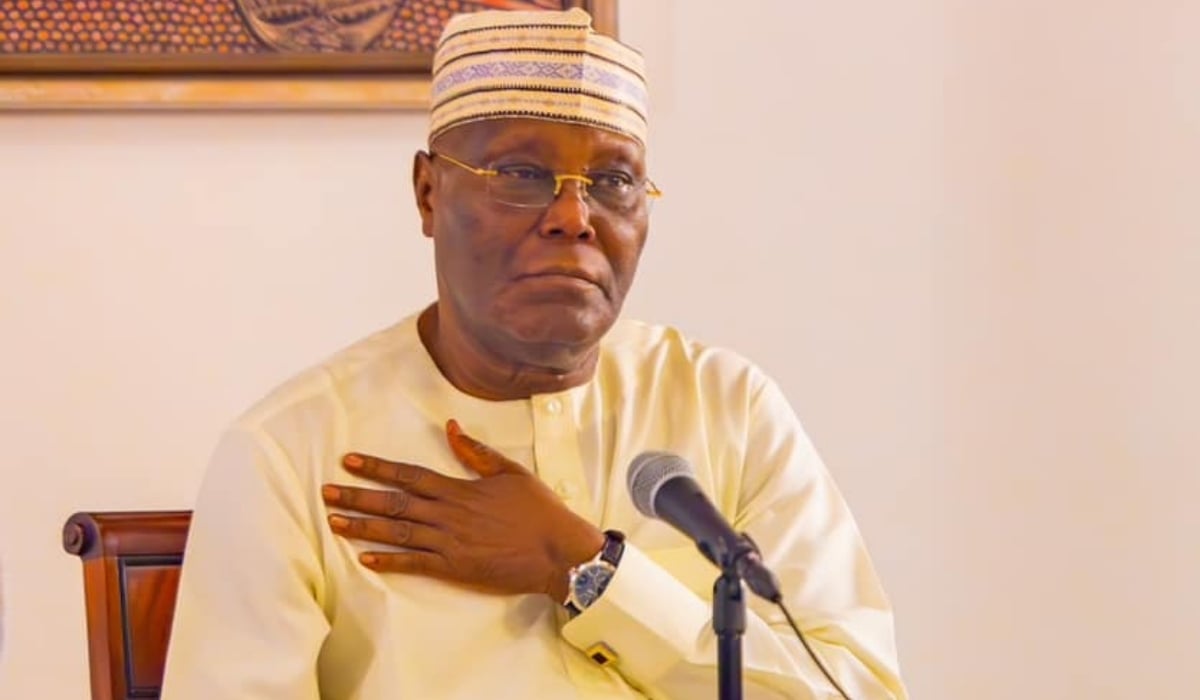
Former Vice President and presidential candidate of the African Democratic Congress (ADC), Atiku Abubakar, has insisted that he will not abandon his proposal to introduce a targeted fuel subsidy aimed at easing the economic hardship faced by Nigerians.
Atiku, through his Senior Special Assistant on Public Communication, Phrank Shaibu, said on Sunday that his proposed intervention under the Atiku Economic Recovery Plan (AERP) was fundamentally different from the subsidy regime operated in the past.
He explained that the proposal would be targeted, capped, transparently budgeted and independently audited, with a clearly defined exit strategy.
According to him, the policy would be implemented alongside accelerated domestic refining, increased competition in the petroleum sector, improved mass transportation and measures aimed at restoring Nigerians’ purchasing power.
> “What he proposes is a targeted, capped, transparently budgeted and independently audited intervention with a clearly defined exit mechanism, accompanied by accelerated domestic refining, competition, mass transportation and measures to restore household purchasing power,” Shaibu said.
Atiku also demanded greater transparency regarding petroleum tax credits and other incentives granted to investors, arguing that Nigerians should know the amount of public revenue being surrendered through such arrangements.
He questioned whether local investors had equal access to the incentives provided to foreign and large-scale investors.
“The test of economic reform is not how loudly a President announces that ‘subsidy is gone’; it is whether citizens are better off, businesses are productive, jobs are being created and household incomes can sustain basic living costs,” he said.
The former vice president accused the government of applying different standards to corporations and ordinary citizens, particularly in the way it approaches economic interventions.
> “A government cannot preach unrestrained market forces to the poor while practising interventionist economics for rich foreign friends. That is not economic reform. It is classic economic apartheid.”
Atiku said he supported both domestic and foreign investment, stressing that transparent and performance-based incentives could play an important role in attracting capital and creating economic opportunities.
He, however, rejected what he described as attempts to portray government intervention as sound economic policy when it benefits corporations, while condemning similar intervention when it is designed to cushion citizens from hardship.
“You cannot subsidise capital and criminalise relief for citizens. You cannot offer cushions upstairs and call suffering downstairs reform,” he said.
According to Atiku, the current economic approach effectively exposes ordinary Nigerians to market forces while providing various forms of protection and incentives to major investors.
He maintained that his proposed economic programme would seek to balance market principles with social protection.
> “Markets must work, investment must earn a fair return and public finances must be protected, but the Nigerian citizen must remain the ultimate beneficiary of economic policy,” Atiku stated.
The latest statement comes amid an intensifying political and economic debate between Atiku and the Presidency over the removal of petrol subsidy by President Bola Tinubu in 2023.
While the Tinubu administration has continued to defend the policy as necessary to reduce government expenditure and redirect resources to other sectors, Atiku has argued that Nigerians are bearing the brunt of the policy through rising transportation costs, food prices and declining purchasing power.


 Follow Us on Google Discover

Atiku rejects FG’s 30-Day petrol discount, questions what Nigerians will do in Day 31

BREAKING: Tinubu’s Govt announces 30-Day petrol discount at filling stations for Nigerians

TCN schedules transformer maintenance, announces power outage in Ogun

Lakurawa terrorists kill two soldiers, Chinese national in Kebbi

FBI busts alleged Ghana scam network, arrests over 130

JUST IN: Idowu Sobowale, veteran journalist, communication scholar dies at 85

Umahi dismisses rift with Wike, says ‘we’re one family’

NYSC Kidnap: How I paid N6m to secure my son’s release from kidnappers – Mother

Veteran rapper Lord of Ajasa becomes US citizen

Canadian Poet Anne Carson clinches 2026 nobel prize in Literature

Amaechi ally, Sokonte Davies dumps ADC, returns to APC

NAF Crash: Aiyedatiwa orders sustained search for missing victims, aircraft

2027: Taraba is 100% behind Tinubu — Governor Kefas

Abuja court grants alleged fake JAMB registrar N50m bail

2027: Peter Obi will win with or without Igbos’ vote — Isaac Fayose
BREAKING: Tinubu’s Govt announces 30-Day petrol discount at filling stations for Nigerians

2027: Over 1,000 Islamic Clerics urge Tinubu not to contest, cite hardship, insecurity

‘Nigerians don’t hate Tinubu’ — Presidency rejects The Economist’s report

2027: Tinubu, Govs afraid of contest, offering N50m, N200m, cars to opposition candidates to step down

BREAKING: Security forces rescue 20 NYSC members from abductors in Imo

Akor Adams’ late goal seals thrilling 3-3 draw for Super Eagles against Russia

FG yields to SSANU ultimatum, releases eight months’ salary arrears

Court sentence man to death for killing father in Kogi

Military launches underwater search for crashed NAF ATR-42 aircraft in Ondo, deploys advanced sonar (Photos)

BREAKING: NLC begins indefinite strike over Teachers’ promotion in FCT

Rainbow Coalition: Wike, Chinda, Abe visit Fubara in Port Harcourt

Tragedy as passenger dies during Kenya Airways flight from Nairobi to Lagos

Wave of resignations hits Radda administration as appointees quit amid gov’s rift with Masari

AAU lecturer found dead in Edo hotel after alleged encounter with sex worker
